

Categories
Change Password!
Reset Password!



This retrospective cohort study examined the effectiveness and safety of rivaroxaban versus enoxaparin for venous thromboembolism (VTE) prophylaxis among people undergoing hip fracture surgery.
Rivaroxaban markedly reduces postoperative VTE incidence and treatment costs compared to enoxaparin in hip fracture patients, but it is linked with a higher rate of hemorrhagic events.
This retrospective cohort study examined the effectiveness and safety of rivaroxaban versus enoxaparin for venous thromboembolism (VTE) prophylaxis among people undergoing hip fracture surgery.
Patients who underwent hip fracture surgery were randomized to get either oral rivaroxaban or subcutaneous enoxaparin for postoperative VTE prophylaxis. Data collected encompassed demographic details, fracture type, time from admission to surgery, and surgical procedures performed. The key outcomes were the incidence of VTE, bleeding complications, and mortality within 30 days post-surgery. Additionally, the daily cost of each anticoagulant was analyzed.
A total of 166 patients were analyzed. The mean age of volunteers was 77.95 ± 12.91 years in the rivaroxaban arm and 76.27 ± 11.00 years in the enoxaparin arm. Rivaroxaban was better than enoxaparin in minimizing VTE risk after hip fracture surgery. But, a trend towards a heightened risk of hemorrhage was observed. Rivaroxaban's cost-effectiveness surpassed that of enoxaparin. No patient deaths were reported in either cohort (Table 1).
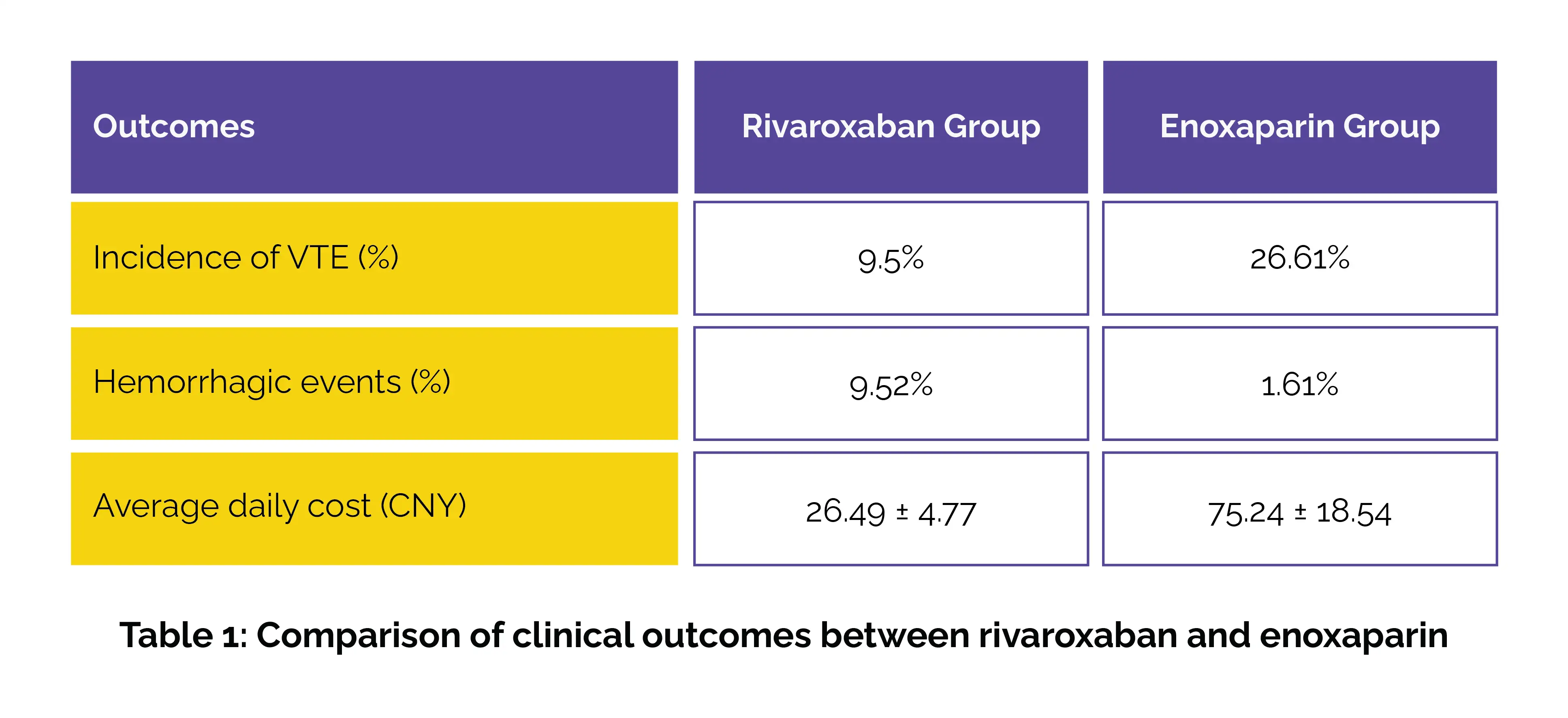
Rivaroxaban was more beneficial than enoxaparin in preventing postoperative VTE after hip fracture surgery, though it carried a higher risk of bleeding. It also offered a lower daily cost. Further prospective studies are warranted for guiding patient selection.
Frontiers in Surgery
Rivaroxaban vs. enoxaparin for preventing venous thromboembolism after hip fracture operations: a retrospective cohort study
Xiaofeng Zheng et al.















Comments (0)