

Categories
Change Password!
Reset Password!



Moderate-to-severe period pain at age 15 increases the likelihood of chronic pain at age 26 by up to 76%.
A population-based study from the United Kingdom (UK) has revealed that adolescent dysmenorrhoea—commonly known as painful periods—may significantly escalate the risk of chronic pain in adulthood, highlighting the urgent need for early diagnosis and better menstrual health support.
Dysmenorrhoea remains a prevalent yet often underrecognized health concern among adolescents, and mounting evidence shows that menstrual pain frequently overlaps with broader pain sensitivities and chronic pain syndromes. As adolescent health gains increasing attention in public health frameworks, understanding how early menstrual pain shapes long-term wellbeing becomes essential. Rachel Reid-McCann et al. aimed to determine whether dysmenorrhoea experienced at age 15 years predicted the development of chronic pain in adulthood, including pain extending beyond the pelvis.
The investigators analyzed data from the Avon Longitudinal Study of Parents and Children, a UK birth cohort tracking volunteers from adolescence to adulthood. Dysmenorrhoea was recorded annually from ages 8 to 17, with severity formally graded at age 15. At age 26, participants reported pain lasting at least one day, allowing classification of chronic pain as symptoms persisting for three months or more. Those with pre-menarche pain conditions or only short-term pain at age 26 were excluded.
Missing data were addressed using multiple imputation. Multivariable logistic regression models—adjusted for ethnicity, maternal education, early adversity, pre-menarche depression, physical activity, smoking, childhood dietary factors, and body mass index—estimated the relative risk of chronic pain across dysmenorrhoea levels. A dose–response trend was evaluated by modeling severity as a continuous variable.
Of the subjects, 59.7% noted moderate or severe menstrual pain at age 15. Later, at age 26, 26.5% noted chronic pain persisting 3 months or more. The risk levels for chronic pain climbed steadily with dysmenorrhoea severity (Table 1):
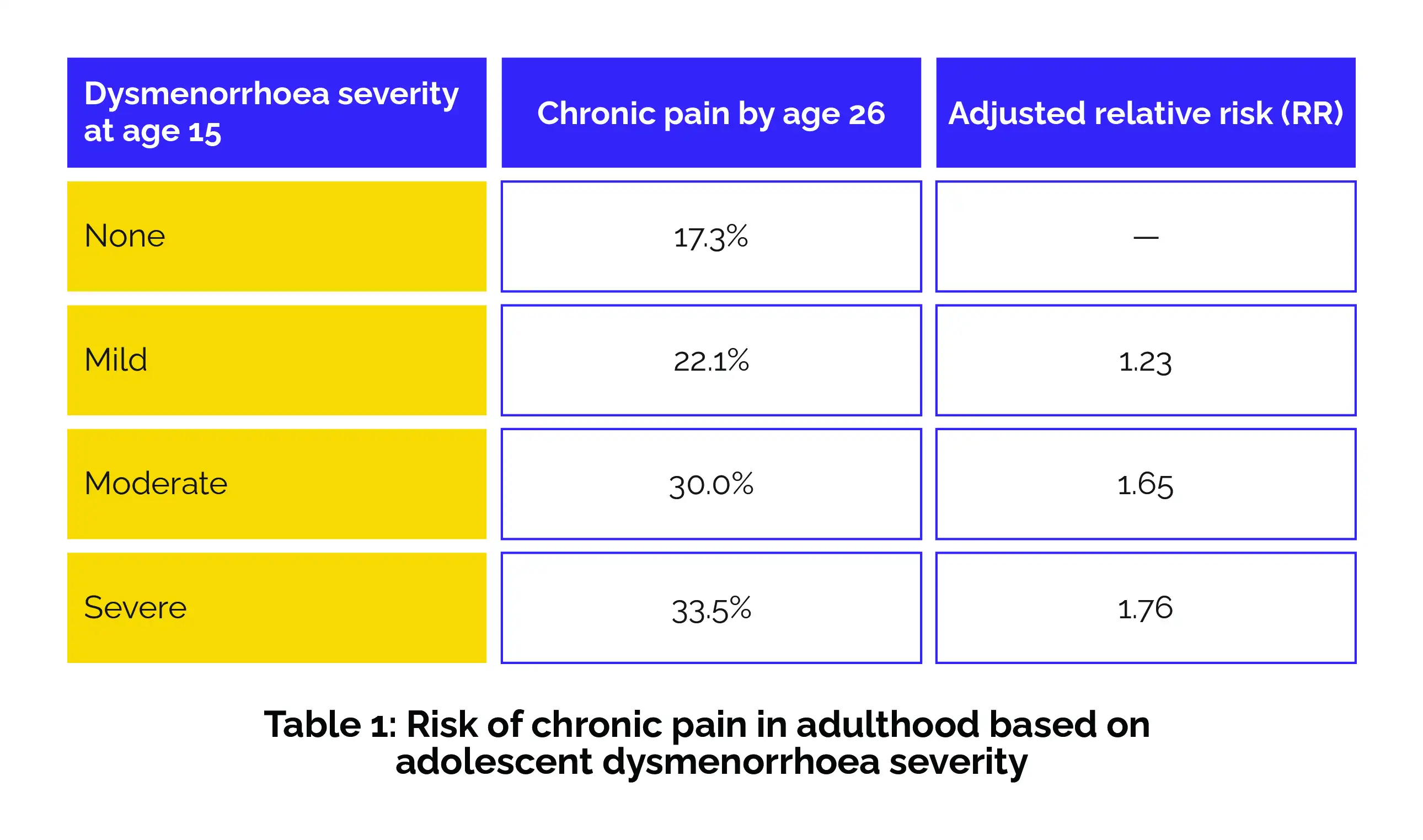
Researchers identified a clear dose-response relationship—the more intense the period pain in adolescence, the higher the likelihood of experiencing long-term pain. Psychological factors such as depression and anxiety played a modest mediating role, especially among those with severe dysmenorrhoea—but did not fully explain the link. Researchers warn that untreated menstrual pain is not simply a “monthly inconvenience”, it may be an early warning sign for later chronic pain disorders.
The Lancet Child & Adolescent Health
Longitudinal association between dysmenorrhoea in adolescence and chronic pain in adulthood: a UK population-based study
Rachel Reid-McCann et al.















Comments (0)