

Categories
Change Password!
Reset Password!



Traumatic injuries often present with considerable pain, making rapid and effective pain control essential.
Intravenous ketorolac is effective for prehospital trauma pain management, especially in patients presenting with moderate pain.
Traumatic injuries often present with considerable pain, making rapid and effective pain control essential. This study determined the efficacy of intravenous ketorolac (a potent non-steroidal anti-inflammatory drug [NSAID]) for pain management in trauma patients within a prehospital setting.
In this descriptive cross-sectional study, 134 trauma patients were enrolled from road emergency bases. Each subject received a slow intravenous injection of 30 mg ketorolac over 1 minute. Pain intensity was determined via the visual analog scale (VAS) at 0 (pre-injection), 15, 30, and 45 minutes post-injection. Data analysis was executed via SPSS version 23.
Participants had a mean age of 37.42 ± 23.6 years, including 87 males (64.9%) and 47 females (35.1%). At baseline, 85 patients (63.4%) reported severe pain (VAS 7–10), while 49 patients (36.6%) reported moderate pain (VAS 4–6). A statistically significant reduction in pain intensity was observed by 15 and 30 minutes, with greater responsiveness noted in patients with moderate pain (Table 1).
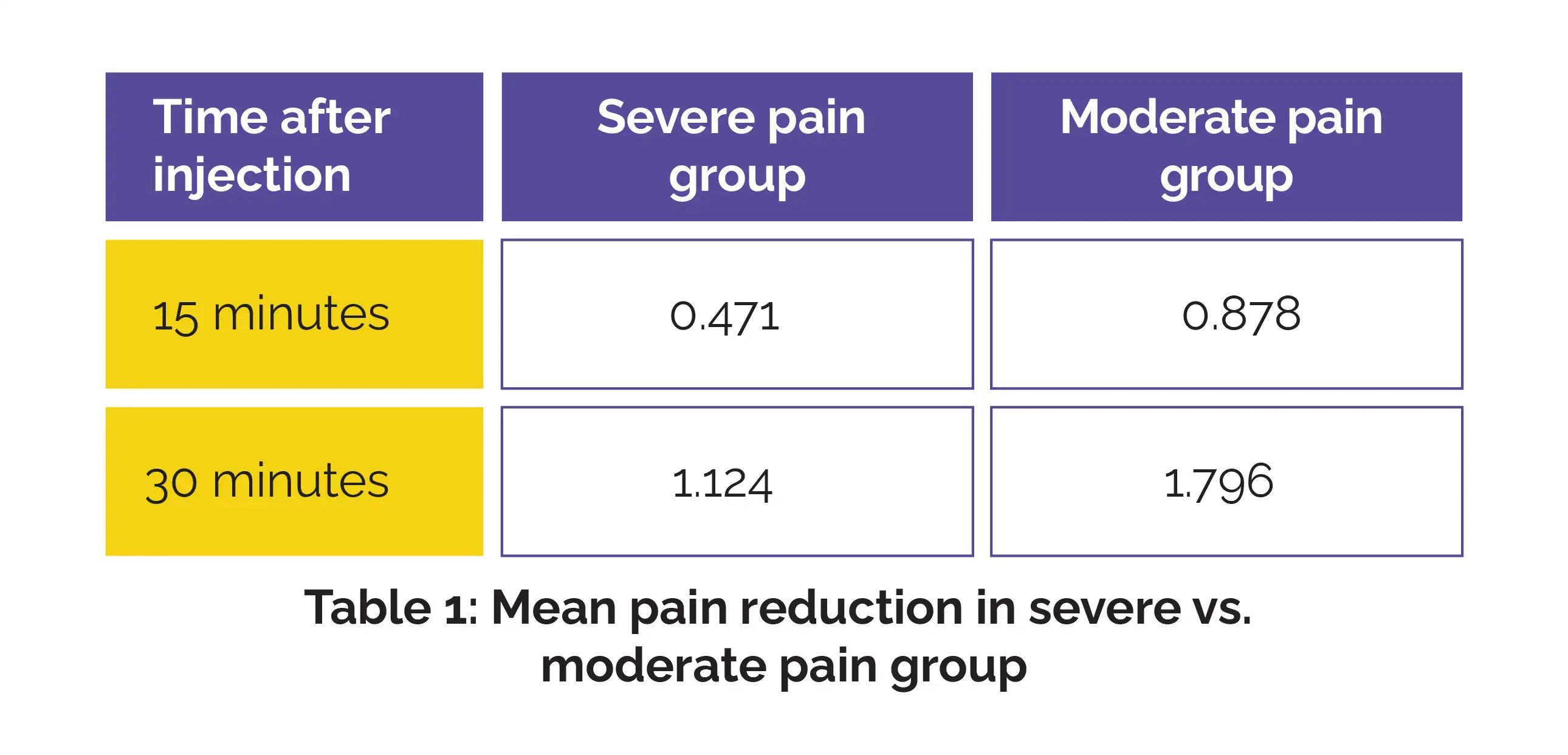
Intravenous ketorolac demonstrates meaningful analgesic benefit for trauma patients experiencing moderate to severe pain in prehospital emergency environments. Due to its delayed peak effect (after 30 minutes), ketorolac may be less suitable for cases requiring rapid pain relief before short-duration transport. Nonetheless, findings support its role as a valuable option for prehospital trauma pain management protocols.
Journal of Emergency Practice and Trauma.
Assessing the effectiveness of ketorolac in pain management of traumatic injuries in prehospital emergency care services
Seyed Mohammad Amini et al.
















Comments (0)