

Categories
Change Password!
Reset Password!



This study sought to compare the effectiveness of specific macronutrient compositions in managing type 2 diabetes (T2D), focusing on exact dietary formulations rather than isolated nutrients or broader dietary patterns.
A very low-carbohydrate, calorie-restricted, high-protein diet shows the greatest short-term improvements in fasting glucose, HbA1c, and weight in type 2 diabetes-affected patients.
This study sought to compare the effectiveness of specific macronutrient compositions in managing type 2 diabetes (T2D), focusing on exact dietary formulations rather than isolated nutrients or broader dietary patterns.
An extensive search was done in Scopus, PubMed, and the Cochrane Central Register of Controlled Trials to check suitable randomized controlled trials (RCTs). For estimating mean differences (MD) and corresponding 95% credible intervals (CrIs), a Bayesian random-effects network meta-analysis was used. Evidence certainty was assessed via the GRADE framework.
A total of 80 RCTs involving 9,232 individuals with T2D were analyzed. At the 6-month follow-up, diets that were very low in carbohydrates, high in protein, and calorie-restricted exhibited the most remarkable improvements in glycated hemoglobin (HbA1c), body weight, and fasting plasma glucose (FPG). At 12 months, the benefits persisted for HbA1c and FPG, but not for weight.
For sustained weight loss at 12 months, a low-carbohydrate, high-protein diet was likely the most effective. In terms of low-density lipoprotein (LDL) cholesterol reduction, the most beneficial intervention at 6 months was a calorie-restricted, low-carbohydrate, and high-protein diet, while at 12 months, a moderate-carbohydrate, calorie-restricted, and standard-protein diet led to the most notable reduction (Table 1).
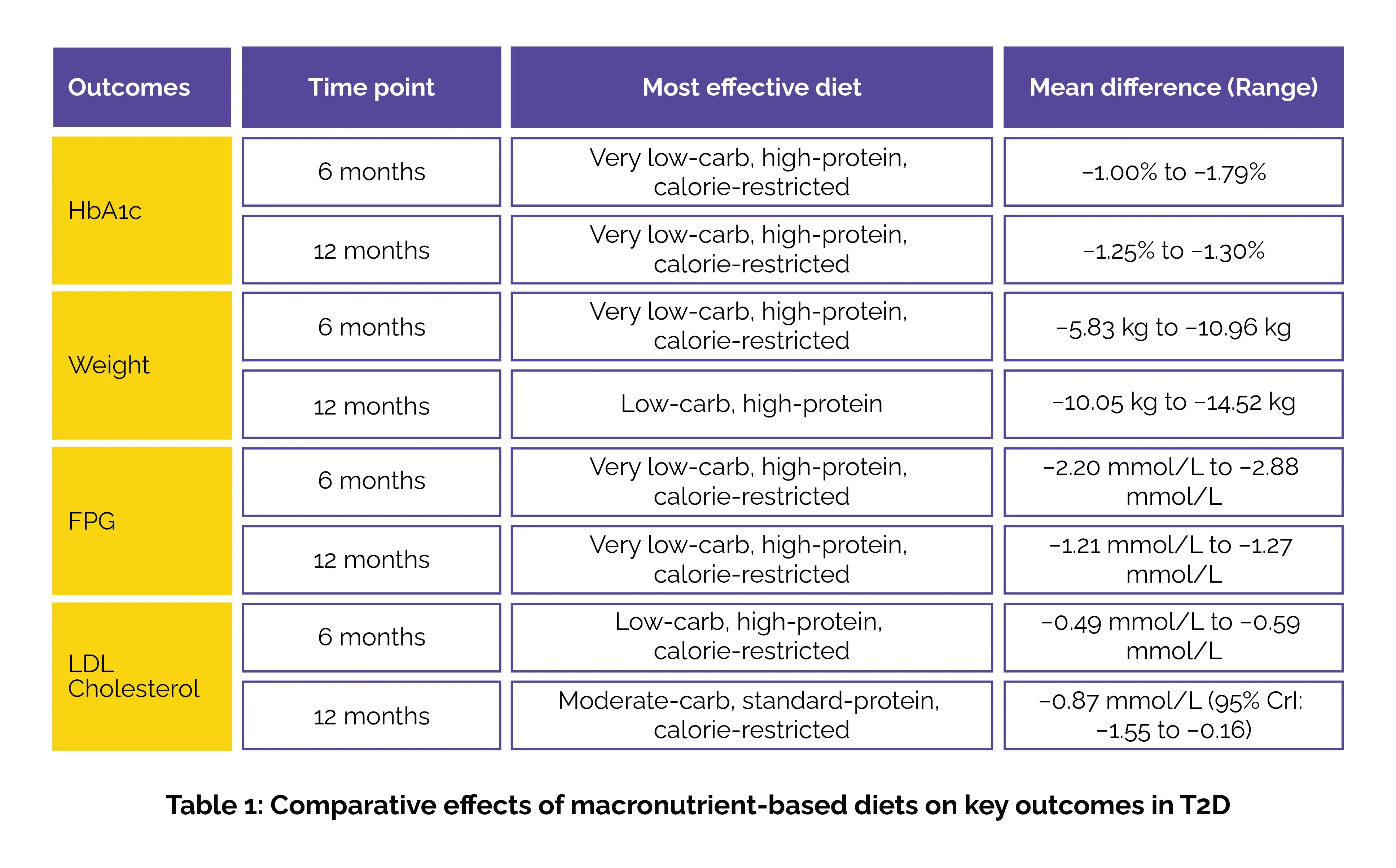
Very low-carbohydrate, high-protein, calorie-restricted diets may offer substantial short-term benefits in glycemic control and weight reduction for T2D sufferers. However, less restrictive carbohydrate approaches may be more sustainable for long-term weight management and lipid profile improvement.
Journal of Health, Population and Nutrition
Comparative effects of different macronutrient compositions for type 2 diabetes management: a systematic review and network meta-analysis of randomized trials
Negin Badrooj et al.















Comments (0)