

Categories
Change Password!
Reset Password!


The goal was to explore the effects of a culturally tailored Mediterranean diet intervention (the MediSoul Diet) on post-stroke cognitive impairment and post-stroke depression in stroke survivors.
A culturally-adapted Mediterranean diet (The MediSoul Diet) substantially improves diet adherence, mood, and vascular risk factors in post-stroke patients.
The goal was to explore the effects of a culturally tailored Mediterranean diet intervention (the MediSoul Diet) on post-stroke cognitive impairment and post-stroke depression in stroke survivors.
Volunteers included hospitalized patients (aged 18–80 years) who experienced an acute ischemic stroke and had at least 1 vascular risk factor (diabetes, hypertension, hyperlipidemia, or obesity). All were discharged on an oral diet. Baseline assessments encompassed the Mediterranean Diet Adherence Screener (MEDAS), Montreal Cognitive Assessment (MoCA), Patient Health Questionnaire-8 (PHQ-8), lipid panel, glycated hemoglobin (HbA1C), and body weight.
During hospitalization, the enrolled subjects received culturally tailored dietary counseling based on the MediSoul diet. After discharge, they received biweekly fresh produce through a Community Supported Agriculture program for 3 months. At 3-month follow-up, all baseline measures were repeated.
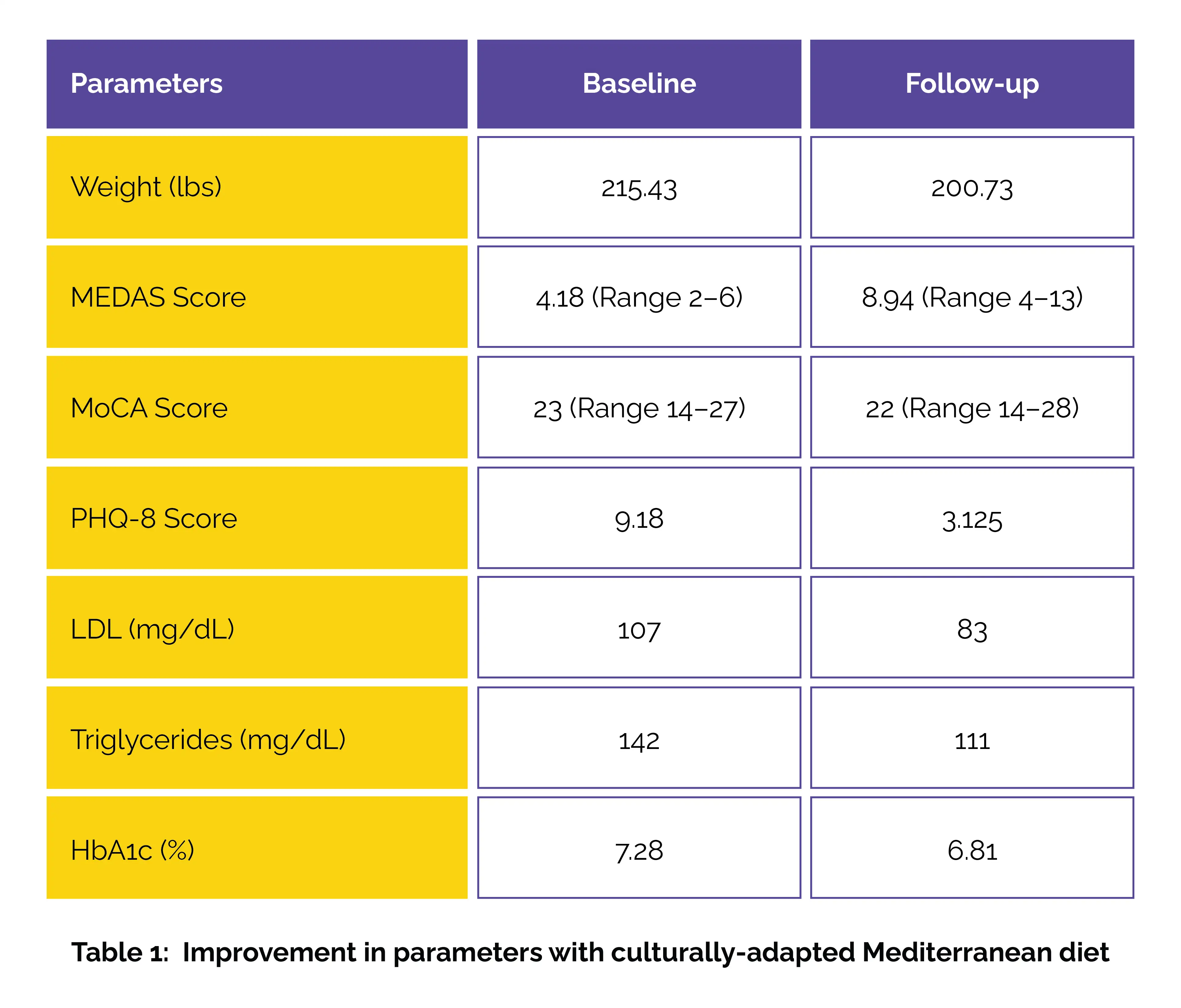
In total, 25 participants (mean age 59 years) were enrolled. Notably, 2 participants (8%) experienced stroke recurrence requiring readmission. Table 1 illustrates changes in mean body weight, MEDAS scores, MoCA scores, and PHQ-8 scores. Improvements were also observed in vascular markers like low-density lipoprotein (LDL) cholesterol, triglycerides, and HbA1C.
Introducing a culturally-tailored Mediterranean diet at the point of care meaningfully enhanced dietary adherence and positively impacted post-stroke cognitive impairment, depression, and vascular risk factors.
Neurology
The Mediterranean Soul Food Diet Intervention After Stroke in the Stroke Belt is Feasible and Effective in Post-Stroke Cognitive Impairment and Depression (P6-14.001)
Karima Benameur et al.














Comments (0)