

Категории
Сменить пароль!
Сброс пароля!



У пожилых людей, страдающих атопическим дерматитом (АтД), часто наблюдаются более разнообразные воспалительные реакции по сравнению с молодыми пациентами.
Подкожное введение стапокибарта эффективно уменьшает тяжесть заболевания и зуд, а также имеет благоприятный профиль безопасности у пожилых людей с атопическим дерматитом среднетяжелого и тяжелого течения.
У пожилых людей, страдающих атопическим дерматитом (АтД), часто наблюдаются более разнообразные воспалительные реакции по сравнению с молодыми пациентами. В данном исследовании изучались безопасность и эффективность стапокибарта, моноклонального антитела против рецептора α интерлейкина-4 (IL-4Rα), в различных возрастных группах.
Взрослые пациенты с АтД среднетяжелого и тяжелого течения были рандомизированы для получения либо стапокибарта в дозе 300 мг подкожно 1 раз в 2 недели (после нагрузочной дозы 600 мг), либо плацебо в течение 16 недель. После начального периода все пациенты получали стапокибарт в дозе 300 мг 1 раз в 2 недели в течение дополнительных 36 недель. В ходе последующего анализа подгрупп пациенты были разделены на две категории: пожилые (≥60 лет; n=93) и не пожилые (18–59 лет; n=407). Первичные конечные точки включали следующие показатели:
На 16-й неделе стапокибарт продемонстрировал превосходную клиническую эффективность по сравнению с плацебо в обеих возрастных категориях. У пациентов пожилого и молодого возраста, получавших стапокибарт, наблюдались более высокие показатели ответа по шкалам EASI-75, IGA 0/1 и улучшение показателей зуда на ≥4 балла. Продолжение лечения на этапе поддерживающей терапии привело к устойчивому и прогрессивному улучшению всех измеренных показателей (таблица 1).
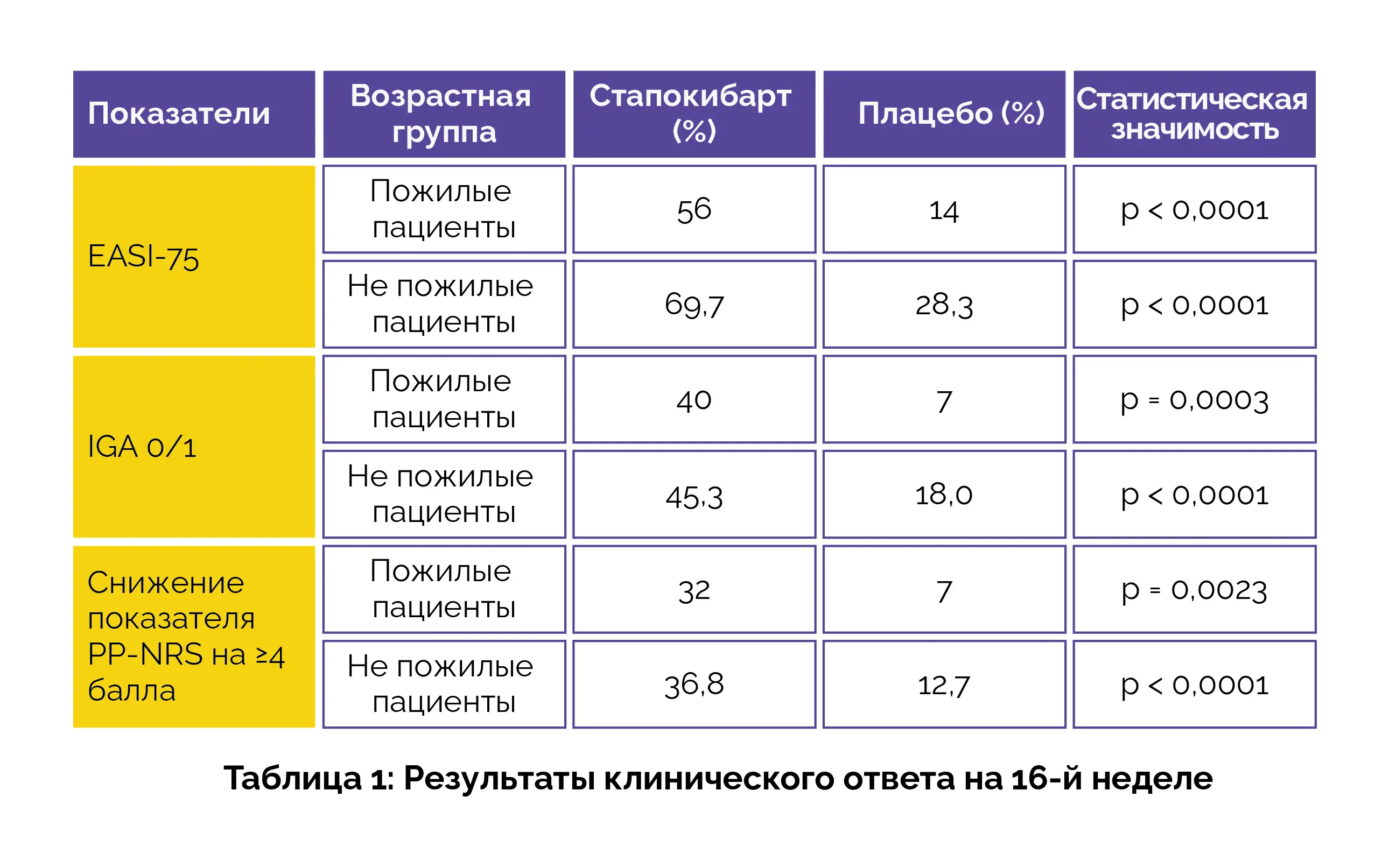
Частота нежелательных явлений, возникших в ходе лечения, была сопоставима у пациентов, получавших стапокибарт и плацебо, в течение 16-недельной контролируемой фазы, и новых проблем по безопасности в разных возрастных группах выявлено не было.
Стапокибарт продемонстрировал высокую клиническую эффективность и благоприятный профиль безопасности у пожилых людей с АтД, предлагая многообещающий вариант таргетного лечения пациентов этой возрастной группы.
International Journal of Dermatology
Efficacy and Safety of Anti-IL-4Rα Stapokibart in Elderly Patients With Moderate-To-Severe Atopic Dermatitis
Yan Zhao и соавт.














Комментарии (0)