

Categories
Change Password!
Reset Password!



Patients with diabetes remain at higher ischemic risk after coronary stenting, and the optimal antithrombotic regimen for secondary prevention continues to be debated.
Indobufen-based DAPT demonstrates similar cardiovascular protection and lower bleeding risk compared to aspirin-based DAPT in diabetic patients following coronary stent implantation.
Patients with diabetes remain at higher ischemic risk after coronary stenting, and the optimal antithrombotic regimen for secondary prevention continues to be debated. Indobufen-based dual antiplatelet therapy (DAPT) emerges as a potential alternative to traditional aspirin-based strategies, but its role in diabetic subgroups requires a clearer clinical definition. Hence, the researchers aimed to evaluate the efficacy and safety of indobufen-based vs. aspirin-based DAPT in diabetes sufferers.
OPTION trial was a randomized, open-label, multicenter, noninferiority trial conducted in China. Patients were randomized 1:1 to receive indobufen-based or aspirin-based DAPT following coronary stenting. This post hoc analysis of the OPTION trial stratified outcomes by diabetes status. The primary outcome was a 1-year composite of cardiovascular death, nonfatal myocardial infarction, definite or probable stent thrombosis, ischemic stroke, or Bleeding Academic Research Consortium (BARC) type 2, 3, or 5 bleeding. Secondary endpoints assessed efficacy and safety outcomes separately across subgroups.
Among 4,551 patients in the OPTION study, the primary endpoint occurred at a similar rate in patients with and without diabetes, with no significant interaction observed between diabetes status and treatment effect (Table 1).
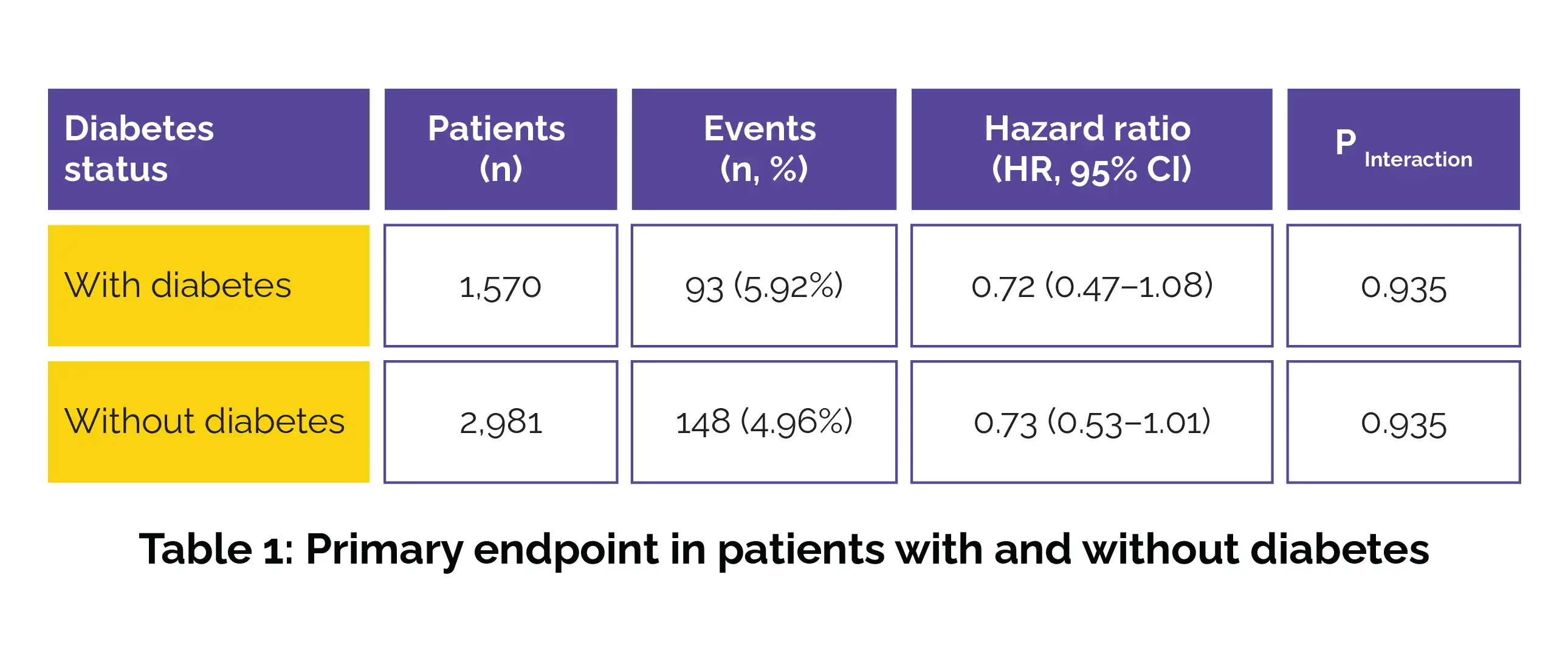
The secondary efficacy outcomes were also comparable across both groups. Likewise, both subgroups experienced similar benefits regarding safety outcomes, indicating consistent treatment effects regardless of diabetes status (Table 2).

Indobufen-based DAPT demonstrated comparable ischemic protection and improved bleeding safety when compared with aspirin-based DAPT in patients with diabetes undergoing DES implantation. These findings supported indobufen as a viable alternative for secondary prevention.
Journal of Diabetes
Indobufen Versus Aspirin Plus Clopidogrel in Patients After Coronary Stenting in Patients With Diabetes: A Post Hoc Analysis of the OPTION Trial
Shujing Wu et al.















Comments (0)