

Categories
Change Password!
Reset Password!


The coexistence of primary sclerosing cholangitis (PSC) and inflammatory bowel disease (IBD) defines a complex clinical entity in which persistent intestinal inflammation and increased colorectal cancer risk demand more effective treatment strategies.
Oral vancomycin consistently improves intestinal inflammation and mucosal healing in primary sclerosing cholangitis–associated inflammatory bowel disease, supporting its emerging therapeutic role.
The coexistence of primary sclerosing cholangitis (PSC) and inflammatory bowel disease (IBD) defines a complex clinical entity in which persistent intestinal inflammation and increased colorectal cancer risk demand more effective treatment strategies. Building on the growing therapeutic interest in oral vancomycin, the investigators evaluated its impact on clinical outcomes, mucosal healing, histologic activity, and intestinal and hepatic biomarkers.
In this retrospective study, investigators assessed the clinical course of patients with PSC–IBD who received oral vancomycin. Clinical characteristics, treatment history, vancomycin dose, laboratory findings, endoscopic and histologic assessments, and treatment response were analyzed. Patients were categorized into low-dose (≤500 mg/day) and high-dose (>500 mg/day) groups, and Kaplan–Meier analysis was used to evaluate vancomycin-free survival.
The analysis included 90 patients, the majority of whom had ulcerative colitis (80%), with a median age of 17.4 years at PSC diagnosis. Oral vancomycin was linked with meaningful improvements in intestinal disease activity, reflected by favorable histologic, clinical, biomarker, and endoscopic outcomes. Comparable therapeutic benefits were observed with both low-dose (≤500 mg/day) and high-dose (>500 mg/day) regimens, while long-term treatment persistence remained similar across dose groups (Table 1).
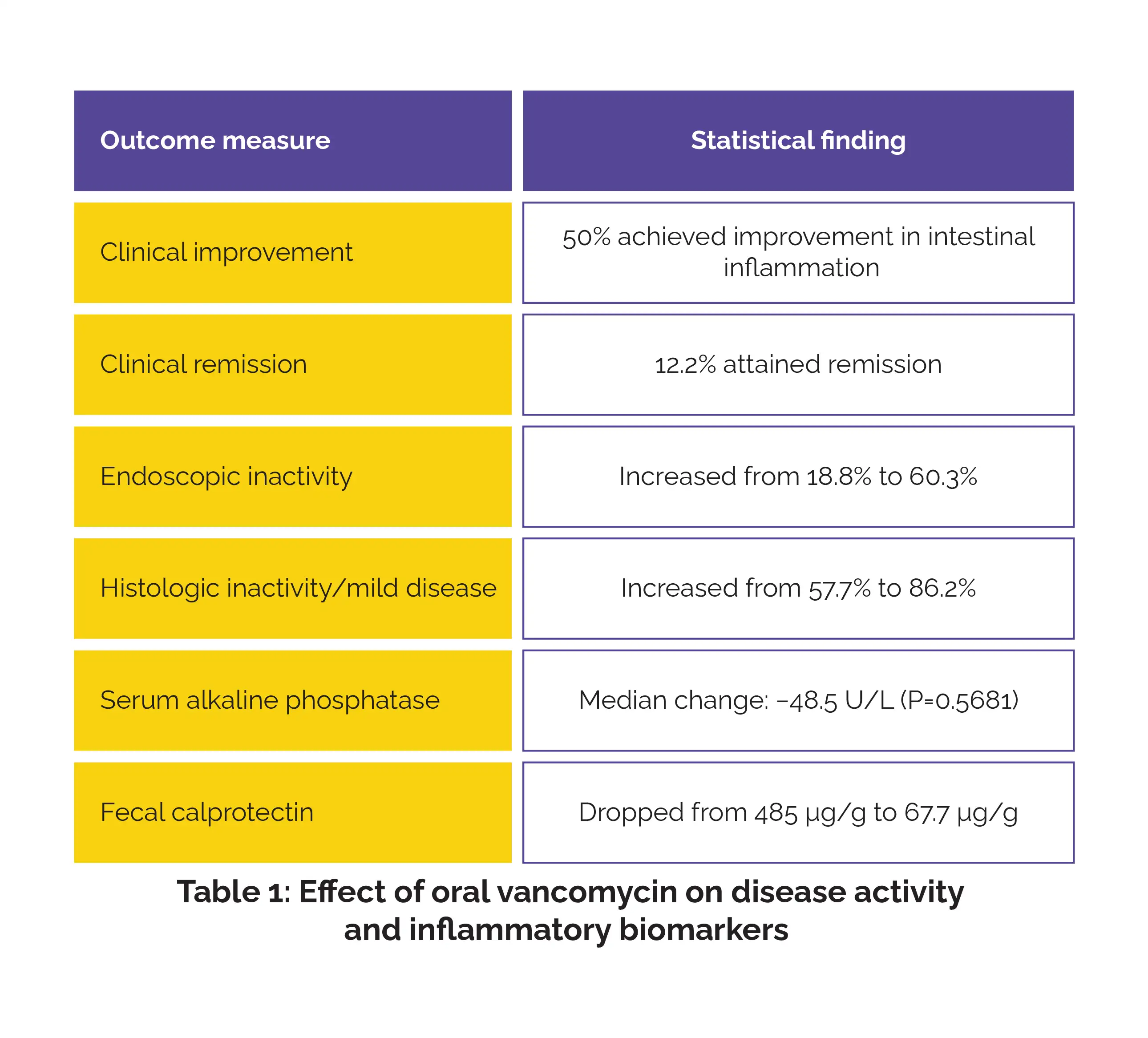
Importantly, both low-dose and high-dose oral vancomycin achieved comparable clinical, endoscopic, and biochemical improvements. The 5-year vancomycin-free survival remained similar between dosing groups, suggesting durable therapeutic benefit irrespective of dose.
Oral vancomycin demonstrated improvements spanning clinical activity, mucosal healing, histologic response, and inflammatory biomarkers, suggesting a broader therapeutic influence in PSC–IBD.
Gastro Hep Advances
Oral Vancomycin Is an Effective Therapy in Adult Patients With Inflammatory Bowel Disease and Primary Sclerosing Cholangitis
Siri A. Urquhart et al.















Comments (0)