

Categories
Change Password!
Reset Password!



Binge-eating disorder (BED) remains a prevalent and clinically challenging condition associated with obesity, metabolic complications, psychological distress, and impaired quality of life.
Naltrexone + bupropion therapy reduces caloric intake, sweet-food craving, and early hunger signals in individuals with binge-eating disorder.
Binge-eating disorder (BED) remains a prevalent and clinically challenging condition associated with obesity, metabolic complications, psychological distress, and impaired quality of life. Therapeutic strategies targeting brain reward pathways are increasingly being explored to enhance therapeutic outcomes. The combination of naltrexone and bupropion has emerged as a valuable intervention due to its potential to attenuate food reward and hedonic eating behaviors. Hence, this study evaluated the mechanisms through which naltrexone/bupropion (NB) influences eating behavior, food craving, and caloric intake among individuals with BED.
Researchers conducted a human laboratory investigation involving 50 adults diagnosed with BED, of whom 72% had obesity, during participation in a 12-week randomized clinical trial. Assessments were executed at baseline and after 6 and 12 weeks of treatment with NB. Participants underwent standardized laboratory testing to evaluate their ability to resist consuming preferred high-calorie snack foods, total calories consumed during eating episodes, and food craving intensity. Secondary outcomes included hunger ratings, mood assessments, and measurement of trough plasma concentrations of study medications and metabolites.
The key findings of the study are presented in Table 1.
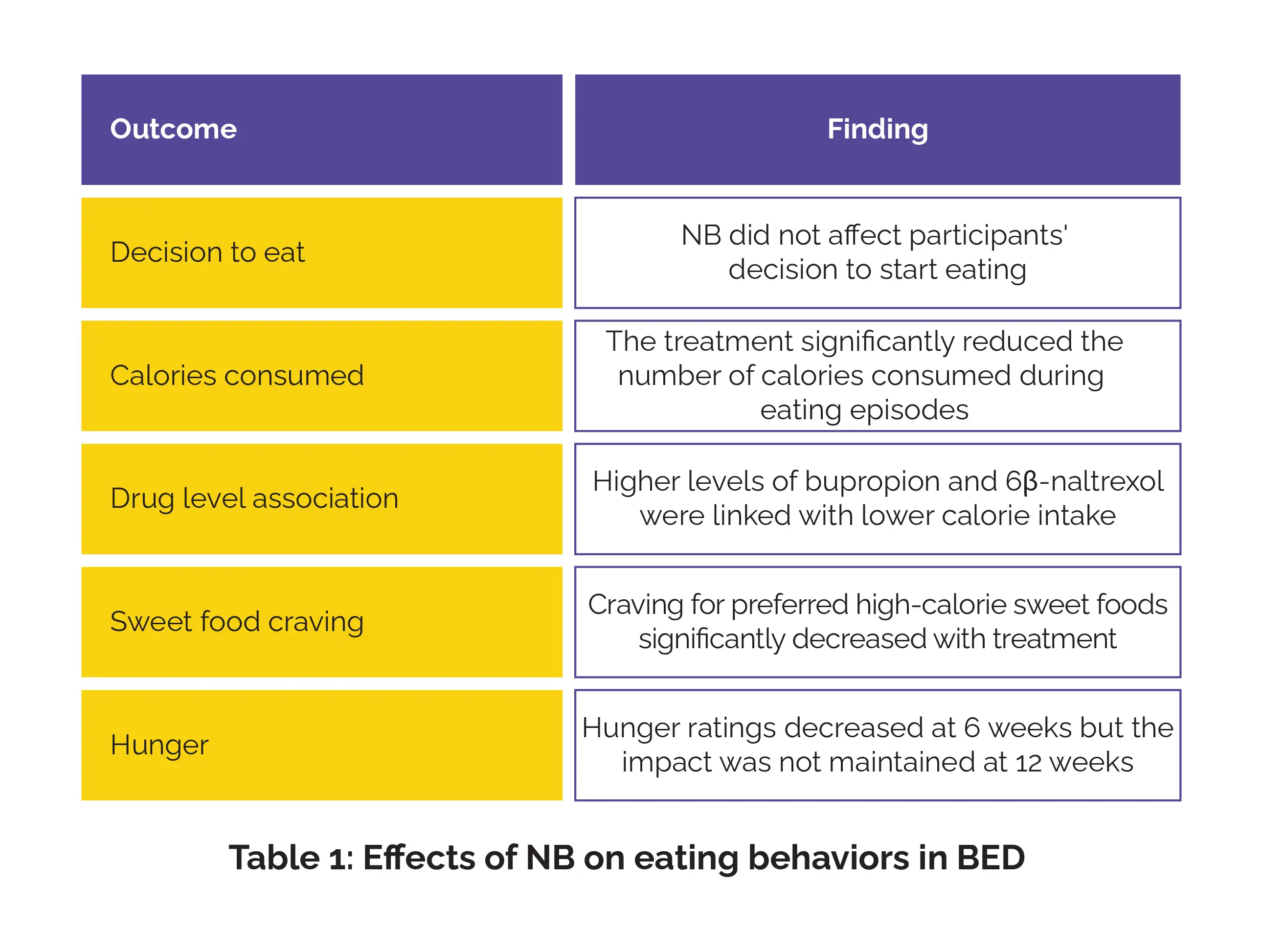
Overall, NB reduced calorie intake, sweet-food craving, and early hunger responses in individuals with BED.
NB reduced food intake but did not affect the decision to start eating in individuals with BED. The findings suggested that the treatment acted through reduced food reward, lower sweet-food craving, and early appetite suppression. These results supported its potential role in binge reduction and weight management.
Drug and Alcohol Dependence Reports
Naltrexone/bupropion for binge-eating disorder: A human laboratory investigation of mechanisms
Sherry A. McKee et al.













Comments (0)