

Categories
Change Password!
Reset Password!



An interpretable AI framework now enables highly accurate, real-time detection of enamel caries, improving early diagnosis and supporting preventive dental care.
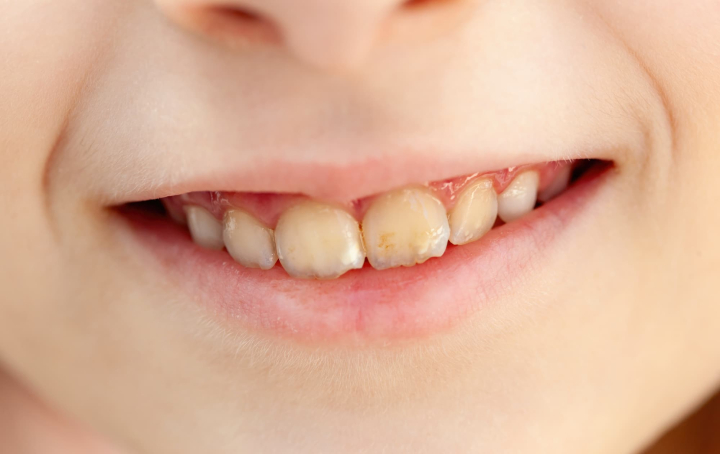
Dental enamel caries remains one of the most widespread oral health conditions globally, where early-stage detection is critical for enabling noninvasive treatment and preventing disease progression. However, conventional diagnostic approaches, including visual examination and radiography, are constrained by variability among clinicians and limited sensitivity in identifying early lesions. Heba Ashi aimed to develop and validate an efficient, interpretable artificial intelligence (AI) framework capable of accurately classifying enamel caries across multiple stages while maintaining clinical transparency and applicability.
The author curated a dataset of 2,000 clinical dental images categorized into:
This dataset was expanded to 12,000 images through systematic preprocessing and augmentation techniques. The following two deep learning architectures were dependently trained using transfer learning:
Their outputs were integrated through an attention-based fusion mechanism to boost classification performance. To ensure interpretability, Gradient-weighted Class Activation Mapping (Grad-CAM) was employed to visualize decision-making regions. Model performance was rigorously evaluated using standard metrics, including accuracy, precision, sensitivity, specificity, F1 score, and receiver operating characteristic (ROC), area under the ROC curve (AUC), along with inference time analysis to assess clinical feasibility.
The proposed AI models demonstrated consistently high diagnostic performance, with the fused framework achieving superior accuracy and reliability for enamel caries classification (Table 1).

The fused model further achieved an F1 score of 96.92% and an ROC AUC of 99.34%, with misclassifications remaining minimal and largely restricted to adjacent disease stages, no critical diagnostic errors observed, and low inference time supporting its suitability for real-time clinical use. The study demonstrated that integrating deep learning with interpretable visualization significantly improved the accuracy and reliability of enamel caries detection.
The framework combined high-performance classification with transparent decision-making. This approach effectively addressed key limitations of conventional diagnostic methods. Its efficiency and precision made it suitable for both clinical practice and community-level screening. It also supported earlier intervention and strengthened preventive care strategies.
European Journal of Dental Education
From Clinic to Community: An Interpretable Artificial Intelligence Framework for Enamel Caries Detection to Support Public Health Dentistry
Heba Ashi et al.











Comments (0)