

Categories
Change Password!
Reset Password!



Small bowel obstruction and no prior abdominal surgery (NPA-SBO) presents a complex clinical condition.
Most patients with small bowel obstruction without prior abdominal surgery are successfully managed with nonoperative treatment, reducing unnecessary surgical interventions.
Small bowel obstruction and no prior abdominal surgery (NPA-SBO) presents a complex clinical condition. The researchers conducted a systematic review and meta-analysis to assess the effectiveness of conservative management in adults with NPS-SBO, and to examine associated outcomes, including complications, recurrence, malignancy, adhesive disease, and unnecessary surgical exploration.
The analysis involved adult patients diagnosed with NPA-SBO. Relevant studies published between 1996 and 2023 were identified through database searches. Successful resolution with conservative treatment was evaluated as the primary outcome. Secondary analyses included rates of complications, recurrence, malignancy-related obstruction, adhesions, and negative laparotomy. Pooled estimates were generated using random-effects statistical models.
Overall, 15 studies comprising 855 patients were incorporated. Most patients with NPA-SBO were successfully managed without surgery. Surgical treatment was linked with a higher complication rate than nonoperative management. Recurrence after conservative treatment was uncommon. Malignancy represented a notable underlying cause, although adhesions were the most frequent etiology. A substantial proportion of patients underwent negative laparotomy, highlighting the diagnostic challenges associated with NPA-SBO (Table 1).
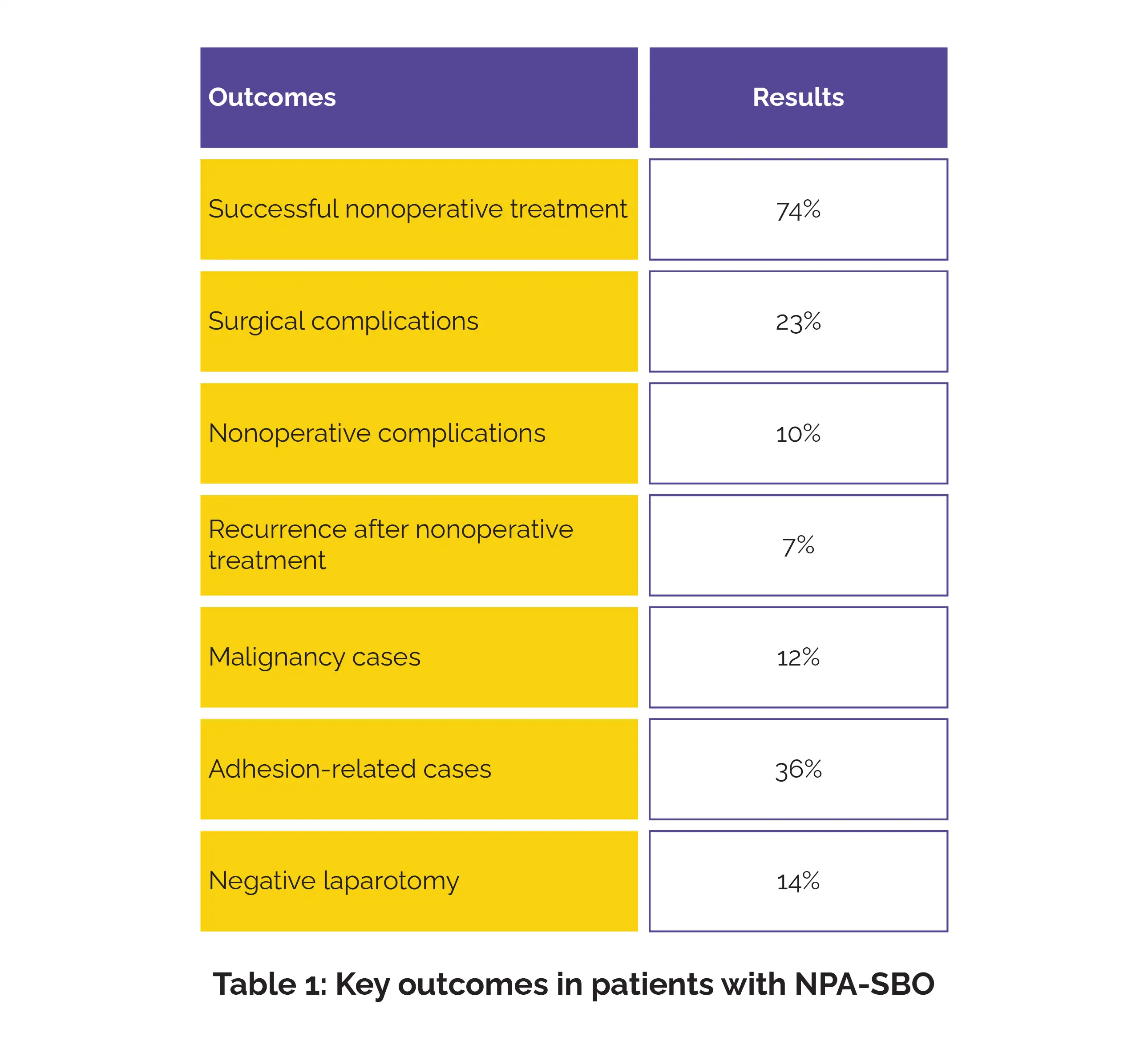
Most patients with NPA-SBO (virgin abdomen) were successfully managed using conservative treatment strategies with relatively low complication and recurrence rates.
Journal of Surgical Research
Outcomes of Small Bowel Obstruction in Patients With No Prior Surgery: A Systematic Review
Kyle D. Klingbeil et al.















Comments (0)