

Categories
Change Password!
Reset Password!


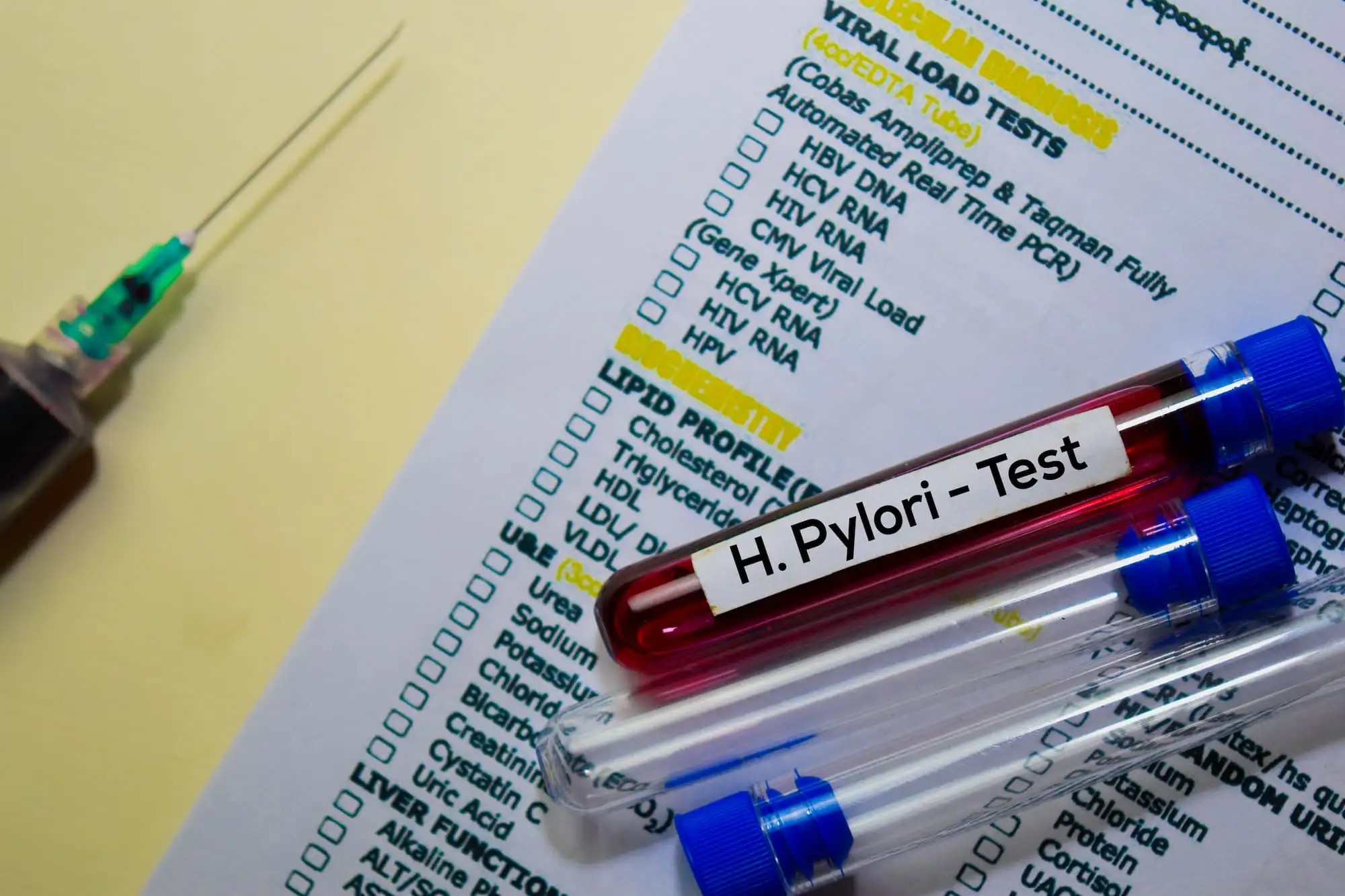
Adding bismuth subcitrate to a condensed 7-day triple therapy matches the high eradication rates and safety profile of the traditional 14-day standard treatment in children and adolescents.
Treating Helicobacter pylori (H. pylori) infection in children may not always require a prolonged antibiotic course. Findings from an open-label randomized controlled trial suggest that a 7-day bismuth-containing regimen can deliver high eradication rates comparable to a conventional 14-day triple-therapy regimen.
The prospective randomized controlled trial enrolled 73 treatment-naïve children and adolescents aged 5–18 years with microbiologically confirmed H. pylori infection. Volunteers were randomly allocated to:
Treatment doses were weight-adjusted. Bismuth subcitrate was administered at 120–240 mg twice daily, while the PPI was given at 20–40 mg twice daily. Amoxicillin was dosed at 500–1000 mg twice daily, and either metronidazole 250–500 mg twice daily or clarithromycin 250–500 mg twice daily was used as per susceptibility testing.
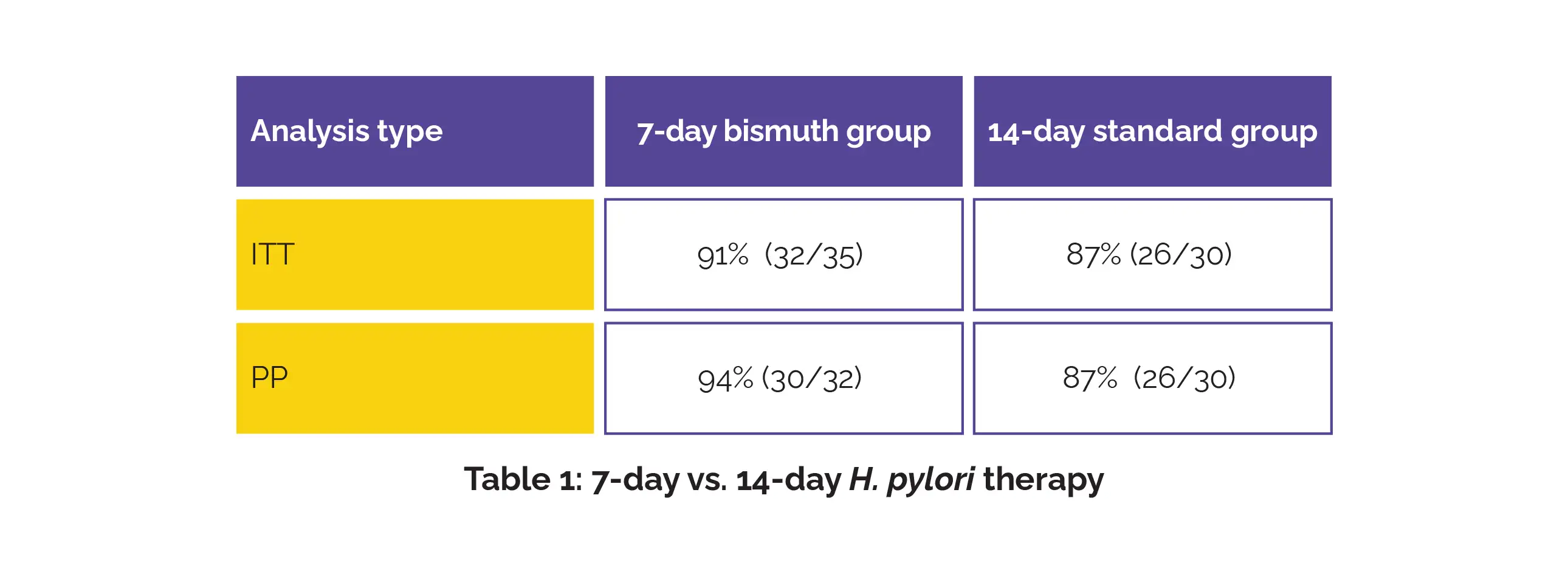
Two months after treatment, eradication was assessed using either a two-step monoclonal stool antigen test or urea breath test. The results were striking! The shorter regimen delivered eradication rates exceeding 90% in the intention-to-treat (ITT) and per-protocol (PP) populations, as depicted in Table 1:
Treatment was generally well-tolerated, with no serious adverse events reported. Most adverse events were mild-to-moderate. A metallic taste occurred considerably more often among children receiving the 14-day standard triple therapy, whereas other adverse events occurred at similar frequencies between the groups.
Thus, shortening treatment schedules to 7 days while incorporating bismuth subcitrate offers a practical, highly valuable alternative for tackling pediatric H. pylori infections. By halving the treatment duration, clinicians can potentially boost patient compliance and minimize side-effect burdens—such as taste disturbances—while maintaining optimal cure rates.
Helicobacter
An Open-Label Randomized Controlled Trial Comparing the Efficacy and Safety of a 7-Day Triple Therapy With Bismuth Versus 14-Day Standard Triple Therapy for Helicobacter pylori Eradication in Children and Adolescents
Anja Šterbenc et al.












Comments (0)