

Categories
Change Password!
Reset Password!



Urticaria presents as short-lived wheals, angioedema, or both. It is termed acute urticaria (AU) when it lasts under 6 weeks and chronic urticaria when it lasts 6 weeks or longer.
While infection-associated urticaria is predominantly self-limiting and resolves within weeks, up to 9.5% of cases persist beyond 6 months, with overall recurrence and chronicity rates ranging from 7% to 30%. Delayed-onset cases following SARS-CoV-2 infection carry a distinct risk for progression to chronic spontaneous urticaria.
Urticaria presents as short-lived wheals, angioedema, or both. It is termed acute urticaria (AU) when it lasts under 6 weeks and chronic urticaria when it lasts 6 weeks or longer. AU is often set off by infections, drugs, or foods, whereas chronic urticaria, especially chronic spontaneous urticaria (CSU), is usually idiopathic or immune-driven.
Viruses are a leading reported cause of AU, particularly in children, with respiratory and gastrointestinal infections implicated most often. The rash typically coincides with or follows the infection and fades within days to weeks, but some patients appear to have longer courses: ongoing symptoms, relapse after a clear spell, or progression to chronic urticaria. The long-term picture remains poorly characterized, since studies differ in design, populations, definitions, and follow-up, and many pool several triggers. Reports of delayed or prolonged urticaria after severe acute respiratory syndrome coronavirus 2 (SARS-CoV-2) infection have heightened interest.
Although previous research identified infections as triggers in 45.2% of pediatric AU cases and reported a link with prolonged symptom duration, it did not investigate subsequent clinical outcomes through long-term follow-up. Similarly, existing reviews have largely concentrated on acute clinical manifestations, diagnostic approaches, and individual infectious agents, particularly SARS-CoV-2, rather than the long-term course of infection-associated urticaria. Consequently, the long-term outcomes in both pediatric and adult populations remain insufficiently understood. To the authors' knowledge, no previous systematic review has specifically synthesized the evidence addressing this question.
(a) Study design
This systematic review followed the 2020 Preferred Reporting Items for Systematic Reviews and Meta-Analyses (PRISMA) guidelines.
(b) Literature search
PubMed, Embase, CINAHL, Scopus, and Web of Science were searched from inception to 17 March 2026, without search-stage limits (language was checked at screening) and without grey literature. The search strings combined Medical Subject Headings (MeSH terms), database-indexed vocabulary, and free-text keywords targeting infection-associated urticaria, viral triggers, and long-term prognosis (persistence, chronicity, and recurrence).
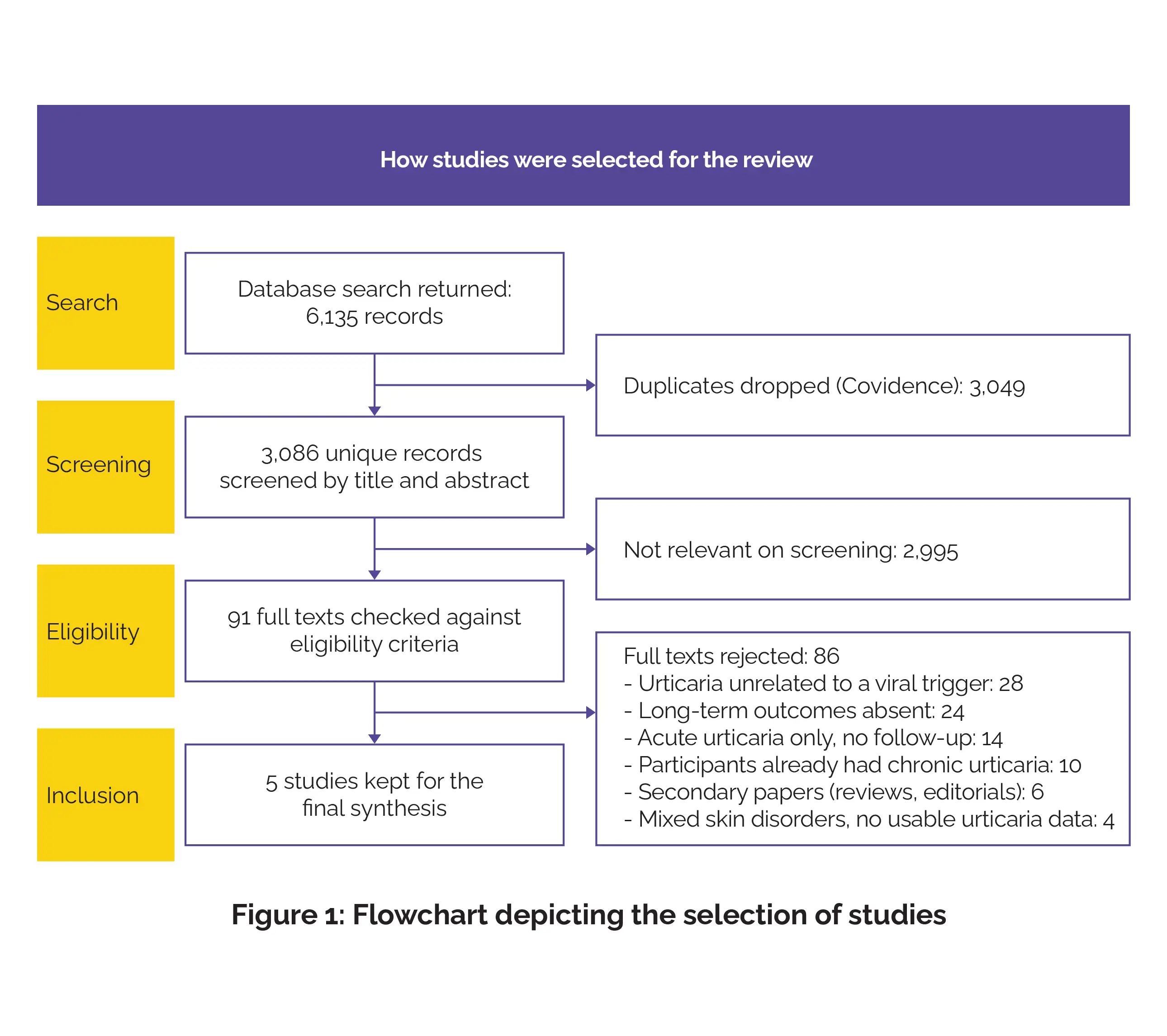
Reference lists and citations of included studies and relevant reviews were also checked. After EndNote de-duplication, two reviewers independently screened titles and abstracts in Covidence, and full texts were assessed against the criteria; disagreements went to discussion or a third reviewer.
(c) Inclusion criteria
(d) Exclusion criteria
(e) Data extraction
Two reviewers independently extracted author, year, country, design, sample size, population, pathogen, infection diagnosis, urticaria type, symptom duration, follow-up, and outcomes on a standard form, resolving disagreements by consensus or a third reviewer; unclear data were interpreted from study descriptions and cross-checked.
(f) Study outcomes
Long-term outcomes meant anything beyond the acute phase, using established clinical and guideline definitions:
Study-specific definitions were retained and mapped to these categories, and mixed-etiology results were read against reported or dominant triggers.
(g) Risk of bias and quality assessment
Two reviewers independently applied the Newcastle–Ottawa Scale (NOS), which scores participant selection, group comparability, and outcome assessment; totals of 7–9 indicated low risk of bias, 4–6 moderate, and 0–3 high.
(h) Data synthesis
Heterogeneity was judged qualitatively, and because pooling would likely mislead, no meta-analysis was done. Results were summarized narratively by age group (children vs. adults) and virus where possible, as evidence on infection-associated urticaria rather than confirmed post-viral urticaria.
(a) Study selection and characteristics
b) Clinical presentation and infectious triggers
Urticaria generally developed during the acute phase of infection, occurring within days before or after infection-related symptoms. The predominant presentation was pruritic wheals, with or without angioedema.
(c) Persistence and progression to chronic urticaria
Most infection-associated urticaria cases resolved within weeks to months. However, prolonged symptoms were documented in a subset of patients.
(d) Recurrence and chronicity
Infection-associated urticaria recurred or progressed to chronic disease in a subset of patients, highlighting variability in its long-term clinical course (Table 1).
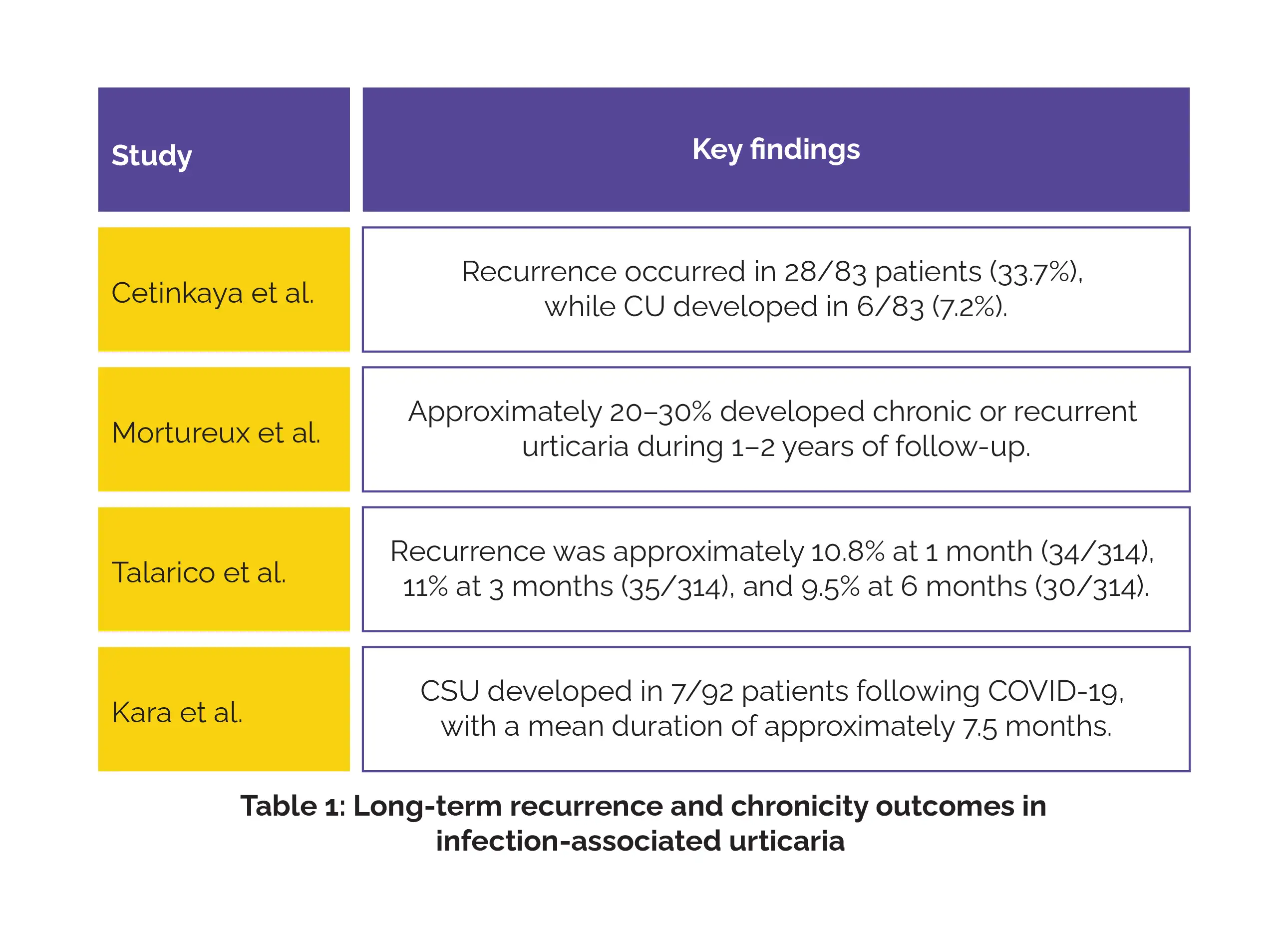
Importantly, recurrence and chronicity estimates from several studies were derived from mixed-etiology cohorts, limiting their direct attribution to viral infections.
(e) Factors associated with prolonged disease
(f) Risk of bias
All five studies illustrated moderate risk of bias.
This systematic review offers a critical synthesis of the long-term clinical trajectory of infection-associated urticaria, challenging the traditional view that post-viral cutaneous eruptions are strictly self-limiting. While the vast majority of subjects experience rapid symptom resolution within weeks, the identification of a persistence rate up to 9.5% beyond 6 months—alongside overall recurrence and chronicity rates between 7% and 30%—underscores that a clinically meaningful subgroup develops prolonged dermatological disease. These findings emphasize the need to re-evaluate clinical follow-up timelines for those presenting with post-viral urticarial flares.
A particularly noteworthy finding is the distinct clinical phenotype linked with SARS-CoV-2 infection, where delayed-onset urticaria was consistently linked to an increased risk of progression towards CSU. This observed pattern points toward potential post-viral immunological mechanisms, such as sustained immune dysregulation, persistent low-grade inflammation, or cross-reactive autoimmune responses triggered by viral antigens. Recognizing these delayed-onset risk patterns is fundamental for clinicians evaluating post-infectious cutaneous sequelae in both pediatric and adult populations.
Infection-associated urticaria is generally self-limiting. However, clinicians must recognize that a subset of patients may develop persistent, recurrent, or chronic symptoms. Delayed-onset urticaria, particularly following SARS-CoV-2 infection, may signal a greater likelihood of progression to CSU and warrants consideration of closer follow-up.
Although reassurance is appropriate for most pediatric patients, recurrence and chronicity must be discussed with caregivers. Careful differentiation between infection-induced and drug-induced urticaria, alongside individualized follow-up, may help improve clinical assessment and patient counselling.
Frontiers in Allergy
Persistence, chronicity, and recurrence of infection-associated urticaria following viral infections in children and adults: a systematic review
Saad Alhumaid et al.











Comments (0)