

Categories
Change Password!
Reset Password!


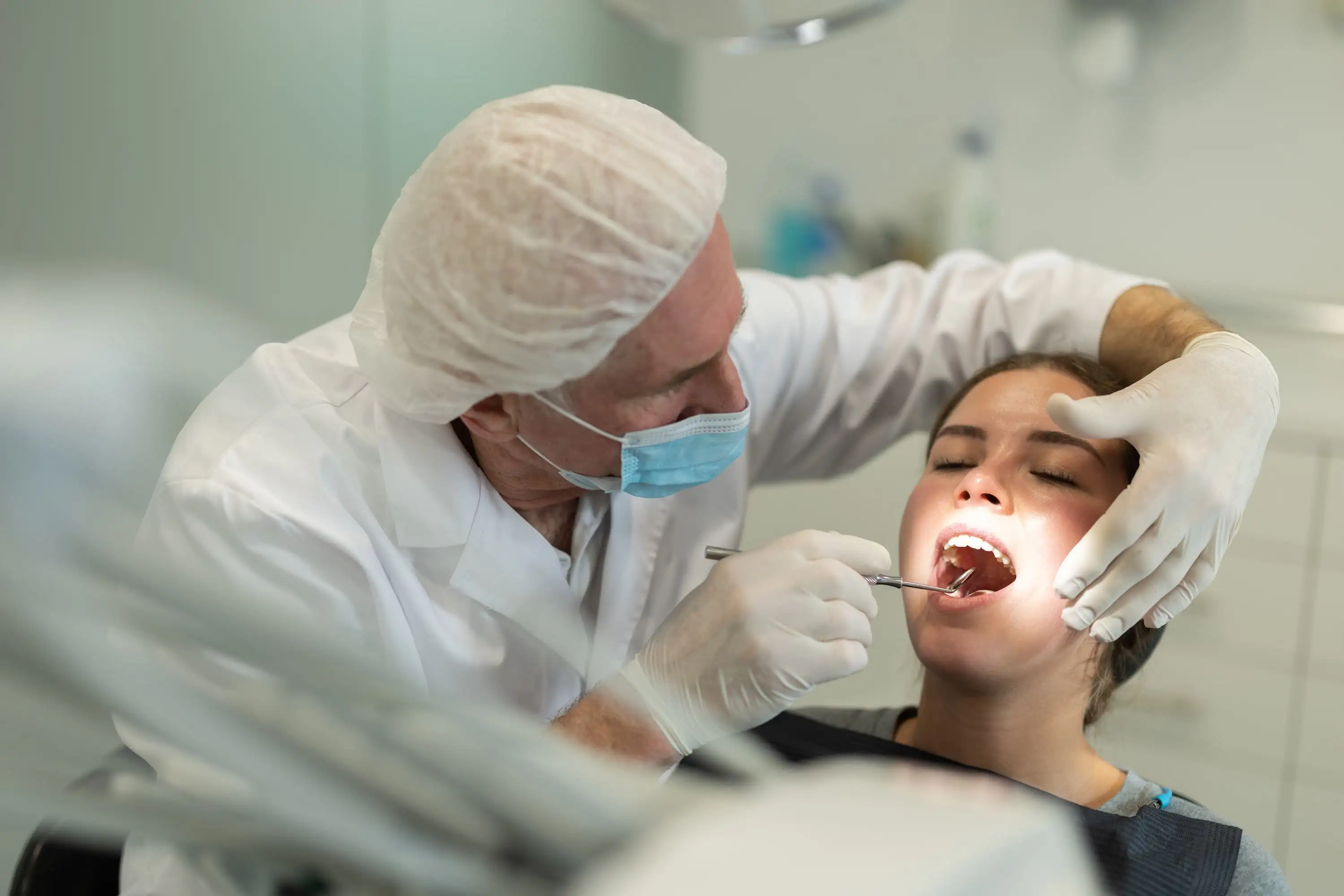
Periodontal intra-bony defects are a challenging manifestation of periodontitis that can compromise tooth-supporting structures and require regenerative periodontal therapy.
Locally applied insulin and HA, combined with an absorbable collagen sponge, show favorable clinical and radiographic outcomes in periodontal intra-bony defects, with HA showing greater radiographic defect-depth reduction and insulin providing better early postoperative pain control.
Periodontal intra-bony defects are a challenging manifestation of periodontitis that can compromise tooth-supporting structures and require regenerative periodontal therapy. Attaining predictable tissue healing and bone regeneration remains a fundamental treatment goal. Absorbable collagen sponge (ACS) yields a biocompatible scaffold that can support space maintenance and local delivery of therapeutic agents.
Hyaluronic acid (HA) has established applications in periodontal regeneration, while insulin has shown potential to foster wound healing and bone repair. Despite these promising powers, clinical evidence supporting locally delivered insulin for periodontal regeneration remains limited. Researchers therefore investigated whether insulin-loaded collagen sponge could improve periodontal healing when compared with HA-loaded collagen sponge and collagen sponge alone.
A pilot randomized controlled trial evaluated 21 periodontitis patients with intra-bony defects randomly allocated into three groups (n = 7 each):
The key endpoint ascertained was clinical attachment level (CAL) at baseline and 6 months after surgery. Secondary endpoints included probing pocket depth (PPD), postoperative pain checked via visual analog scale (VAS) at 24 and 48 hours, and radiographic parameters including bone density and radiographic linear defect depth (RLDD).
PPD and CAL improved substantially over time across all cohorts at the 6-month evaluation, with no statistically significant differences among the groups. Regarding patient-reported outcomes, VAS pain scores were lower in Group I and Group II when compared to Group III at 24 hours and 48 hours, with Group I illustrating the lowest overall scores. RLDD dropped substantially across all groups, with Group II exhibiting a greater reduction when compared to Group I and Group III at 6 months. Furthermore, bone density noticeably improved over time within Group I and Group II, whereas Group III exhibited no pivotal change, though overall intergroup variance in bone density was non-significant.
The SFA coupled with either topical insulin or HA offered substantial clinical attachment gains, pocket depth reductions, and radiographic bone fill in periodontal intra-bony defects. Local insulin functions as a viable, highly cost-effective, and patient-tolerable regenerative biomaterial, supporting the requisition for larger, long-term trials.
Clinical Oral Investigations
Clinical and radiographic evaluation of local application of insulin versus hyaluronic acid using resorbable collagen sponge in management of periodontal intra-bony defects: a pilot randomized controlled clinical trial
Naglaa El-Wakeel et al.









Comments (0)