

Категории
Сменить пароль!
Сброс пароля!



Парацетамол широко используется для купирования острой и послеоперационной боли, однако оптимальная однократная пероральная доза до сих пор является предметом дискуссий.
Пероральный прием парацетамола в дозе 1000 мг обеспечивает большее облегчение острой и послеоперационной боли, чем 500 мг и 650 мг, без увеличения нежелательных явлений.
Парацетамол широко используется для купирования острой и послеоперационной боли, однако оптимальная однократная пероральная доза до сих пор является предметом дискуссий. Различия между дозами 500 мг, 650 мг и 1000 мг могут влиять на степень обезболивания без эквивалентных изменений в безопасности. Оценка взаимосвязи доза-ответ поэтому является фундаментальной для оптимизации анальгетической эффективности при поддержании соответствующего баланса польза-риск.
Исследование было направлено на систематическую оценку эффективности и безопасности различных пероральных доз парацетамола у взрослых с острой или послеоперационной болью, с особым акцентом на взаимосвязи доза-ответ и общий баланс польза-риск.
Исследователи провели систематический анализ данных, полученных в результате исследований, опубликованных на английском языке в период с 2000 по 2026 год. Соответствующие доказательства были идентифицированы посредством поиска в базах данных PubMed/MEDLINE, Google Scholar, Cochrane Library, ScienceDirect и ResearchGate. Подходящие публикации включали рандомизированные контролируемые исследования (РКИ), систематические обзоры и метаанализы, оценивающие эффективность перорального приема парацетамола в дозах 500 мг, 650 мг или 1000 мг.
Были извлечены данные о ≥50% облегчении боли, полном обезболивании на протяжении 4-6 часов (TOTPAR), суммарной разнице интенсивности боли (SPID), нежелательных явлениях и маркерах печёночной безопасности. Взаимосвязь доза-ответ изучалась с использованием описательной модели Emax/Hill. На основании доступных объединённых доказательств были впоследствии получены ориентировочные значения NNT (число пациентов, которых необходимо пролечить), NNH (число пациентов, которым будет нанесён вред) и общие оценки пользы и риска.
В доказательную базу вошли четыре рандомизированных контролируемых исследования и один систематический обзор/метаанализ. Было отмечено связанное с дозой увеличение облегчения боли при применении парацетамола, причём доза 1000 мг показала наиболее сильный анальгетический эффект (таблица 1).
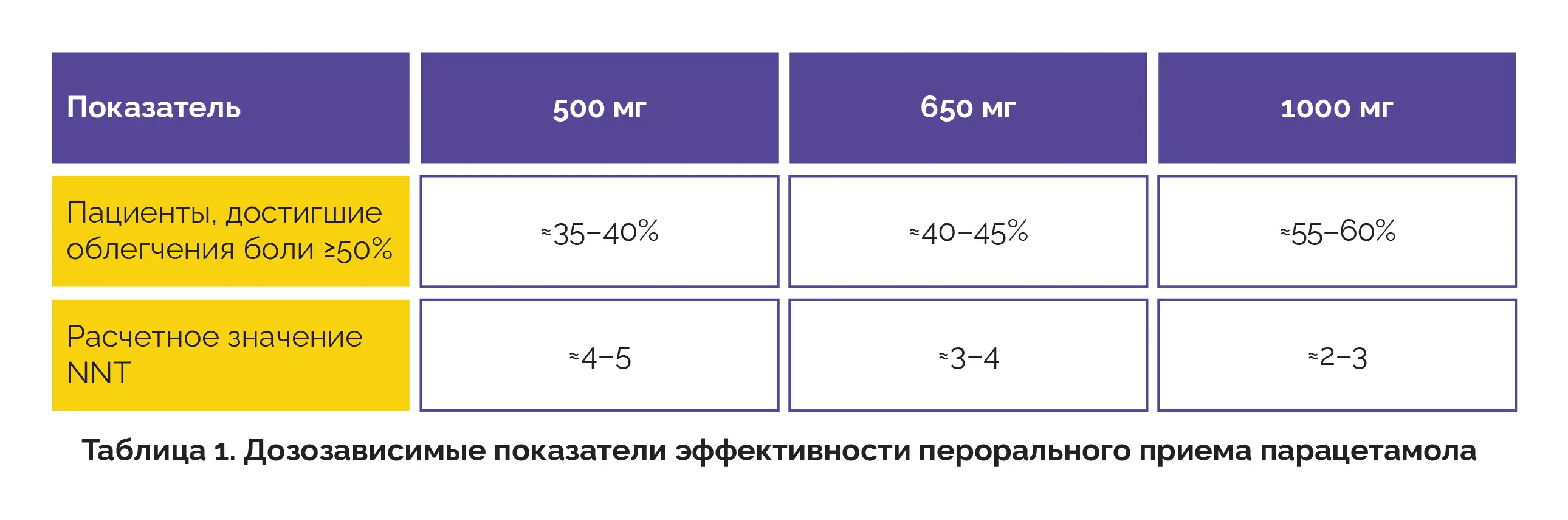
Нежелательные явления оставались относительно редкими и были в целом сопоставимы между дозами, возникая примерно у 6–9% участников. Важно отметить, что полученные данные не выявили явного увеличения гепатотоксичности при однократном или кратковременном применении. Доза 500 мг оказывала эффект, близкий к ED50 (50% эффективной дозы), 650 мг приближалась к верхней части кривой доза-эффект, а 1000 мг была близка к прогнозируемому максимальному анальгетическому эффекту.
Среди оценённых доз пероральный прием парацетамола в дозе 1000 мг обеспечивал наибольшее облегчение боли без увеличения краткосрочных нежелательных явлений и имел наиболее благоприятное общее соотношение польза-риск.
International Journal of Medical and Pharmaceutical Research
Dose–Response Analysis and Benefit–Risk Assessment of Paracetamol (500 mg, 650 mg, and 1000 mg) for Acute and Postoperative Pain: A Systematic Evidence Synthesis with Emax Modeling
Aljouri Alzahrani и соавт.














Комментарии (0)