

Категории
Сменить пароль!
Сброс пароля!


У пожилых пациентов переломы шейки бедра являются распространенным явлением и связаны с развитием осложнений и со смертностью.
Внутривенное введение кеторолака в периоперационном периоде ассоциируется со снижением 2-летней смертности без повышения 90-дневной летальности или 2-летних хирургических осложнений после хирургического лечения перелома шейки бедра у пожилых пациентов.
У пожилых пациентов переломы шейки бедра являются распространенным явлением и связаны с развитием осложнений и со смертностью. Эффективный контроль боли имеет решающее значение для ранней мобилизации и восстановления, тогда как стратегии со снижением потребности в опиоидах могут помочь минимизировать связанные с опиоидами нежелательные эффекты.
Кеторолак, нестероидный противовоспалительный препарат (НПВП), часто используется как часть мультимодальной анальгезии. Однако опасения по поводу повреждения почек, кровотечения и нарушений заживления перелома ограничили его применение у некоторых пациентов. Целью данного ретроспективного когортного исследования было определение связи между применением кеторолака в периоперационном периоде и краткосрочными и долгосрочными результатами после операции по поводу перелома шейки бедра.
Сеть TriNetX Research Network использовалась для идентификации взрослых в возрасте ≥65 лет, перенёсших фиксацию перелома или гемиартропластику по поводу перелома шейки бедра. Пациенты с патологическими или открытыми переломами, двусторонними или множественными процедурами или абсолютными противопоказаниями к применению кеторолака были исключены. Периоперационным воздействием считали внутривенное введение кеторолака в течение 48 часов после операции.
После применения 48-часовой послеоперационной точки отсчёта участники были сопоставлены методом оценки склонности с учётом демографических характеристик, типа хирургического вмешательства и индекса коморбидности Elixhauser. В окончательную когорту сопоставленных пациентов вошли 11 450 человек по 5 725 человек в каждой группе. Ключевыми конечными точками были 90-дневная смертность и медицинские осложнения. Вторичными конечными точками были 2-летняя смертность и хирургические осложнения.
В целом, 90-дневная смертность и медицинские осложнения были сопоставимы между группами. Острая почечная недостаточность была менее частой при применении кеторолака. Через 2 года показатели хирургических осложнений оставались низкими и были в целом сходными между группами (таблица 1).
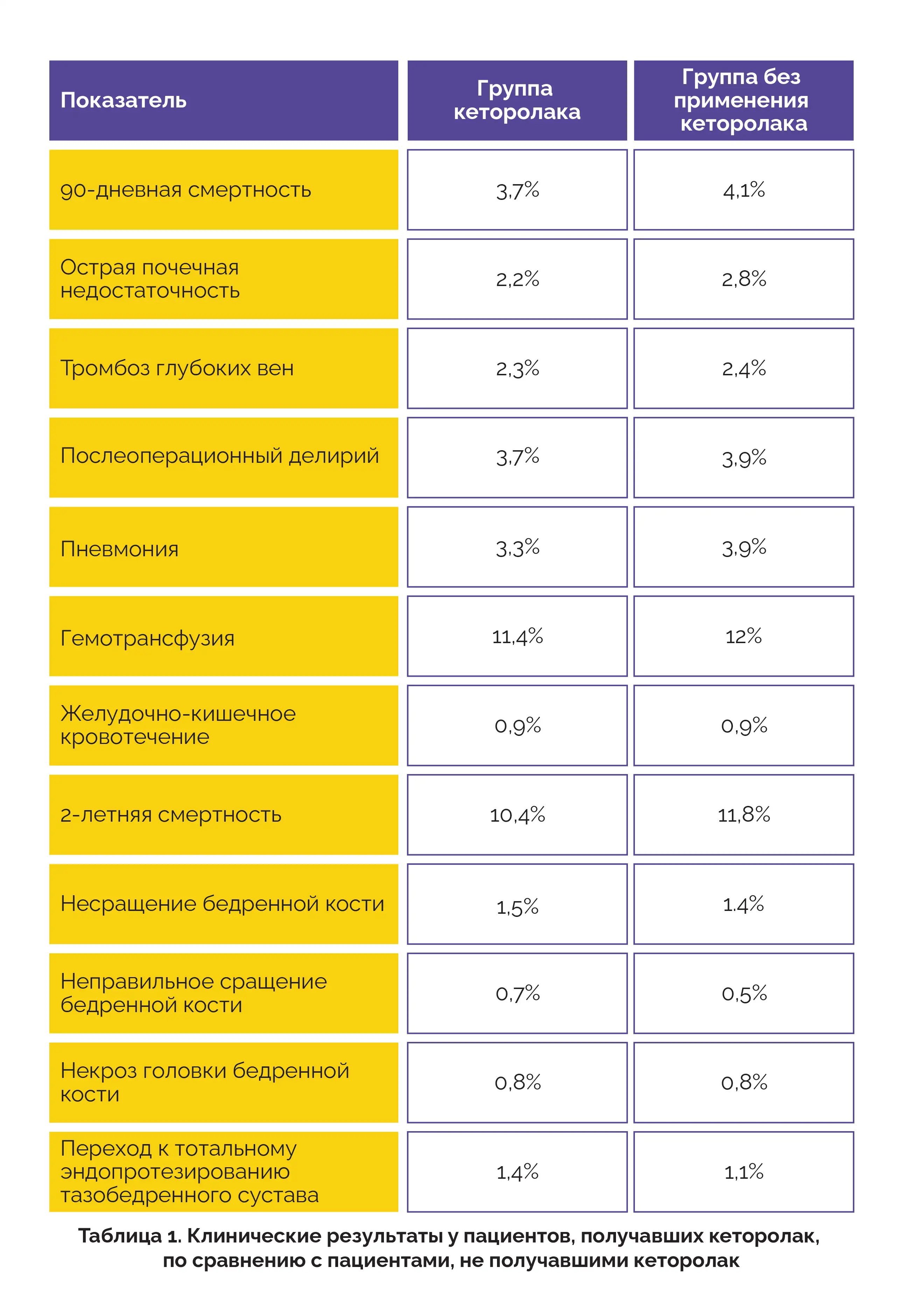
Периоперационное внутривенное введение кеторолака не было связано с более высокой 90-дневной смертностью, серьезными медицинскими осложнениями или хирургическими осложнениями в течение 2 лет после операции по поводу перелома шейки бедра у пожилых людей. Выявленная связь с более низкой двухлетней смертностью обнадеживает, но не доказывает причинно-следственную связь. В целом, полученные результаты подтверждают целесообразность тщательного отбора пациентов для периоперационного применения кеторолака в рамках мультимодальной анальгезии с целью снижения потребности в опиоидах. При этом необходимы проспективные исследования для подтверждения его долгосрочной безопасности и преимуществ.
Journal of the American Academy of Orthopaedic Surgeons
Perioperative Ketorolac Is Associated With Lower Mortality After Surgically Treated Hip Fracture in Older Adults
Stephen J Perle и соавт.












Комментарии (0)