

Categories
Change Password!
Reset Password!



Atopic dermatitis (AD) is marked by eczematous lesions, severe pruritus, and skin dryness that can hamper quality of life.
Upadacitinib demonstrates a stable long-term safety profile in moderate-to-severe atopic dermatitis over six years, with no new or unexpected safety signals observed.
Atopic dermatitis (AD) is marked by eczematous lesions, severe pruritus, and skin dryness that can hamper quality of life. Upadacitinib, an oral selective Janus kinase 1 (JAK1) inhibitor, is approved for moderate-to-severe AD in adolescents and adults. Given the chronic nature of AD and the requirement for prolonged therapy, evaluating the long-term safety of upadacitinib is important. This assessment aimed to fill this gap.
Researchers conducted a pooled long-term safety analysis using data from three global phase 3 clinical trials: MeasureUp 1, MeasureUp 2, and ADUp. The analysis incorporated adolescent and adult patients aged 12–75 years who received a minimum of one dose of upadacitinib 15 mg (UPA15) or 30 mg (UPA30). Safety outcomes examined over 6 years included treatment-emergent adverse events (TEAEs), serious adverse events, and adverse events of special interest.
Serious adverse event rates were generally the same between the two dosing groups. The most commonly reported adverse event (excluding COVID-19) was nasopharyngitis in both groups. Serious infections and most adverse events of special interest also occurred at comparable rates between treatments.
Dose-dependent differences were noted for certain events, including herpes zoster, hepatic disorders, neutropenia, and creatine phosphokinase elevations. Cardiovascular events and venous thromboembolic events were rare and comparable across both groups. Malignancy rates, including lymphoma, were low, and deaths related to TEASs were uncommon in both groups (Table 1).
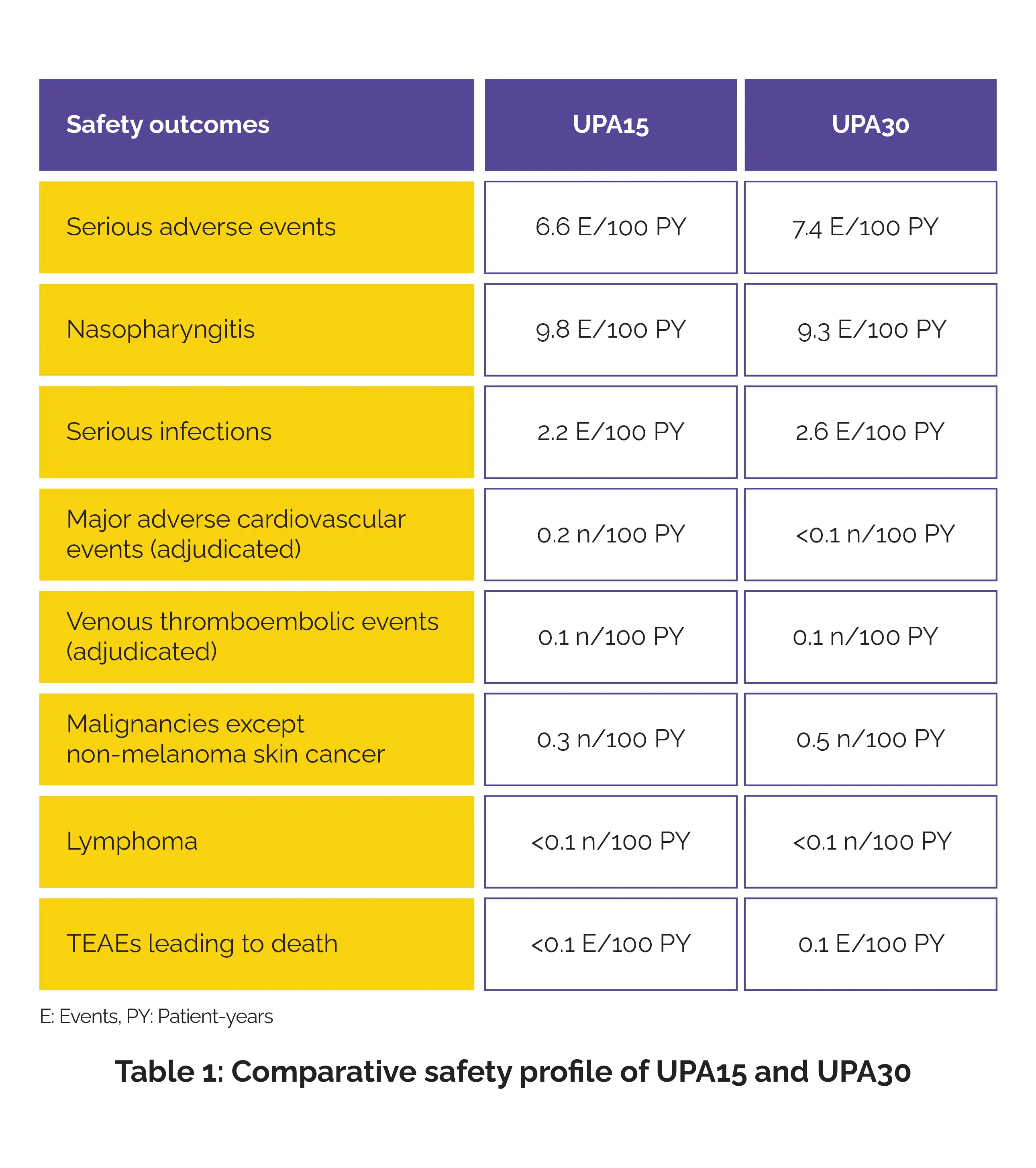
Upadacitinib maintained a stable long-term safety profile in patients with moderate-to-severe AD over a 6-year period. No novel clinically significant safety signals emerged, and rates of serious adverse events, cardiovascular events, thromboembolic events, malignancies, and deaths remained low with both 15 mg and 30 mg doses.
Journal of the European Academy of Dermatology and Venereology
Safety of upadacitinib in atopic dermatitis in randomized clinical trials across 6 years
Christopher G Bunick et al.












Comments (0)