

Categories
Change Password!
Reset Password!



Adding biomechanics-based core muscle training to pelvic floor muscle training improves continence, pelvic floor strength, and quality of life in women with postpartum stress urinary incontinence.
Postpartum stress urinary incontinence (SUI) remains a common pelvic floor complication that develops after pregnancy and childbirth due to neuromuscular and pelvic support damage. The condition frequently affects daily activities, emotional well-being, and overall quality of life (QoL) in postpartum women. Conventional pelvic floor muscle training (PFMT) is widely used, yet additional rehabilitation strategies continue to be explored to enhance treatment outcomes.
A retrospective study evaluated whether integrating biomechanics-based core muscle training with standard PFMT improved urinary continence, pelvic floor muscle strength, and patient-reported QoL in women experiencing postpartum SUI. A group of researchers analyzed 178 women diagnosed with postpartum SUI. Volunteers were categorized according to rehabilitation strategy into:
Primary outcome measures included changes in the 1-hour pad test and scores from the International Consultation on Incontinence Questionnaire-Urinary Incontinence Short Form (ICIQ-UI SF). Secondary assessments focused on pelvic floor muscle strength using the modified Oxford scale, along with treatment safety evaluation. Statistical analyses were carried out via chi-square testing and paired and independent-sample t-tests. Women who underwent biomechanics-based core rehabilitation achieved better continence outcomes than those treated with standard PFMT alone (Table 1).
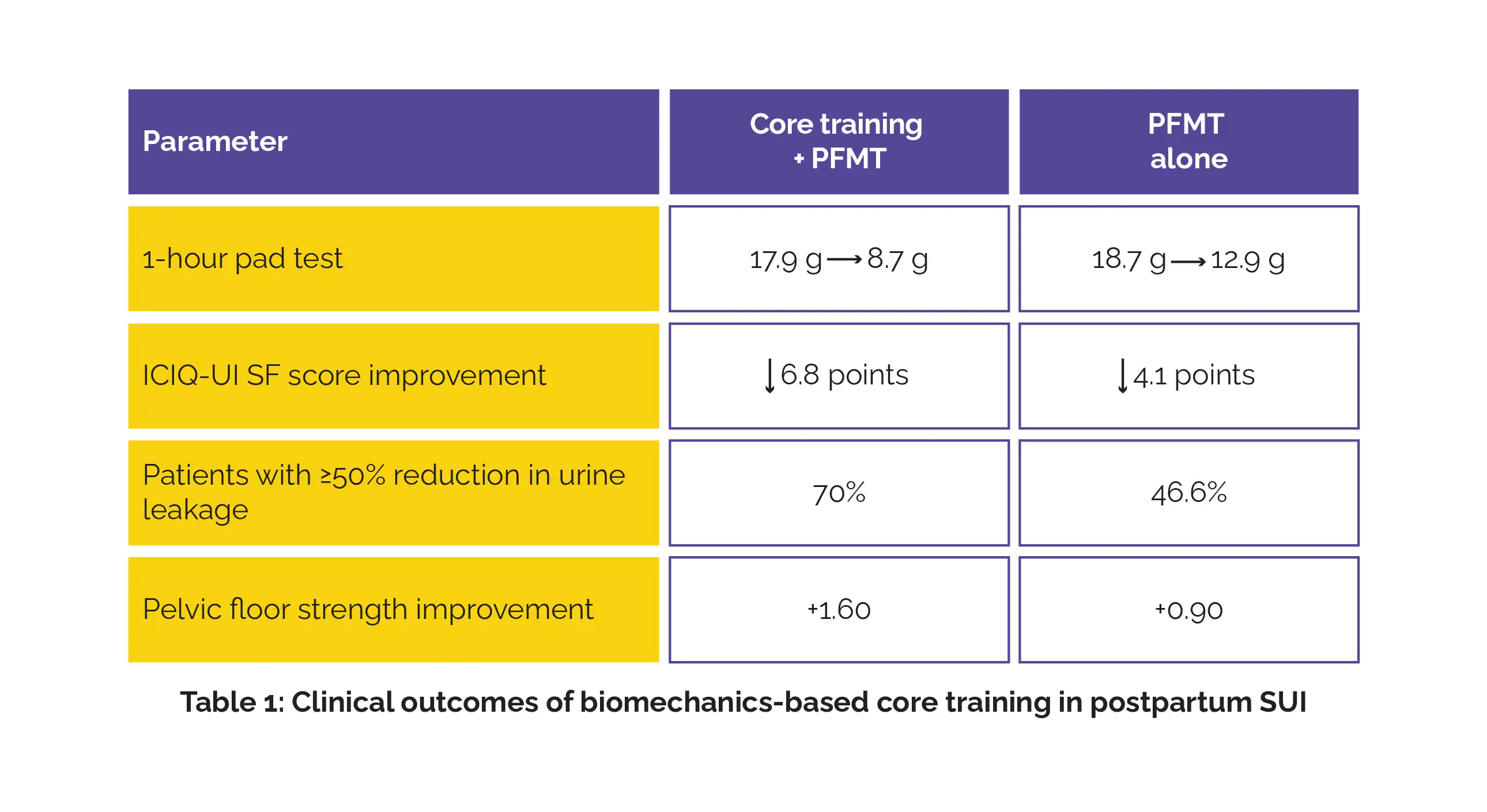
Patients receiving biomechanics-based core rehabilitation illustrated greater improvement in urinary continence, symptom severity, and pelvic floor muscle strength when compared with conventional pelvic floor training alone, with no serious adverse events.
To sum up, biomechanics-based core muscle rehabilitation served as a valuable adjunct to standard PFMT for postpartum SUI. The combined approach enhanced continence outcomes, strengthened pelvic floor function, and improved patient quality of life without compromising safety.
Medicine
Efficacy of biomechanics-based core muscle training in patients with postpartum stress urinary incontinence
Xiaodan Yang et al.










Comments (0)