

Categories
Change Password!
Reset Password!



Preventive migraine treatment aims to reduce attack frequency and improve day-to-day functioning, but response to a single preventive agent can vary considerably.
Combination preventive therapy delivers a greater reduction in monthly headache days and better treatment adherence than nortriptyline monotherapy in episodic migraine.
Preventive migraine treatment aims to reduce attack frequency and improve day-to-day functioning, but response to a single preventive agent can vary considerably. Combining established preventive medicines with complementary mechanisms offers another therapeutic strategy when headache control remains inadequate. Hence, the study compared nortriptyline monotherapy with nortriptyline-based dual and triple therapy for headache reduction, treatment adherence, tolerability, and patient satisfaction in episodic migraine (EM).
This single-centre retrospective study included 252 patients with EM. Participants received nortriptyline alone (n=45), nortriptyline + flunarizine (n=84), or nortriptyline + flunarizine + tizanidine (n=123). Changes in monthly headache frequency were evaluated over 4 months. Treatment adherence, adverse effects, and patient satisfaction were also assessed.
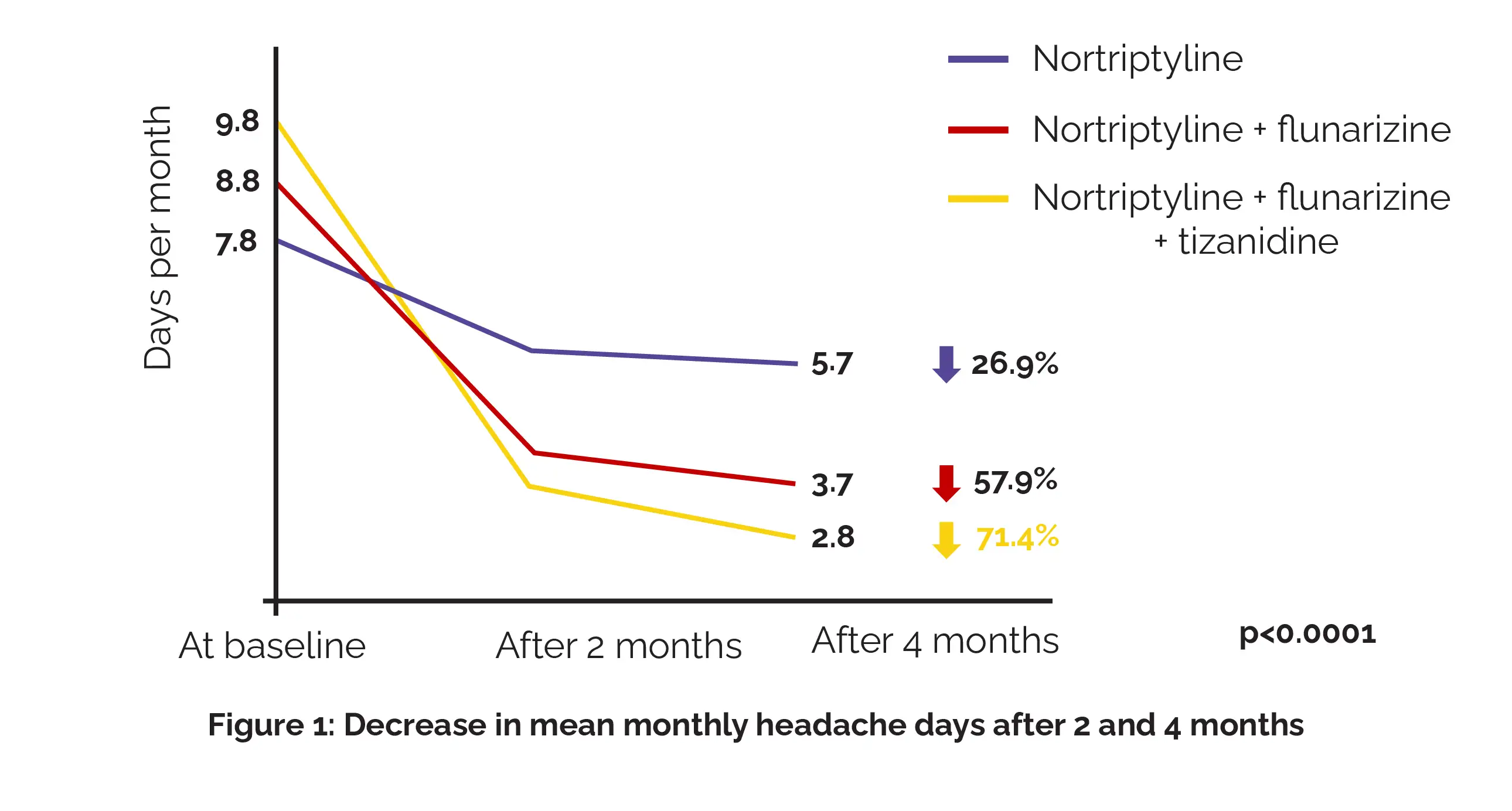
Headache frequency declined across all treatment regimens, with the greatest reduction observed with triple therapy (Figure 1).
Treatment adherence was higher among those receiving combination therapy than among those receiving monotherapy (approximately 75% vs 55.6%). Adverse effects were noted in 25% of patients, with most described as mild. More than 75% of patients reported medium-to-high satisfaction with treatment.
Nortriptyline-based combination regimens were linked with greater reductions in headache frequency and better adherence than nortriptyline alone. The findings supported combination preventive therapy as a practical option when monotherapy did not provide sufficient control, with overall tolerability and patient satisfaction remaining favourable.
Cephalalgia Reports
Monotherapy versus combination therapy in the prophylaxis of episodic migraine: A retrospective study
Abouch Valenty Krymchantowski et al.














Comments (0)