

Categories
Change Password!
Reset Password!



Type 2 diabetes (T2D) sufferers, particularly those suffering from atherosclerotic cardiovascular disease (ASCVD) and/or chronic kidney disease (CKD), remain at elevated cardiovascular (CV) risk.
Oral semaglutide improves multiple cardiometabolic risk factors, with benefits emerging early and persisting during long-term treatment.
Type 2 diabetes (T2D) sufferers, particularly those suffering from atherosclerotic cardiovascular disease (ASCVD) and/or chronic kidney disease (CKD), remain at elevated cardiovascular (CV) risk. Oral semaglutide has demonstrated CV benefits in this population, but its long-term effects on established CV risk factors remain less clear. Hence, the study investigated whether orally administered semaglutide was linked with changes in established ASCVD risk factors compared with placebo.
This post hoc secondary analysis used intention-to-treat data from the double-blind, multicenter SOUL randomized clinical trial. Adults with T2D and ASCVD and/or CKD receiving standard of care were randomly allocated 1:1 to get once-daily oral semaglutide up to 14 mg or placebo. Participants were followed for a mean of 47.5 months. The key analyses assessed estimated treatment differences (ETDs) for blood pressure (BP), glycated hemoglobin (HbA1c), and body weight. Estimated treatment ratios (ETRs) were used for high-sensitivityC-reactive protein (hsCRP) and plasma lipid parameters.
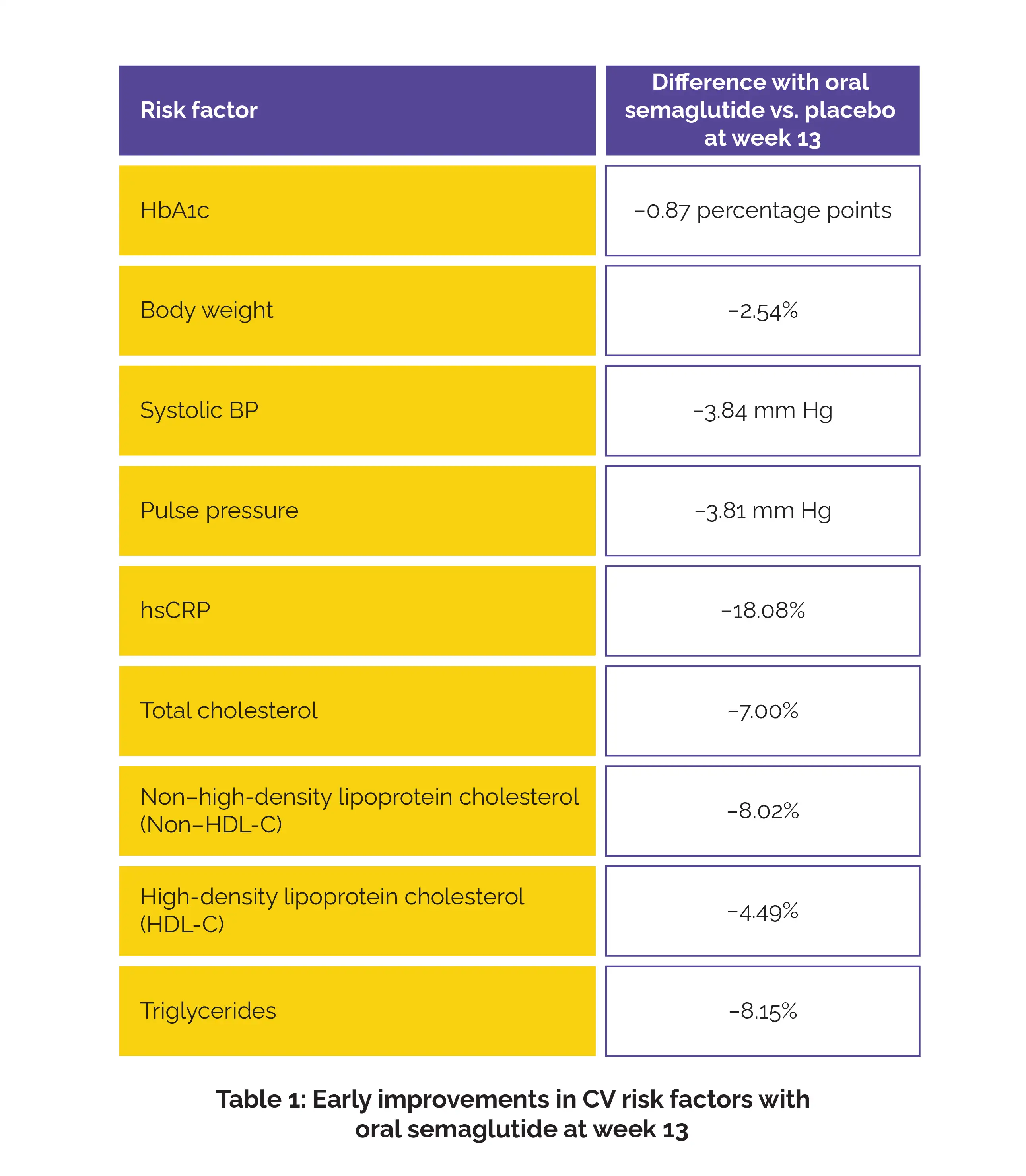
Among 9,650 randomized participants, 9,495 (98.4%) completed the trial. Oral semaglutide was associated with early improvements by week 13 across several CV risk factors compared with placebo (Table 1):
Body weight declined gradually in both treatment groups, but the reduction remained greater with oral semaglutide. By week 156, oral semaglutide continued to exhibit favorable differences versus placebo (Table 2):
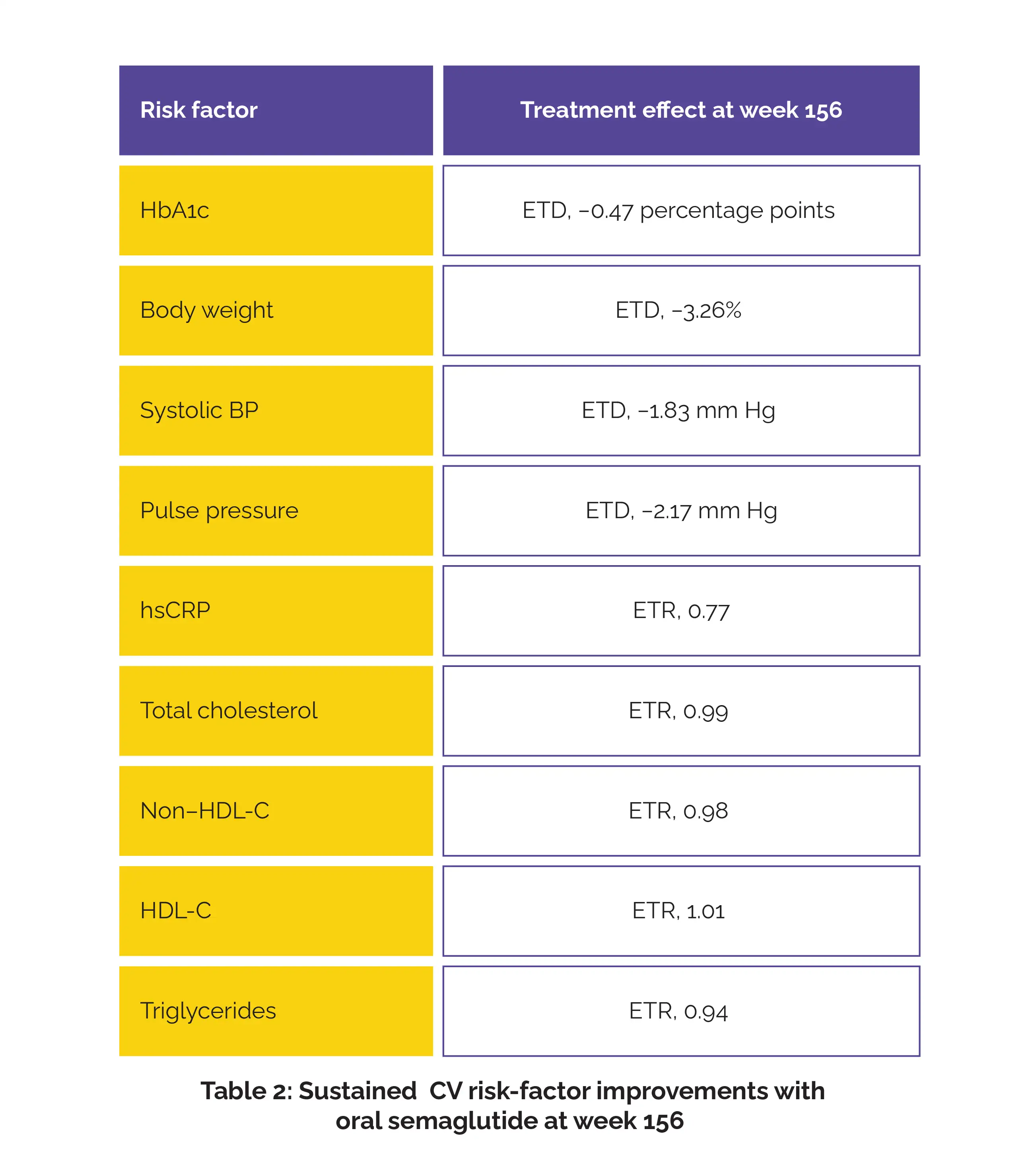
No pivotal treatment differences were noted for low-density lipoprotein cholesterol (LDL-C) or diastolic BP.
Orally administered semaglutide was linked with favorable changes in numerous ASCVD risk factors among high-risk adults with T2D and ASCVD and/or CKD receiving standard of care. The findings indicated that its effects extended beyond glycemic control to include body weight, BP, inflammation, and several lipid parameters.
JAMA Cardiology
Oral Semaglutide and Change in Cardiovascular Risk Factors in High-Risk Type 2 Diabetes A Post Hoc Secondary Analysis of the SOUL Randomized Clinical Trial
Sharon L Mulvagh et al.















Comments (0)