

Categories
Change Password!
Reset Password!



Pregnancy in women with epilepsy can considerably alter seizure control, antiepileptic drug (AED) pharmacokinetics, and overall maternal–fetal health.
Pregnancy increases seizure frequency in women with epilepsy, primarily due to sub-therapeutic antiepileptic drug levels and poor treatment adherence.
Pregnancy in women with epilepsy can considerably alter seizure control, antiepileptic drug (AED) pharmacokinetics, and overall maternal–fetal health. Understanding how pregnancy impacts AED serum levels, treatment adherence, and seizure patterns is essential for optimizing outcomes. Therefore, this prospective case–control study determined the impact of pregnancy in women with primary epilepsy.
Overall, 60 women with primary epilepsy (including 30 pregnant and 30 non-pregnant subjects) were enrolled. Key parameters assessed included seizure frequency, AED regimens, serum drug levels, electroencephalogram (EEG) findings, and pregnancy outcomes. Changes in seizure patterns during pregnancy were compared with non-pregnant controls to identify clinically relevant differences.
Pregnant women experienced a higher frequency of seizures when compared to non-pregnant controls. They also had greater rates of sub-therapeutic AED levels, particularly with sodium valproate and carbamazepine (Table 1).
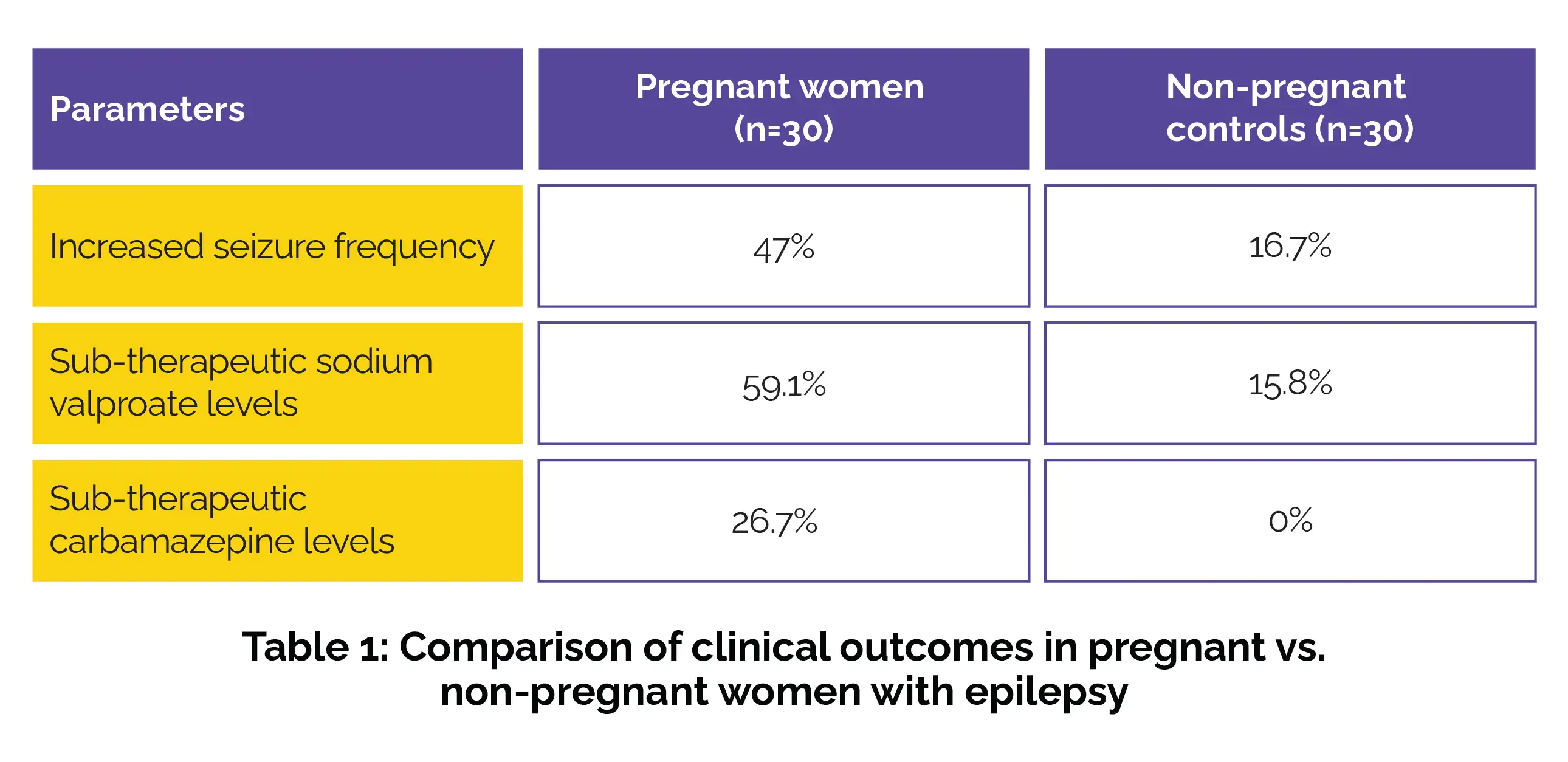
Phenytoin levels remained comparable between the groups. EEG abnormalities were present in both groups, while polyspike discharges were noted only in non-pregnant women. Poor treatment adherence was more common during pregnancy and strongly linked to worsening seizure control. Women with a history of catamenial epilepsy illustrated a trend toward increased seizure frequency (44.4% vs. 16.7 %) and severity (50% vs. 16.7%). Adverse pregnancy outcomes included:
Pregnancy amplifies the risk of seizure exacerbation in women with epilepsy, largely due to sub-therapeutic AED levels and reduced adherence to treatment. Regular therapeutic drug monitoring, patient education, and adherence support are essential for maintaining seizure control. Enhancing access to safe and cost-effective antiepileptics is especially important in resource-limited settings to improve both maternal and neonatal outcomes.
The Egyptian Journal of Neurology, Psychiatry and Neurosurgery
Pregnancy and primary epilepsy: the interwoven effects on seizure dynamics, AED management, and fetal well-being
Hosna Elshony et al.












Comments (0)