

Categories
Change Password!
Reset Password!



Most antibiotics—including β-lactams, fluoroquinolones, carbapenems, and lipoglycopeptides—achieve bone and synovial fluid concentrations exceeding MIC90 values, supporting their use in osteomyelitis and septic arthritis treatment.
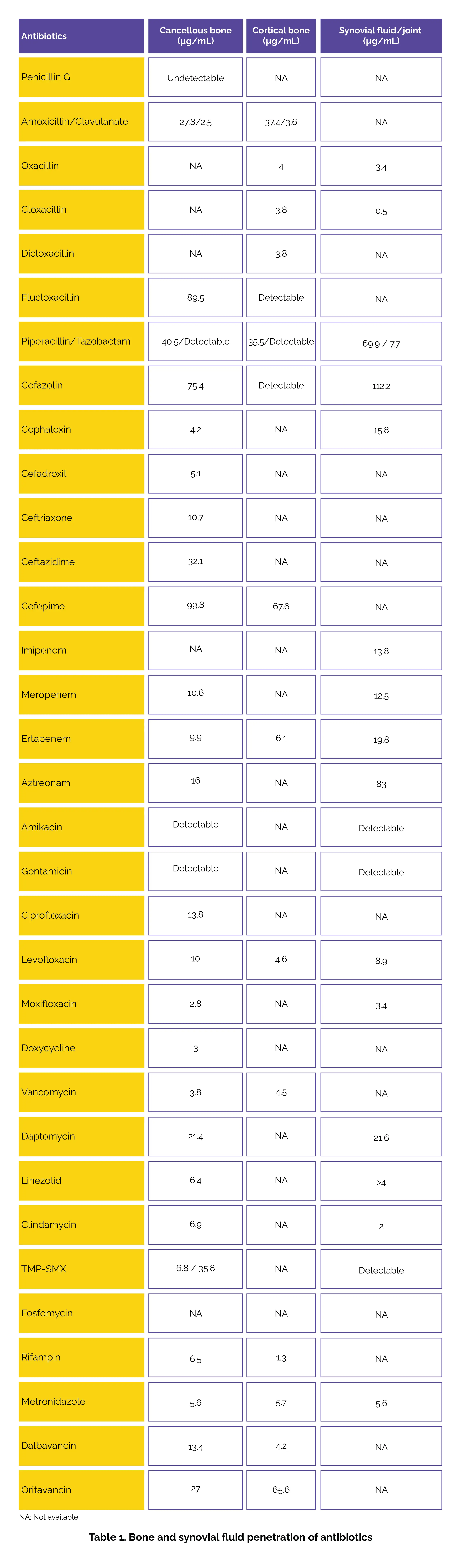
Treating bone and joint infections, including osteomyelitis and septic arthritis, remains cumbersome because antimicrobial agents must penetrate the dense cortical bone structure and the synovial joint space to reach therapeutic concentrations. An updated pharmacokinetic review analyzing studies published between 1976 and 2018 evaluated the penetration profiles of more than 30 antibiotics into cancellous bone, cortical bone, and synovial fluid, and compared these levels with the minimum inhibitory concentrations (MIC90) of common pathogens responsible for bone and joint infections.
The pathogens considered in the analysis included Staphylococcus aureus, coagulase-negative staphylococci, enterococci, β-hemolytic streptococci, viridans streptococci, Enterobacteriaceae, Pseudomonas aeruginosa, and anaerobic bacteria. The findings suggest that most antibiotics reach concentrations in bone and joint tissues that exceed MIC thresholds, supporting their potential role in managing these infections.
Researchers noted that pharmacokinetic evidence strongly supports the ability of many modern antibiotics to diffuse into bone tissue and synovial fluid, although clinical outcome studies remain limited for several agents.
Key Findings
1. Most antibiotics penetrate bone effectively
Many antibiotics—including β-lactams, carbapenems, fluoroquinolones, aminoglycosides, glycopeptides, and lipoglycopeptides—achieved concentrations exceeding MIC90 values of pathogens commonly responsible for bone and joint infections.
Notably, studies show that ciprofloxacin achieves effective penetration into different bone tissues. After oral or intravenous dosing, drug concentrations in turbinate bone, sternal bone marrow, and skull bone exceeded the MICs of common pathogens responsible for bone and joint infections, indicating strong potential for treating these infections.
2. Strong synovial fluid penetration observed
Several antibiotics demonstrated substantial diffusion into synovial fluid, including:
These findings support their use in septic arthritis management.
3. Limited penetration for a few antibiotics
Only a few antibiotics demonstrated suboptimal penetration:
4. Evidence gaps remain
The review highlighted that studies examining joint-space penetration were far fewer than bone penetration studies, indicating a need for more pharmacokinetic and clinical research in septic arthritis treatment.
Clinical Relevance
The pharmacokinetic evidence suggests that antibiotics with strong bone and joint penetration profiles may improve treatment outcomes in:
Understanding antibiotic distribution within cortical bone, cancellous bone, and synovial fluid can help clinicians select optimal antimicrobial therapy, especially in infections requiring long-term management or surgical intervention.
International Journal of Infectious Diseases
Antibiotic penetration into bone and joints: An updated review
Abrar K. Thabit et al.















Comments (0)