

Categories
Change Password!
Reset Password!



Patients with type 2 diabetes and liver cirrhosis receiving SGLT2 inhibitors experience fewer kidney, cardiovascular, and liver complications than those using DPP-4 inhibitors.
According to the outcomes of a large nationwide cohort study, sodium-glucose cotransporter-2 (SGLT2) inhibitors demonstrate strong hepatic and cardiorenal protective effects in coexisting type 2 diabetes (T2D) and liver cirrhosis.
Mu-Chi Chung and other researchers analyzed data from 24,259 adults with both T2D and cirrhosis using Taiwan’s National Health Insurance Database. The study compared patients initiating SGLT2 inhibitors—including canagliflozin, dapagliflozin, and empagliflozin—with those starting dipeptidyl peptidase-4 (DPP-4) inhibitors, such as sitagliptin, linagliptin, saxagliptin, alogliptin, and vildagliptin.
Among participants (mean age 64.7 years, 33.9% women), 9,689 patients (39.9%) received SGLT2 inhibitors, while 14,570 (60.1%) used DPP-4 inhibitors. Volunteers were followed for a median of 2.3 years. Compared with DPP-4 inhibitors, treatment with SGLT2 inhibitors was associated with remarkably lower risks of several major clinical outcomes, as depicted in Table 1:
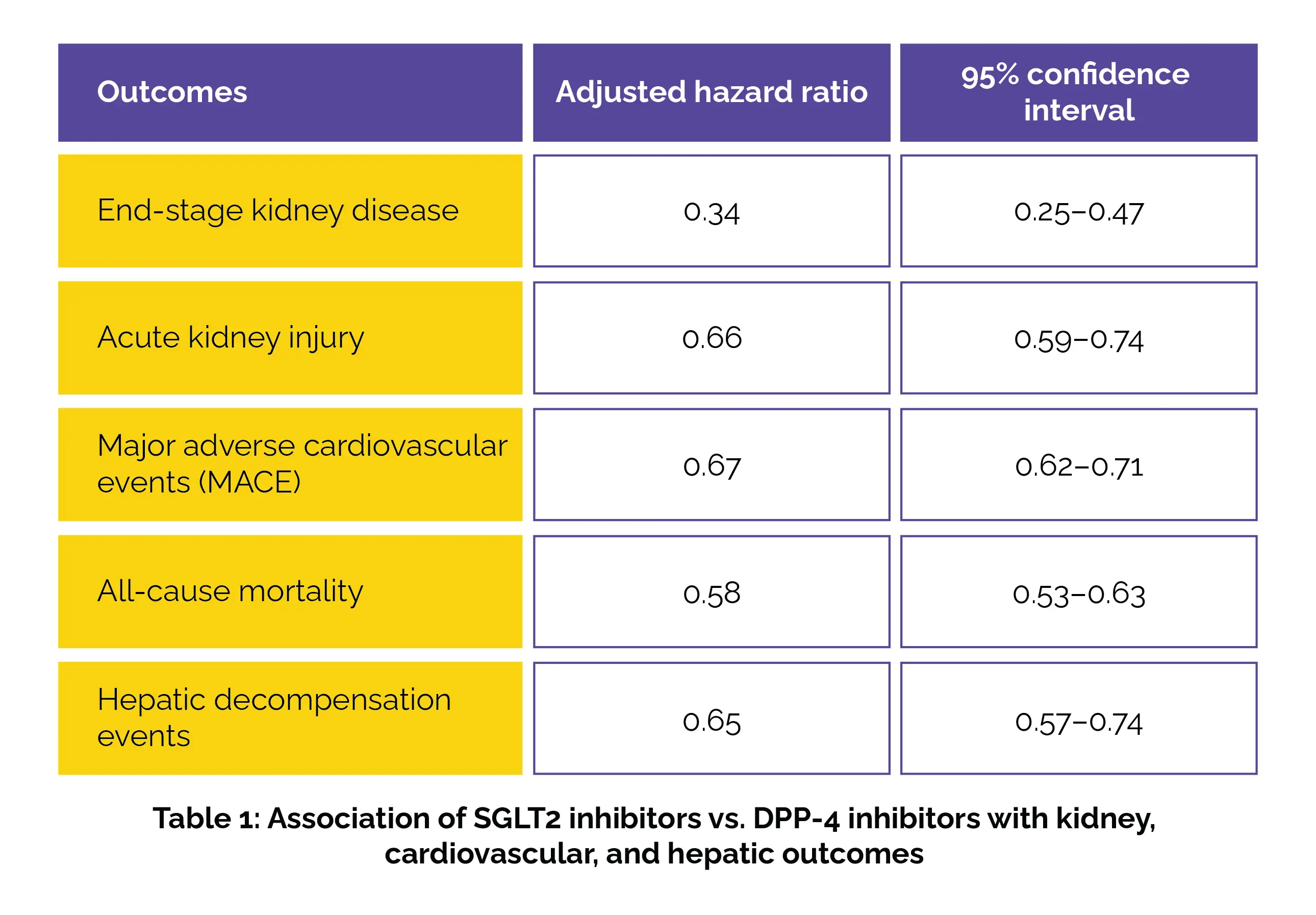
The protective associations remained consistent across multiple sensitivity and subgroup analyses, strengthening the reliability of the findings. Thus, initiating SGLT2 inhibitors in patients with T2D and liver cirrhosis is associated with lower risks of kidney failure, cardiovascular events, liver decompensation, and death, highlighting the potential role of this drug class as a preferred therapeutic option.
JAMA Network Open
SGLT2 Inhibitor Use and Cardiorenal Outcomes in Type 2 Diabetes With Liver Cirrhosis
Mu-Chi Chung et al.











Comments (0)