

Categories
Change Password!
Reset Password!



Third-trimester EPDS screening emerges as a stronger predictor of postpartum depressive symptoms, highlighting a critical window for antenatal mental health intervention.
A new retrospective cohort study suggests that screening for depressive symptoms during the third trimester of pregnancy may provide the most reliable indication of postpartum depression (PPD) risk. The findings also identified numerous obstetric, psychological, and neonatal factors linked with raised Edinburgh Postnatal Depression Scale (EPDS) scores before and after childbirth.
The study, led by Yi-Wei Liao et al., analyzed data from 550 pregnant women who received care between January 2023 and December 2024. Volunteers accomplished EPDS (Chinese version) during the second trimester, third trimester, and on postpartum day 2. An EPDS score of ≥10 was considered indicative of a high risk for depression.
Women with elevated EPDS scores during pregnancy and after delivery were more likely to have specific psychological, obstetric, and neonatal risk factors (Table 1).
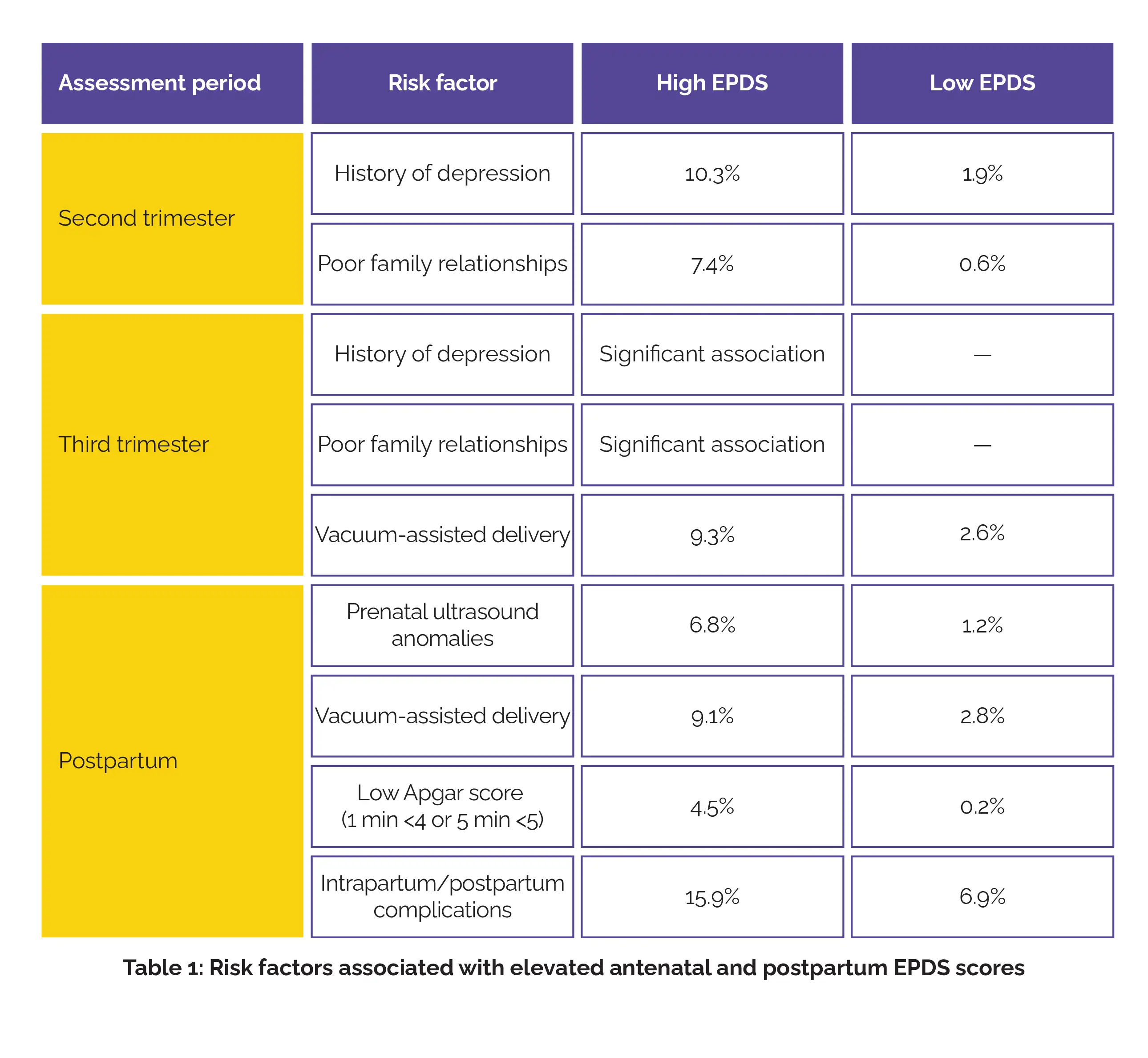
Importantly, third-trimester screening outperformed second-trimester assessment in predicting PPD. EPDS scores obtained during the third trimester demonstrated 90.9% agreement with postpartum scores (Cohen's κ=0.440), compared with 88.7% agreement for second-trimester screening (Cohen's κ=0.387). Hence, routine antenatal mental health screening, particularly during late pregnancy, may help identify women at heightened risk and facilitate timely referral and intervention, potentially boosting maternal mental health outcomes.
Taiwanese Journal of Obstetrics and Gynecology
Risk factors Associated with Elevated Antenatal and Postpartum Edinburgh Postnatal Depression Scale Scores: A Retrospective Cohort Study
Yi-Wei Liao et al.













Comments (0)