

Categories
Change Password!
Reset Password!



Clinical exposure, procedural confidence, and hands-on experience significantly increase dental trainees' willingness to adopt definitive full pulpotomy for symptomatic irreversible pulpitis.
Full pulpotomy is emerging as a viable conservative alternative to conventional root canal treatment for managing pulp exposures in mature permanent teeth, yet trainee perceptions of this approach remain poorly understood. This study explored undergraduate dental students' knowledge, attitudes, and therapy preferences regarding full pulpotomy, and also identified factors independently linked with their willingness to adopt it as a definitive clinical option.
The research team designed a cross-sectional, questionnaire-based study targeting fourth- and fifth-year dental students at a single academic dental institution. Participants completed a structured questionnaire probing their treatment preferences when faced with a standardized clinical scenario, their material of choice for pulp capping, their attitudes toward rubber dam use, the procedural difficulties they anticipated, the barriers they perceived, and their overall willingness to use full pulpotomy as a definitive treatment.
Multivariable binary logistic regression and chi-square testing were applied to uncover which variables independently predicted that willingness. Overall, 255 dental students took part. Spontaneous pain topped the list of diagnostic cues students relied upon for identifying symptomatic irreversible pulpitis, cited by 69.4% of respondents. Prolonged pain to heat followed at 50.6%, with percussion sensitivity noted by 46.7% and radiographic findings by 43.9%.
When confronted with a standardized clinical scenario, students did not gravitate toward the conventional root canal path. Instead, nearly half opted for a pulpotomy-based approach, positioning it clearly ahead of single-visit pulpectomy + obturation and pulpectomy + calcium hydroxide dressing. On the question of pulp capping materials, mineral trioxide aggregate (MTA) stood out as the overwhelming favorite— far ahead of Biodentin and calcium hydroxide. When asked directly, a large proportion of students confirmed they would be willing to use full pulpotomy as a definitive treatment option (Table 1).
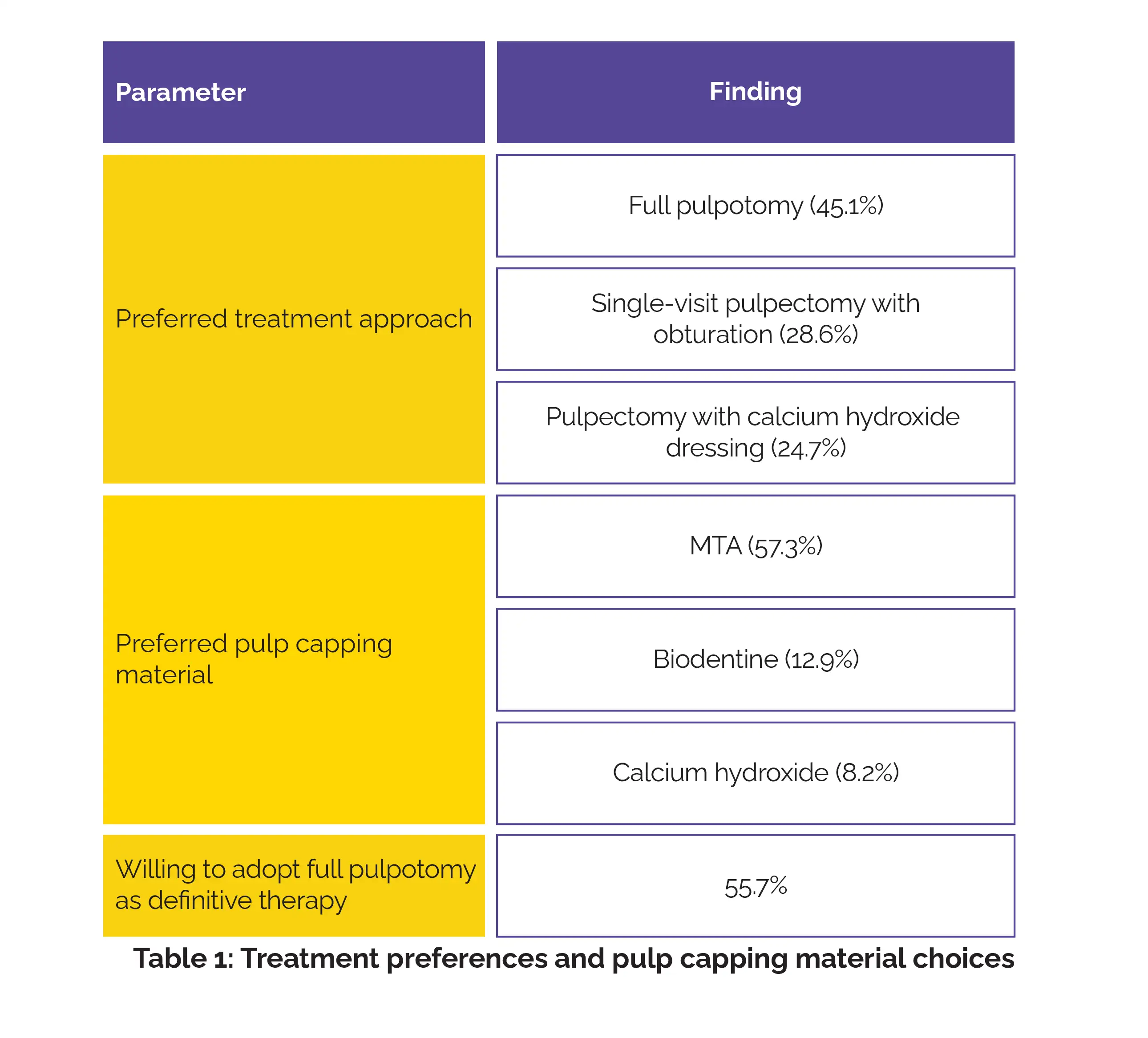
Digging deeper, the multivariable analysis painted a clear picture of what actually moves the needle. Students in more advanced clinical years were more inclined to embrace full pulpotomy. Those who had previously encountered pulpotomy cases in a real clinical setting — or had personally performed the procedure — showed markedly greater willingness. Confidence in managing bleeding during the procedure also emerged as a strong independent driver. A positive stance toward mandatory rubber dam use further reinforced that willingness.
On the flip side, students who perceived notable barriers to implementation or who felt uncertain about how to execute the procedure correctly were significantly less likely to commit to full pulpotomy as a treatment of choice. The findings painted a nuanced picture: while undergraduate dental students broadly welcomed full pulpotomy as a conservative treatment strategy, their actual readiness to use it hinged far less on theoretical knowledge and far more on whether they had stood at the chairside and done it.
Practical exposure, procedural confidence, and a clear understanding of how to execute the technique emerged as the true gatekeepers of adoption — pointing directly to where dental curricula must evolve to close the gap between evidence and practice.
Healthcare (MDPI)
Determinants of Definitive Full Pulpotomy Adoption in Symptomatic Irreversible Pulpitis: A Multivariable Analysis of Dental Trainee Decision-MakingDeterminants of Definitive Full Pulpotomy Adoption in Symptomatic Irreversible Pulpitis: A Multivariable Analysis of Dental Trainee Decision-Making
Suzan Cangül et al.











Comments (0)