

Categories
Change Password!
Reset Password!



Symptomatic umbilical hernia repair is feasible in selected patients with advanced chronic liver disease following meticulous preoperative optimization.
For decades, surgeons have approached umbilical hernia repair in patients with advanced chronic liver disease (CLD) cautiously because portal hypertension, ascites, malnutrition, and impaired liver function substantially increase perioperative risk. The challenge has never been whether these patients require surgery, but rather how to minimize the complications that accompany operative intervention. This retrospective study offers practical insight into how a specialized care pathway may improve outcomes in one of the highest-risk surgical populations.
Investigators reviewed the experience of a dedicated liver transplant center, where patients with symptomatic umbilical hernias underwent open surgical repair after comprehensive preoperative optimization between August 2021 and May 2024. Liver disease severity and operative risk were assessed using established prognostic scores before surgery, while postoperative recovery, complications, liver function, and short-term mortality were closely monitored.
Thirteen patients with advanced CLD underwent surgical repair for symptomatic umbilical hernia. The cohort primarily included individuals with alcohol-related liver disease or non-alcoholic steatohepatitis (NASH), and all patients received surgery after careful preoperative optimization. The main perioperative findings are summarized below in Table 1.
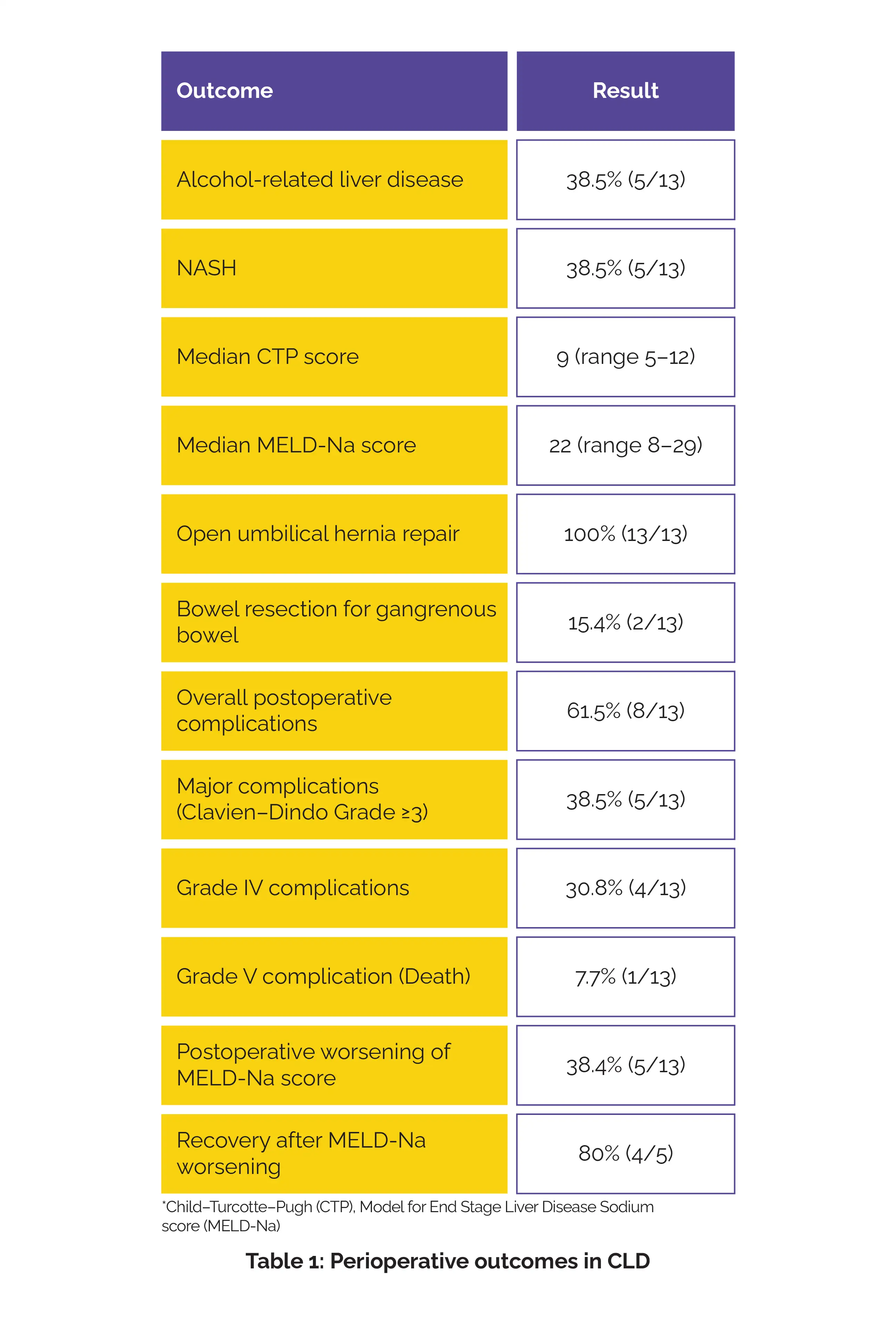
Although postoperative complications remained common, they reflected the advanced liver disease and complex surgical profile of the study population rather than unexpected procedural risk. Importantly, only one patient died within 90 days, while most patients who experienced postoperative deterioration in liver function subsequently recovered. Follow-up extending beyond one year further demonstrated sustained postoperative recovery in the majority of patients managed through this specialized multidisciplinary pathway.
Rather than discouraging surgery in patients with advanced CLD, these findings suggest that patient selection, preoperative optimization, and coordinated perioperative management may be the key determinants of successful outcomes. The study supports referral of symptomatic decompensated liver cirrhosis patients to experienced multidisciplinary centers, where careful preparation can make surgical repair a feasible option despite substantial baseline risk.
Egyptian Liver Journal
Outcomes of patients with chronic liver disease and symptomatic umbilical hernia presenting to a specialized liver transplant unit
Raghu Ram Nelluri et al.















Comments (0)