

Categories
Change Password!
Reset Password!



Intranasal corticosteroids show superior tolerability among topical treatments, while sublingual immunotherapy exhibits the highest rate of other adverse events across major allergic rhinitis therapeutic classes.
Allergic rhinitis (AR) treatments can differ not only in their therapeutic approach but also in their adverse-event (AE) profiles. A novel meta-epidemiological analysis of completed RCTs explored the safety of intranasal therapies, oral medications, and allergen immunotherapy (AIT).
The analysis encompassed 216 completed randomized controlled trials (RCTs) registered in ClinicalTrials.gov through 20 October 2023. Intranasal therapies represented 55.56% of trials, followed by AIT (22.69%) and oral medications (18.06%). Ivan Paladin and other researchers manually extracted adverse events and categorized them via the Common Terminology Criteria for Adverse Events version 5.0 (CTCAE v5.0) and Medical Dictionary for Regulatory Activities (MedDRA) terminology. Meta-analyses then compared the incidence of other adverse events (OAEs) across treatment classes and dosage groups.
Intranasal corticosteroids (INCS) show an excellent safety profile
Among intranasal treatments, INCS had an OAE incidence of 16.37%, compared with 29.43% for intranasal antihistamines (INAH). The most notable safety patterns included:
These findings identify distinct adverse-event patterns even within commonly used intranasal therapies.
Allergen immunotherapy exhibits more adverse events
AIT accounted for 22.69% of the included trials and illustrated higher OAE incidence vs. pharmacological treatment groups (Table 1).
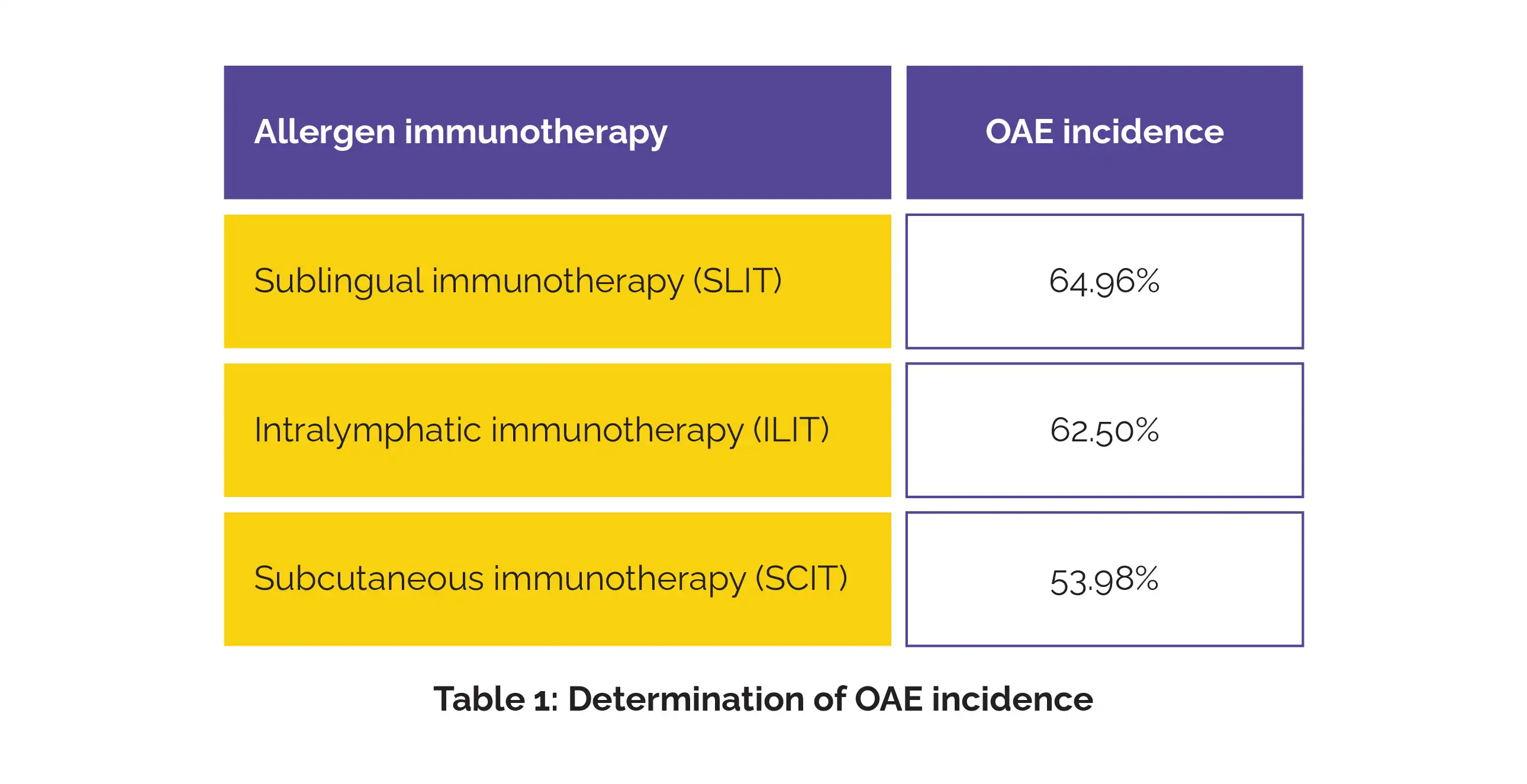
Oropharyngeal adverse events were particularly frequent with SLIT, consistent with its sublingual route of administration.
Oral medications show the lowest OAE incidence
Oral medications accounted for 18.06% of trials and depicted the lowest OAE incidence among the major treatment categories. However, upper respiratory tract infections (URTIs) occurred more frequently with oral antihistamines. The combination of an oral antihistamine (OAH) and leukotriene receptor antagonist (LTRA) appeared to have a favourable safety profile among oral treatment strategies.
What does the safety analysis show?
The safety profile of AR treatment varies substantially by modality, with distinct adverse-event patterns seen across INCS, antihistamines, oral therapies, and allergen immunotherapy.
Pharmaceutics
Safety Profile of Medications for Allergic Rhinitis: A Meta-Epidemiological Analysis of Completed RCTs from ClinicalTrials.gov
Ivan Paladin et al.















Comments (0)