

Categories
Change Password!
Reset Password!



Postpartum women reporting self-harm thoughts face a markedly higher risk of subsequent intentional self-harm, highlighting the critical need for early psychiatric intervention.
Maternal suicide continues to represent one of the most serious yet potentially preventable causes of postpartum mortality worldwide. Early psychological screening tools, including the Edinburgh Postnatal Depression Scale (EPDS), are increasingly used to identify mothers at elevated mental health risk during the postpartum period.
This nationwide cohort study investigated whether postpartum women reporting self-harm thoughts on EPDS item 10 experienced a greater risk of later hospital-recorded intentional self-harm within the first year after childbirth. Investigators performed a population-based cohort analysis involving 170,218 childbirths from 142,795 women in Denmark by integrating nationwide healthcare registers with data from the HOPE cohort.
Self-harm thoughts were identified through any non-zero response to item 10 of the EPDS, which evaluates recent thoughts of self-harm. The primary endpoint included hospital-registered intentional self-harm episodes occurring within 365 days postpartum, encompassing both suicidal and non-suicidal self-injury. To minimize confounding effects, inverse propensity-score weighting was applied, while Firth’s penalized logistic regression model was used to estimate adjusted odds ratios. Women reporting postpartum self-harm thoughts showed a markedly higher likelihood of later hospitalization for intentional self-harm compared with those without such thoughts (Table 1).
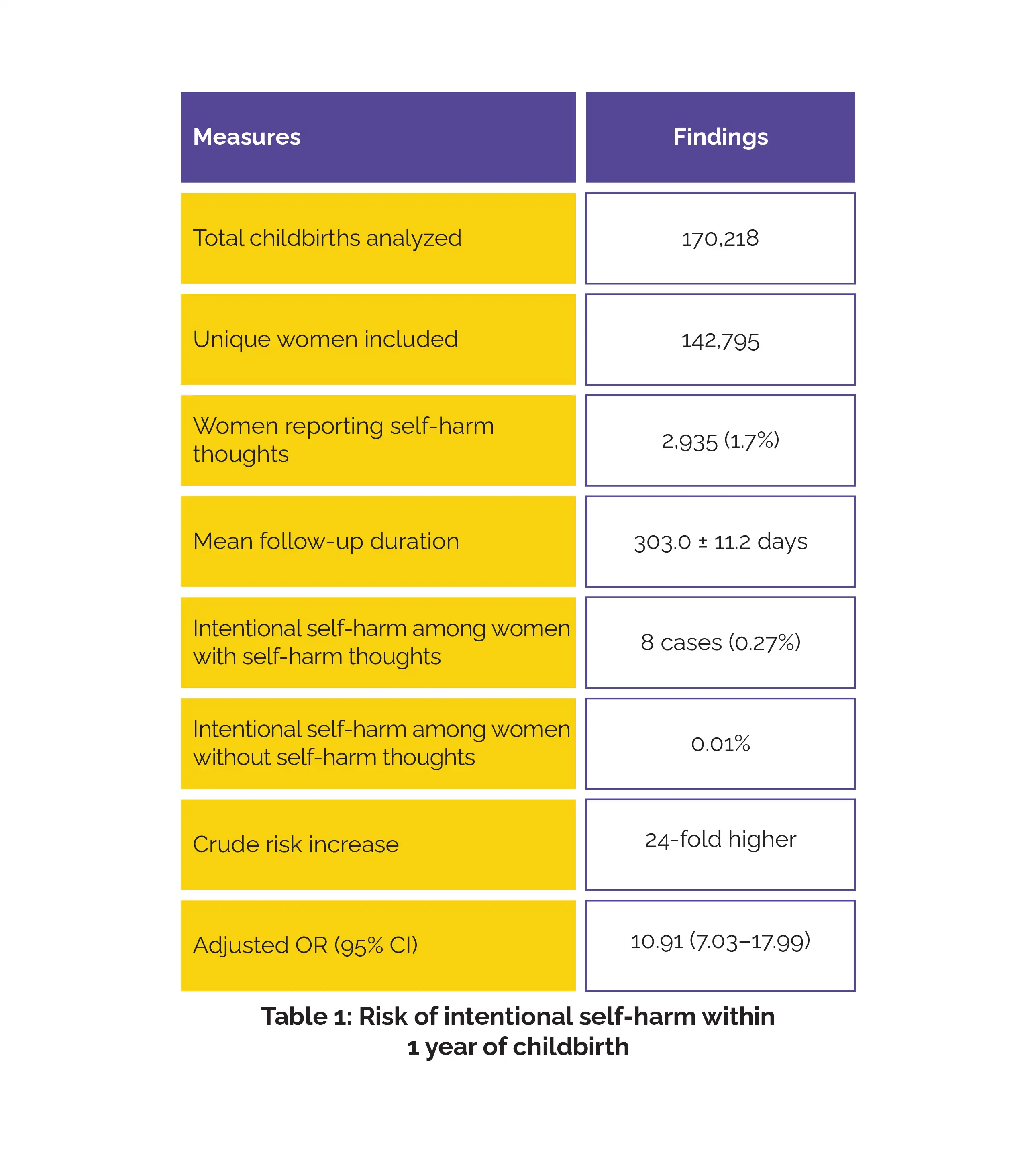
Postpartum women reporting self-harm thoughts remained at elevated risk for subsequent intentional self-harm even after statistical adjustment. The findings reinforced postpartum self-harm thoughts as a clinically meaningful warning sign for future intentional self-harm, despite the overall absolute risk remaining relatively low. These findings support the use of EPDS screening to identify at-risk mothers and facilitate early intervention.
BMJ Mental Health
Postpartum self-harm thoughts and subsequent risk of intentional self-harm
Xiaoqin Liu et al.













Comments (0)