

Categories
Change Password!
Reset Password!



Simple, patient-centered interventions are emerging as effective tools for reducing pain and anxiety during pelvic examinations while advancing trauma-informed gynecological care.
Pelvic examinations are a routine part of gynaecological and obstetric care—but for many women, they can be an uncomfortable or anxiety-provoking experience. A new study suggests that simple interventions aimed at improving the examination experience could make a meaningful difference.
Researchers conducted a systematic review and meta-analysis of randomized interventional trials published between 1990 and 2024 and identified eligible studies from major biomedical databases. Studies involving women older than 15 years undergoing pelvic examinations were included if they compared an intervention with standard care and reported outcomes related to pain, anxiety, discomfort, or embarrassment. Data extraction, bias assessment, and pooled analyses were performed using standardized methods and random-effects models.
The analysis incorporated 16 randomized controlled trials involving 4,641 women and evaluated a broad range of interventions, including:
The pooled findings demonstrated significant reductions in both pain and anxiety during pelvic examinations, supporting the value of targeted patient-centered interventions despite considerable variability across studies (Table 1).
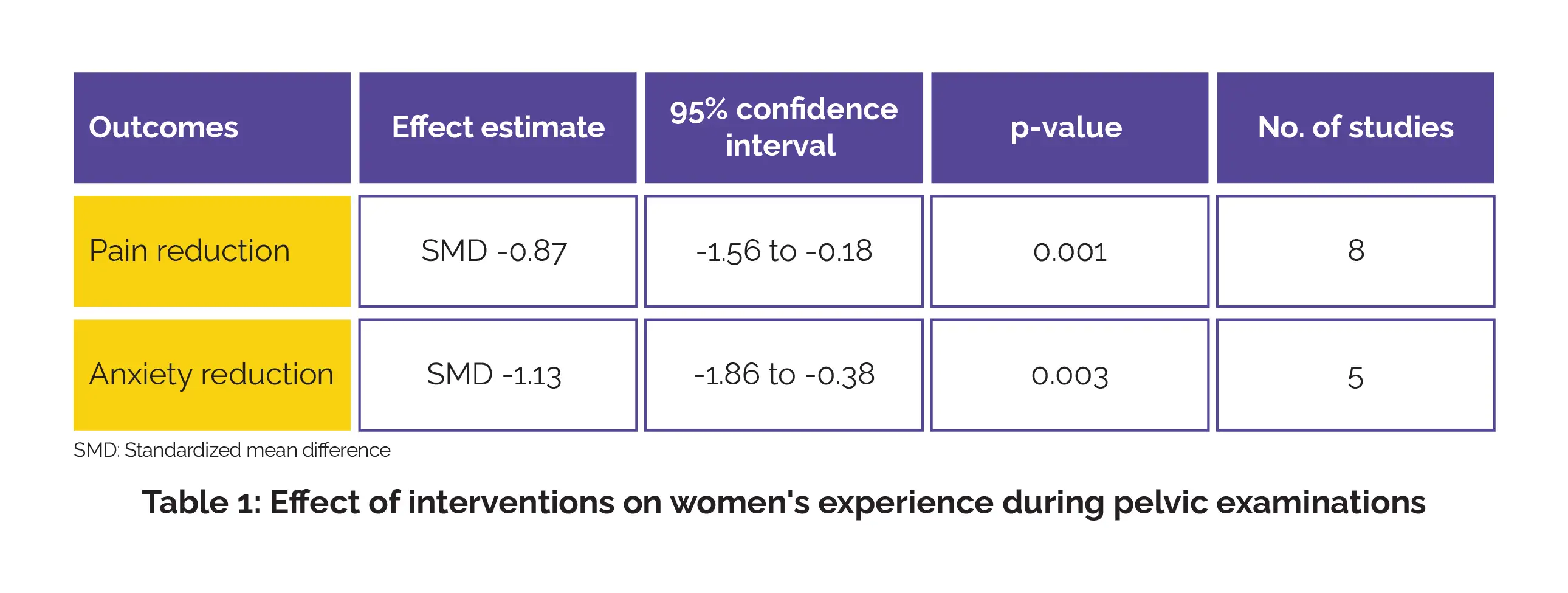
The evidence suggests that small, practical changes could make pelvic examinations more comfortable and less anxiety-provoking for women. However, stronger and more consistent research is needed to identify which interventions work best and determine how they can be routinely incorporated into gynaecological and obstetric practice.
BJOG: An International Journal of Obstetrics & Gynaecology
Effectiveness of Interventions to Improve Women's Experience of Pelvic Examinations: A Systematic Review and Meta-Analysis
Stéphanie Mignot et al.













Comments (0)