

Categories
Change Password!
Reset Password!



In adults with obesity or overweight and preexisting cardiovascular disease but no diabetes, subcutaneous semaglutide (2.4 mg) reduces the risk of cardiovascular mortality, nonfatal stroke, and nonfatal myocardial infarction.
A weight-loss drug has now proven to be a heart protector. In a major international trial, subcutaneous semaglutide—a glucagon-like peptide-1 (GLP-1) receptor agonist best known for diabetes and obesity treatment—was shown to cut the risk of heart attack, stroke, or cardiovascular death by 20% in people with overweight or obesity who did not have diabetes.
This randomized controlled trial recruited 17,604 adults (aged 45 and above) with established cardiovascular disorder and a body mass index of 27 or higher, but no past history of diabetes. Volunteers were randomly assigned to get either subcutaneous semaglutide 2.4 mg once weekly (n=8803) or placebo (n=8801). The enrolled subjects were followed for an average of 39.8 months, with a mean treatment exposure of 34.2 months.
The main outcome was a composite of cardiovascular death, nonfatal heart attack, or nonfatal stroke, evaluated in a time-to-first-event assessment. Results showed that fewer patients in the semaglutide group experienced a primary cardiovascular event when compared to the placebo group. This translated into a 20% lower risk with semaglutide (hazard ratio, 0.80; 95% confidence interval, 0.72–0.90), as shown in Table 1:
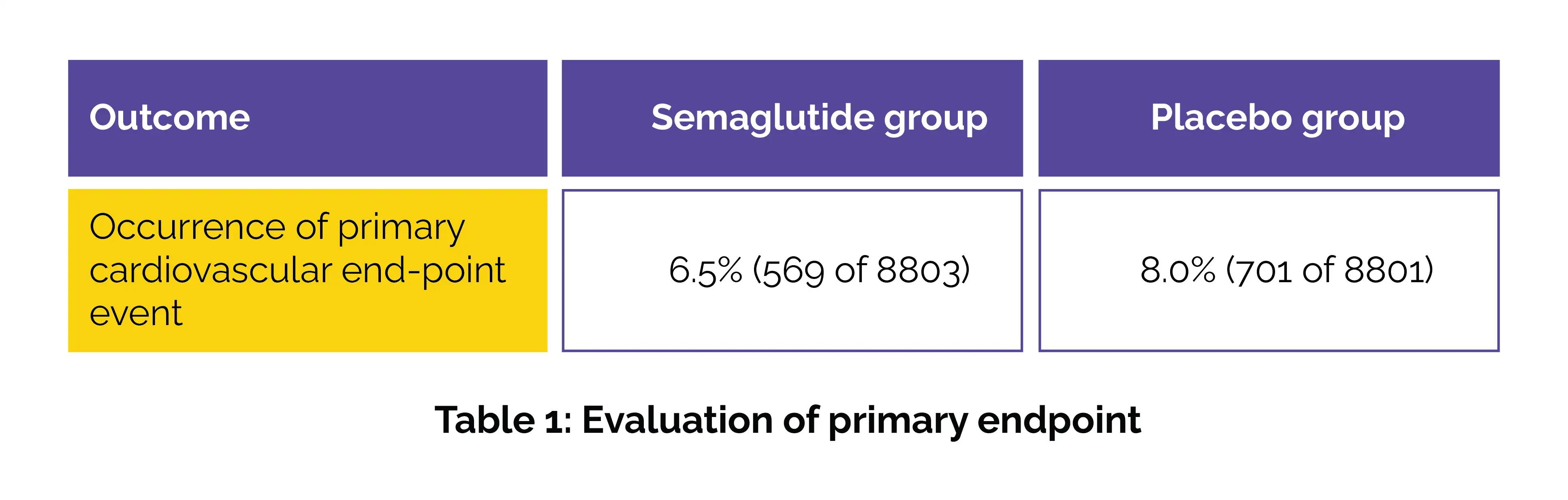
But there was a trade-off! Notably, 16.6% (1461 patients) in the semaglutide group stopped because of side effects, compared with just 8.2% (718 patients) in the placebo group. Researchers concluded that semaglutide not only aids weight control but also offers powerful cardiovascular protection in people living with obesity and heart disease—even in the absence of diabetes.
The New England Journal of Medicine
Semaglutide and Cardiovascular Outcomes in Obesity without Diabetes
A Michael Lincoff et al.














Comments (0)