

Categories
Change Password!
Reset Password!



Loxoprofen sodium cataplasm provides greater short-term pain relief and functional improvement than flurbiprofen cataplasm in patients with osteoarthritis.
A multicenter randomized controlled trial has shown that loxoprofen sodium cataplasm (LSC) may deliver greater short-term symptom relief than flurbiprofen cataplasm (FPC) in patients with osteoarthritis (OA), while maintaining a comparable safety profile.
The study, led by Yutian Lei et al., enrolled 296 patients with OA across three subcenters, with 192 patients assigned to the LSC group and 104 patients to the FPC group. Patients in the LSC arm applied one patch once daily for two weeks, whereas those in the FPC arm used one patch twice daily over the same period.
Researchers evaluated treatment outcomes using the Visual Analog Scale (VAS), the Western Ontario and McMaster Universities Osteoarthritis Index (WOMAC), and the Lysholm knee score. Across all efficacy measures, the LSC group achieved higher treatment effectiveness rates than the FPC group (Table 1).
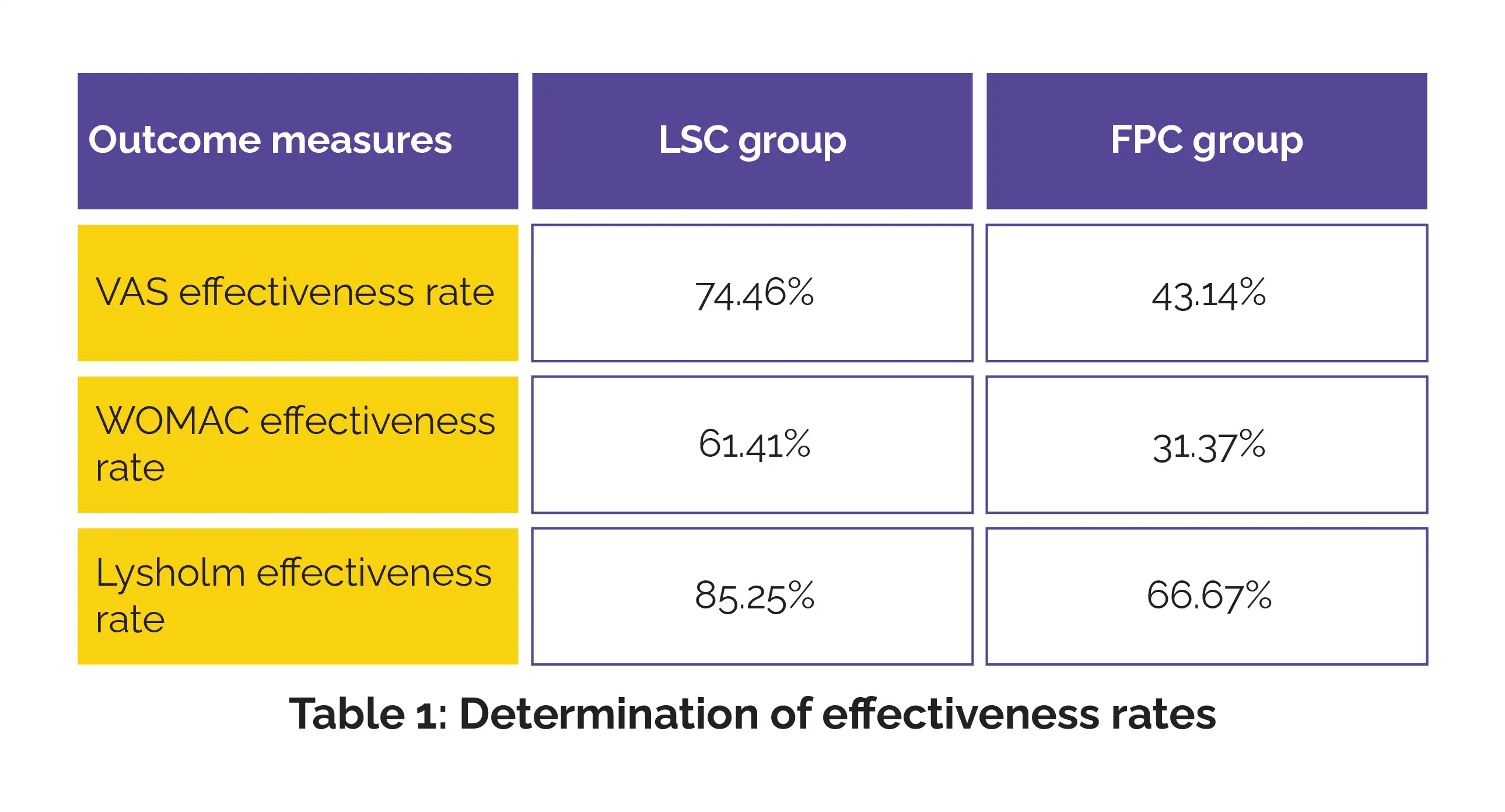
After two weeks of treatment, both groups illustrated improvements in OA symptoms. However, those receiving LSC experienced markedly lower VAS pain scores and lower WOMAC global scores, including better outcomes in pain, stiffness, and physical function domains, when compared with those receiving FPC. Lysholm scores were also markedly higher in the LSC group, indicating improved knee function.
Safety findings revealed different adverse-event patterns between the groups. The FPC group reported more general adverse events and considerably higher rates of dressing shedding. In contrast, the LSC group experienced more specific adverse reactions like skin itching, fever, and allergy, although these differences were not statistically significant. Hence, LSC demonstrated superior short-term potency compared with flurbiprofen cataplasm for OA treatment, alongside a consistent safety profile.
Biomedical Reports
Efficacy and safety of loxoprofen sodium cataplasms in the treatment of osteoarthritis: A randomized, multicenter study
Yutian Lei et al.















Comments (0)