

Categories
Change Password!
Reset Password!



Botulinum toxin injections achieve high healing and response rates in refractory digital ischemia, ulcers, and gangrene in systemic sclerosis, while maintaining a favorable safety profile.
Botulinum toxin (BTX) injections may offer a highly efficient and safe treatment option for refractory digital ischemia, gangrene, and digital ulcers in patients with systemic sclerosis and autoimmune vasculopathies, according to a new systematic review and individual participant data meta-analysis.
The authors carried out a comprehensive search of MEDLINE, Embase, and Scopus to explore BTX injections for ischemic digital complications. Among 116 screened studies, 31 studies met the inclusion criteria. The study included 119 subjects with acute digital ischemia, gangrene, o ischemic digital ulcers. Most participants were women (75.0%), and the mean age was 49.0 years.
Results showed remarkably high complete response rates following BTX treatment, supporting its role as a promising rescue therapy for severe refractory vascular complications in systemic sclerosis (Table 1).
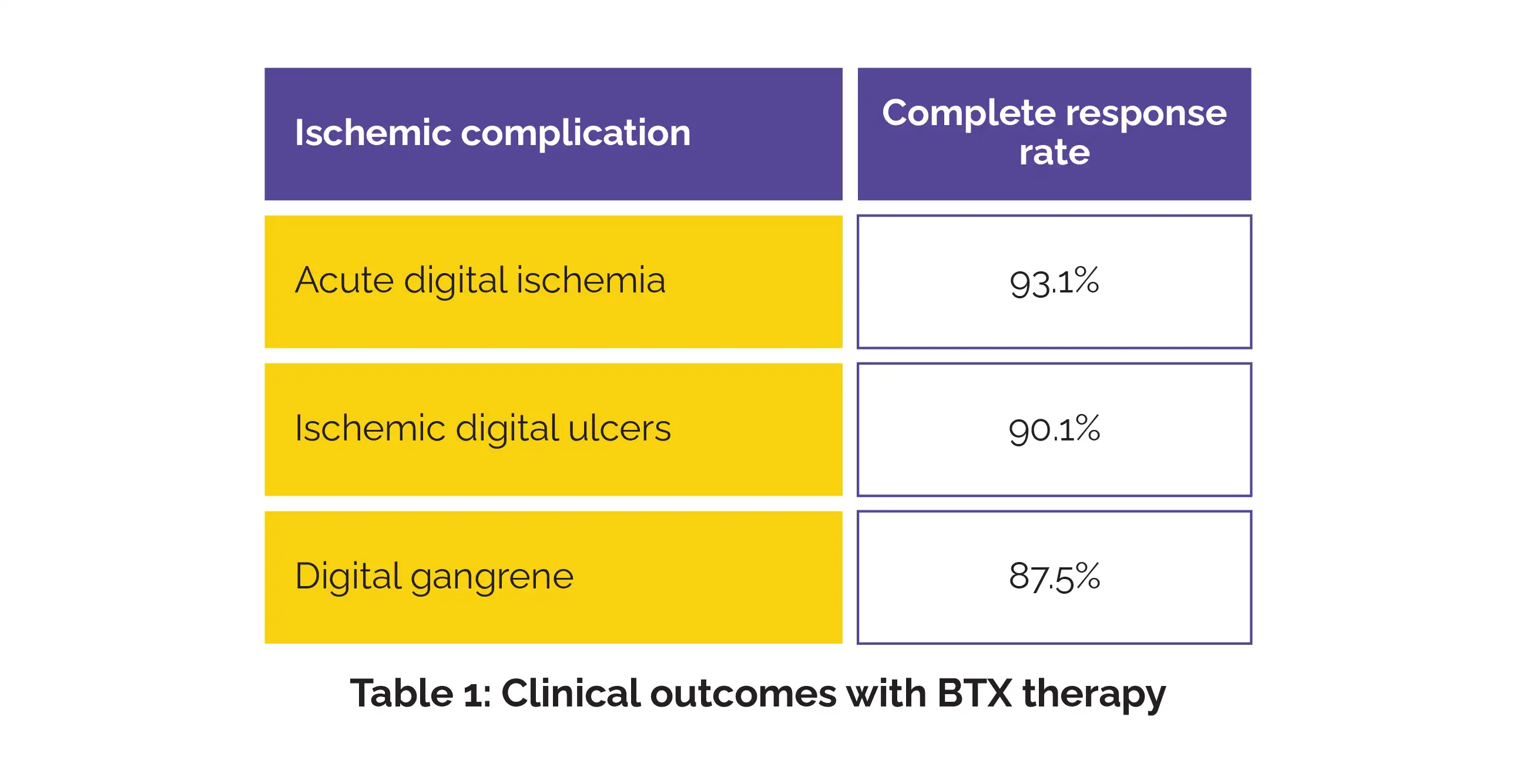
The findings suggest that BTX injections may substantially improve ulcer healing, restore blood flow, reduce ischemic tissue injury, and help prevent progression to gangrene in systemic sclerosis patients. Adverse events were found to be uncommon and mostly transient and mild (Table 2).
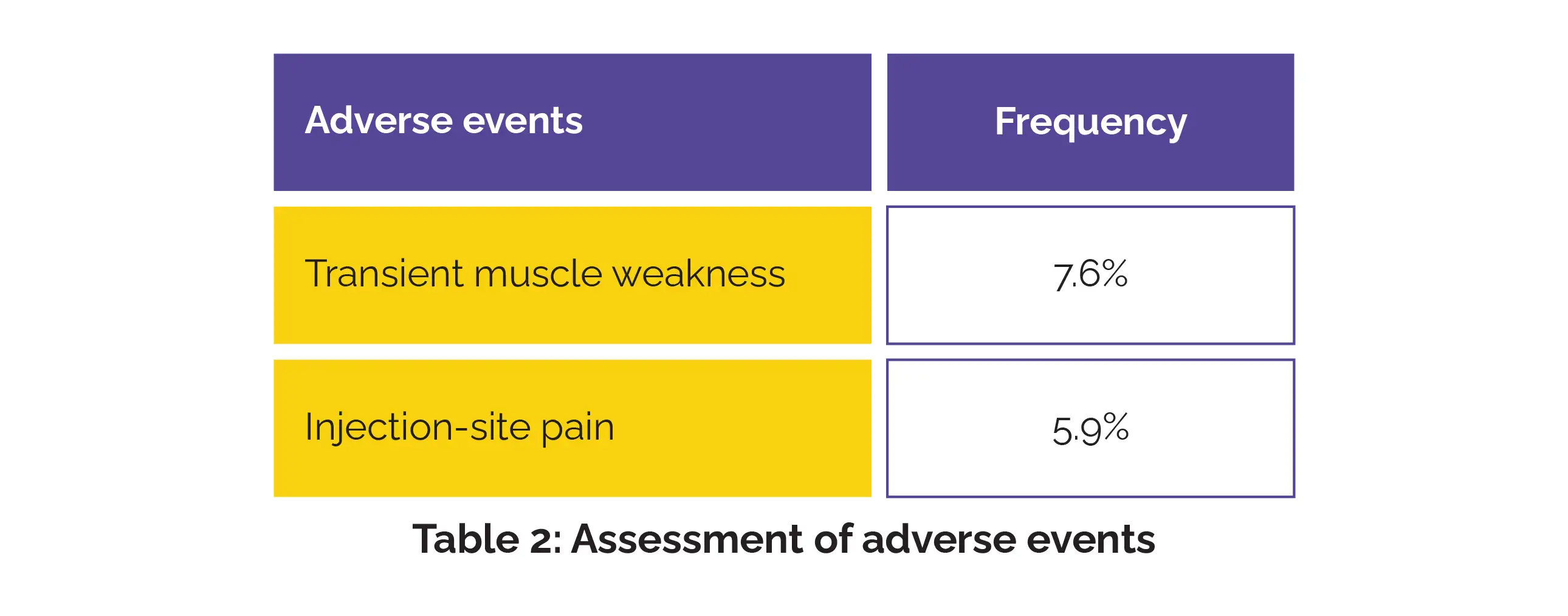
No major safety concerns or severe complications were reported, reinforcing the tolerability of BTX therapy in autoimmune vasculopathy-related digital ischemia. Although multivariable analyses did not identify predictors of treatment response, Kaplan-Meier analyses showed that younger patients and those with autoimmune etiologies experienced faster healing and symptom improvement.
The authors concluded that BTX injections are a safe and effective adjunctive therapy for refractory digital ischemia and digital ulcers in systemic sclerosis, offering a promising physician-administered rescue treatment for those unresponsive to standard vasodilator therapy.
JAMA Dermatology
Botulinum Toxin for Refractory Digital Ischemia and Ulcers in Systemic Sclerosis A Systematic Review and Meta-Analysis
Catherine Zhu et al.















Comments (0)