

Categories
Change Password!
Reset Password!



Patients with postprandial distress syndrome achieve better symptom control with a low FODMAP diet than with standard dietary guidance.
According to the findings of a randomized clinical trial, a low fermentable oligo-, di-, mono-saccharides and polyols (low FODMAP) diet provides superior symptom control and quality-of-life benefits compared with traditional dietary advice (TDA) in patients with postprandial distress syndrome (PDS), the most common subtype of functional dyspepsia.
PDS affects approximately 80% of individuals with functional dyspepsia and is characterized by bothersome post-meal fullness and early satiety. Despite the high prevalence of meal-related symptoms, evidence-based dietary treatment options have remained limited. In this single-center study, 60 adults with PDS were randomized to receive dietary education on either a low FODMAP diet (n=31) or TDA (n=29).
Traditional dietary advice included recommendations for small, frequent meals and reduced consumption of caffeine, alcohol, carbonated beverages, and high-fat, processed, or spicy foods. Participants completed symptom and quality-of-life assessments over a 6-week period. The primary endpoint was a clinically meaningful reduction in the PDS subscale of the Leuven Postprandial Distress Scale (LPDS), defined as improvements of at least 0.5 points and 0.7 points.
Baseline characteristics were comparable between the groups. The mean age of subjects was 39.6 years, 78% were women, 78% were White, and 63% had coexisting irritable bowel syndrome (IBS). The low FODMAP diet attained remarkably higher rates of clinically meaningful symptom improvement than TDA (Table 1).
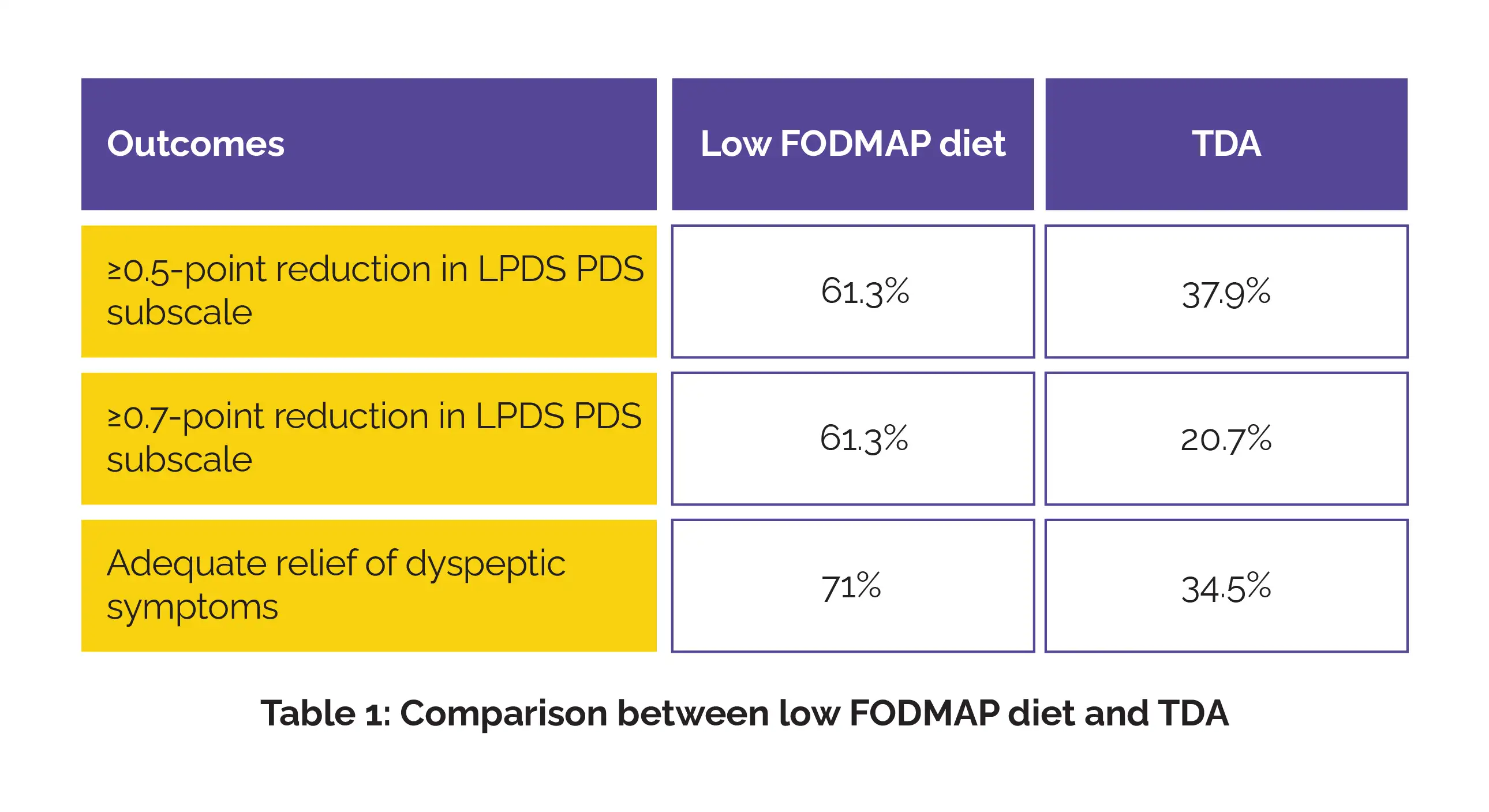
Beyond the primary endpoint, the low FODMAP diet also produced greater improvements in individual LPDS symptom scores, overall gastrointestinal symptoms measured by the Gastrointestinal Symptom Rating Scale, and quality of life assessed using the Nepean Dyspepsia Index.
Researchers concluded that a low FODMAP diet is superior to TDA for achieving symptom relief and improving quality of life in PDS, supporting its consideration as a targeted dietary intervention for this common gastrointestinal disorder.
Clinical Gastroenterology and Hepatology
Low FODMAP Diet versus Traditional Dietary Advice in Postprandial Functional Dyspepsia: A Randomized Clinical Trial
Mohamed G. Shiha et al.













Comments (0)