

Categories
Change Password!
Reset Password!



A significant proportion of postmenopausal women lack essential knowledge about vitamin D and osteoporosis, underscoring the need for targeted bone health education.
Optimal vitamin D status is fundamental to musculoskeletal health and plays a crucial role in preserving bone density and reducing fracture risk. Deficiency has been linked to adverse skeletal outcomes, including increased bone resorption, compromised bone strength, and a higher incidence of osteoporotic fractures. Recognizing the growing burden of osteoporosis among aging women, the study aimed to assess postmenopausal women’s knowledge, attitudes, and practices concerning vitamin D, while also evaluating their level of osteoporosis awareness and understanding.
The study adopted a cross-sectional design and enrolled 260 postmenopausal women undergoing routine follow-up at a university-affiliated menopause clinic. Recruitment criteria required subjects to be 50 years of age or older and postmenopausal for at least 12 months. Researchers gathered demographic and health-related information through structured interviews and evaluated vitamin D awareness, exposure-related behaviors, and osteoporosis knowledge using the Facts on Osteoporosis Quiz (FOOQ) questionnaire, providing insights into bone health education needs among older women.
The analysis highlighted notable gaps in vitamin D awareness and sun-exposure practices among postmenopausal women, as summarized below in Table 1.
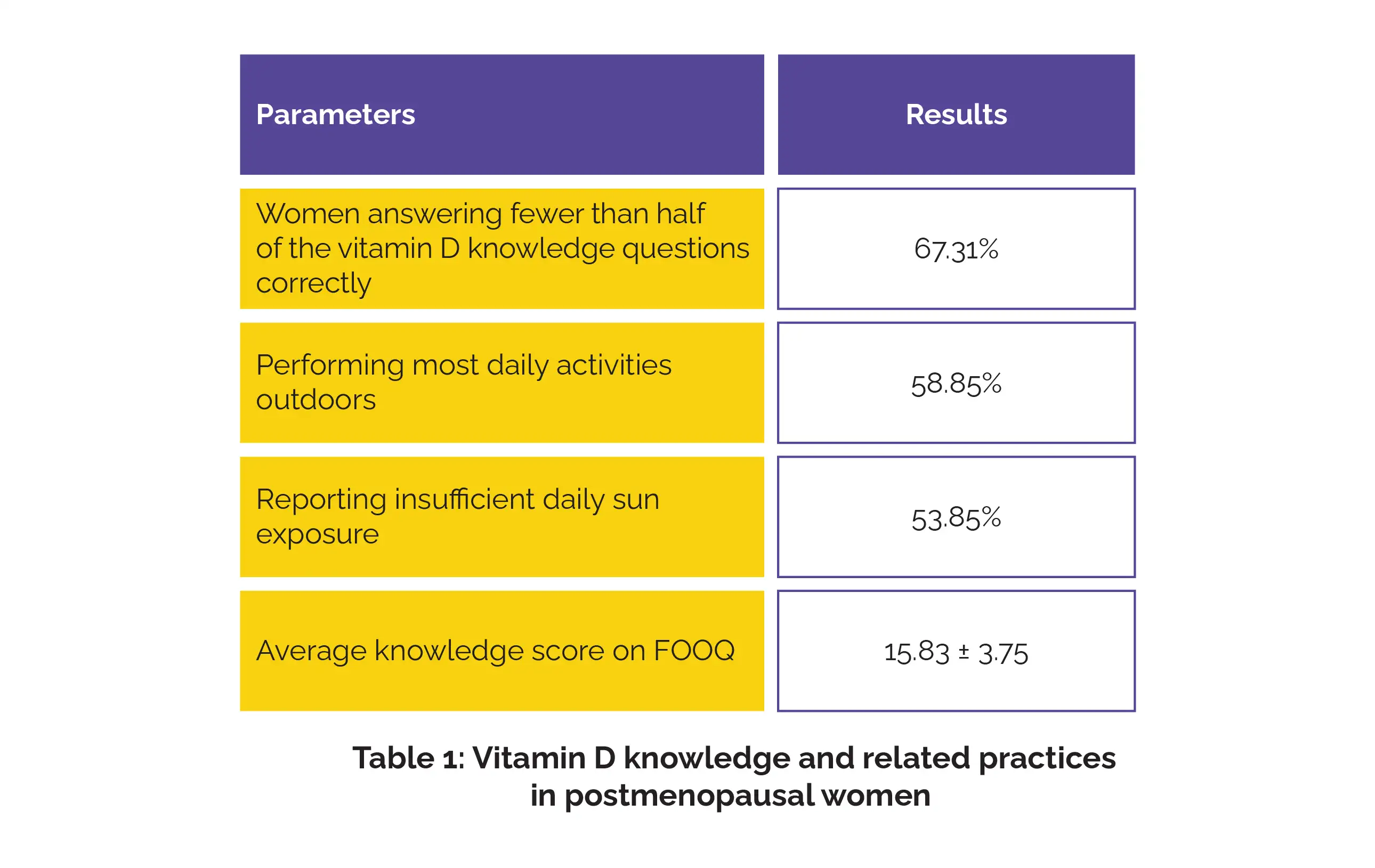
Furthermore, higher educational attainment, greater osteoporosis knowledge as measured by the FOOQ, and stronger self-care behaviors were significantly associated with better vitamin D knowledge among participants. Overall, the findings underscored limited awareness of vitamin D in this population and suggested that education, osteoporosis literacy, and self-care practices play important roles in shaping bone health knowledge.
The research identified notable knowledge gaps regarding vitamin D and osteoporosis in postmenopausal women. Participants who were more educated, practiced better self-care, and had greater osteoporosis knowledge were more likely to demonstrate stronger vitamin D awareness. These findings pointed to the need for enhanced educational programs aimed at improving long-term bone health.
Rev Bras Ginecol Obstet
Knowledge and practices of postmenopausal women regarding vitamin D and osteoporosis
Yasmin Bastos-Silva et al.







Comments (0)