

Categories
Change Password!
Reset Password!



Following surgery, postdischarge nausea and vomiting can substantially impair recovery.
In female patients undergoing ambulatory surgery, a single 5 mg preoperative dose of olanzapine combined with dual antiemetic prophylaxis improves global quality of recovery and reduces postdischarge nausea.
Following surgery, postdischarge nausea and vomiting can substantially impair recovery. Although preoperative 10 mg olanzapine has been shown to decrease postdischarge nausea and vomiting, its use may increase sedation. Whether a lower dose can boost global postoperative recovery has remained unclear. Hence, this study was carried out.
Researchers evaluated whether preoperative olanzapine could improve recovery in 384 women aged 18–50 years undergoing ambulatory surgery under general anesthesia. Participants received either oral olanzapine 5 mg (n=191) or placebo before surgery, alongside standard antiemetic prophylaxis with dexamethasone and ondansetron.
The primary endpoint ascertained was recovery quality assessed using the Quality of Recovery-40 (QoR-40) score on postoperative day (POD) 1. Secondary assessments were postanesthesia care unit (PACU) stay, QoR-40 scores on POD 2, and postdischarge nausea—including overall and severe nausea—through POD 2. QoR-40 scores were analyzed using mixed-effects models accounting for baseline preoperative scores, with treatment effects reported as between-group differences and 95% confidence intervals.
In this randomized controlled trial, olanzapine improved postoperative recovery quality on POD 1 and 2 compared with placebo. It reduced the likelihood of nausea, including severe nausea on POD 1. On POD 2, olanzapine continued to reduce overall nausea, but not severe nausea (Table 1).
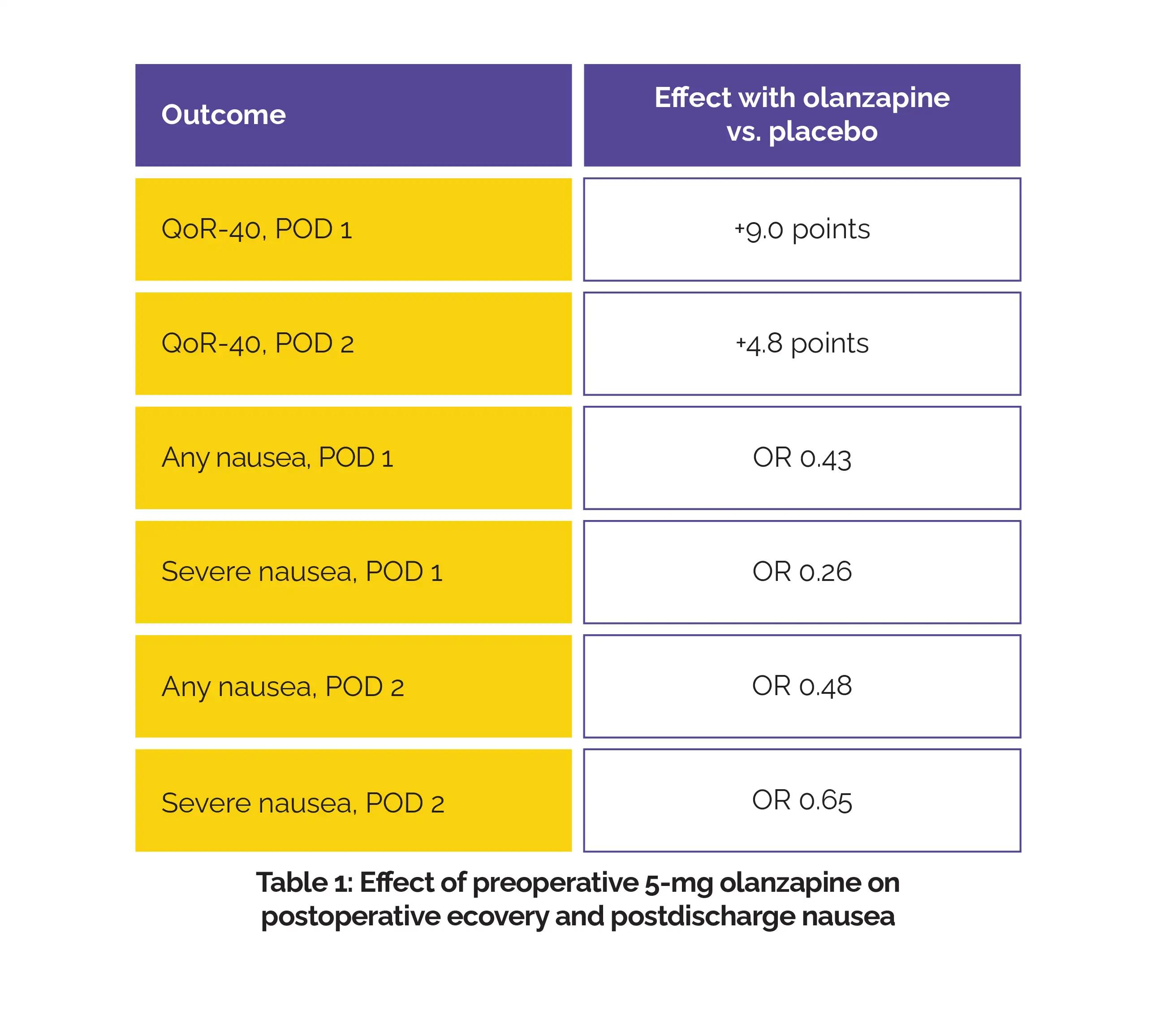
Olanzapine's benefit extended beyond nausea prevention, with improvement in the broader postoperative recovery experience. PACU length of stay was similar between groups, suggesting that the intervention did not delay immediate postoperative discharge from the recovery unit.
Adding a single preoperative 5 mg oral dose of olanzapine to standard dexamethasone and ondansetron enhanced early global recovery quality and minimized postdischarge nausea without prolonging PACU stay in female ambulatory surgery patients.
Anesthesiology
Preoperative Olanzapine and Quality of Recovery after Ambulatory Surgery: A Randomized Clinical Trial
John Guzzi et al.












Comments (0)