

Categories
Change Password!
Reset Password!



Groove pancreatitis (GP), a rare form of chronic pancreatitis impacting the pancreaticoduodenal groove, presents a diagnostic and therapeutic challenge because it can closely mimic pancreatic ductal adenocarcinoma.
Non-surgical and surgical interventions yield comparable success rates in groove pancreatitis, justifying initial conservative management in selected patients while reserving surgery for refractory, complicated, or diagnostically uncertain cases.
Groove pancreatitis (GP), a rare form of chronic pancreatitis impacting the pancreaticoduodenal groove, presents a diagnostic and therapeutic challenge because it can closely mimic pancreatic ductal adenocarcinoma. This overlap may complicate treatment decisions, particularly when malignancy cannot be confidently excluded.
Management options encompass conservative treatment, endoscopic interventions, and surgery. However, the relative potency of surgical and non-surgical approaches remains uncertain. This systematic review and meta-analysis examined the clinical characteristics of GP and compared treatment success rates to clarify the evidence supporting these strategies.
The review included 24 studies involving 562 volunteers. Investigators evaluated demographics, clinical presentation, diagnostic approaches, and treatment outcomes. Non-surgical management included conservative and endoscopic approaches. Random-effects models were employed to check pooled complete success rates with 95% confidence intervals, while direct comparisons assessed differences between treatment strategies.
Across the 24 included studies, the patient-weighted mean age was 50.6 years, and men accounted for 84.3% of patients. The most frequently noted symptoms were abdominal pain (92.3%), weight loss (70.5%), and nausea or vomiting (47.1%). Both approaches illustrated substantial complete success rates, with a numerically higher observed rate following surgery (Table 1).
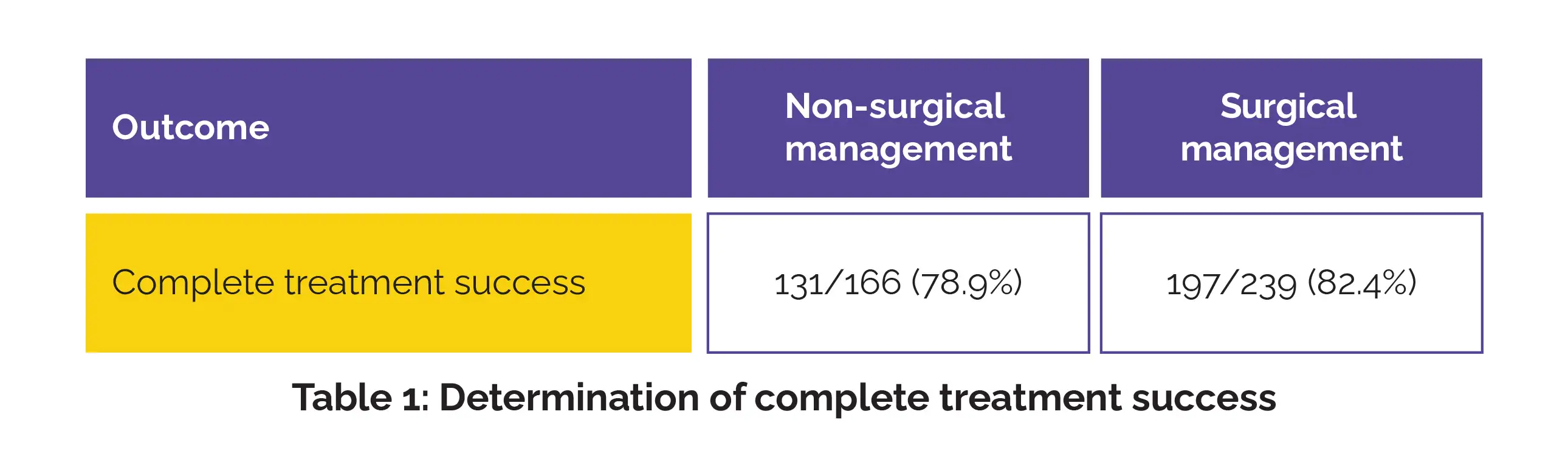
Random-effects meta-analysis illustrated pooled complete success proportions of 0.76 for non-surgical strategies and 0.775 for surgical interventions. In sensitivity analysis, restricting the evaluation strictly to resective surgical procedures elevated the pooled complete success rate to 0.823 with complete absence of heterogeneity (I2 = 0.0%).
Direct comparative analyses revealed no noticeable difference between surgical and non-surgical approaches (risk ratio 0.99), reflecting equivalent overall potency. Substantial heterogeneity was noted in the non-surgical cohort (I2 = 64.2%), whereas heterogeneity remained minimal in the surgical cohort (I2 = 5.8%).
Surgical and non-surgical management of GP exhibited similar pooled success rates, with no significant difference between approaches. However, current evidence does not establish superiority or equivalence, supporting individualized intervention based on symptom severity, complications, and diagnostic uncertainty.
Updates in Surgery
Surgical versus conservative management of groove pancreatitis: a systematic review and meta-analysis
Arkadeep Dhali et al.












Comments (0)