

Categories
Change Password!
Reset Password!



DGBI-like symptoms affect approximately 1 in 3 children with quiescent IBD and are linked with poorer QoL and greater anxiety.
Children can continue to report abdominal pain and other gastrointestinal symptoms even when inflammatory bowel disease (IBD) appears controlled. This creates a familiar clinical dilemma: does persistent symptomatology indicate renewed inflammatory activity, or could another process be contributing?
A study published in the American Journal of Gastroenterology explored this question by examining Disorders of gut-brain interaction (DGBI)-like symptoms in kids with quiescent inflammatory bowel disease (IBD) and comparing them with healthy peers. The investigators enrolled 253 children aged 10–18 years, including 131 with IBD and 122 healthy controls. All children with IBD had biochemically quiescent disease, with some also had endoscopic confirmation of remission.
DGBI was assessed using the Rome IV criteria, alongside measures of quality of life (QoL) and psychological burden. DGBI-like symptoms occurred at a similar frequency in children with IBD and healthy controls. Among children with IBD, functional abdominal pain disorders were common. Those with DGBI-like symptoms experienced poorer health-related quality of life, particularly in IBD symptoms, energy, and social functioning, and reported greater anxiety, as shown in Table 1.
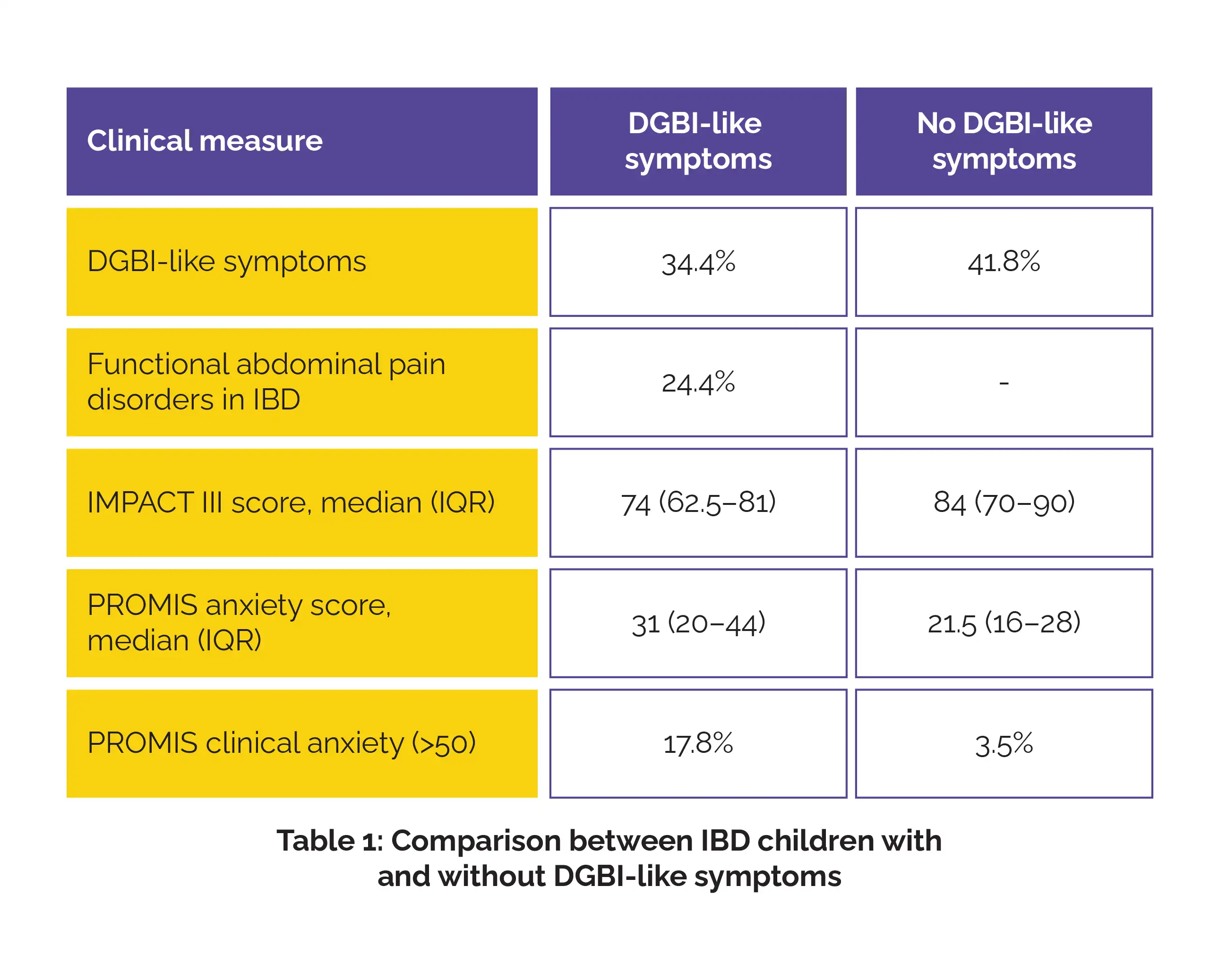
In the analysis of factors associated with DGBI, female sex emerged as the only independent predictor, with more than fivefold higher odds of DGBI (odds ratio 5.2). The findings indicate that DGBI-like symptoms remain common even when pediatric IBD is biochemically quiescent. Importantly, their presence is linked with greater anxiety, poorer quality of life, and heightened symptom burden. This suggests that persistent gastrointestinal symptoms in children battling controlled IBD may not necessarily reflect active intestinal inflammation.
American Journal of Gastroenterology
Disorders of Gut-Brain Interaction-Like Symptoms in Children With Inflammatory Bowel Disease: A Multicenter Prospective Study From the Pediatric Inflammatory Bowel Disease Porto Group of the European Society of Pediatric Gastroenterology, Hepatology and Nutrition
Massimo Martinelli et al.













Comments (0)