

Категории
Сменить пароль!
Сброс пароля!



Семаглутид и тирзепатид меняют ландшафт лечения МАЖБП, сочетая улучшение гистологической картины печени с доказанной кардиометаболической защитой.
Метаболически ассоциированная жировая болезнь печени (МАЖБП) всё больше меняет глобальный кардиометаболический ландшафт, при этом сердечно-сосудистые осложнения становятся для многих пациентов более серьёзной угрозой, чем прогрессирующее поражение печени. В ответ на изменение данной парадигмы в обзоре изучалось, могут ли агонисты рецепторов глюкагоноподобного пептида-1 (ГПП-1) одновременно влиять на прогрессирование заболеваний печени и улучшать сердечно-сосудистые исходы.
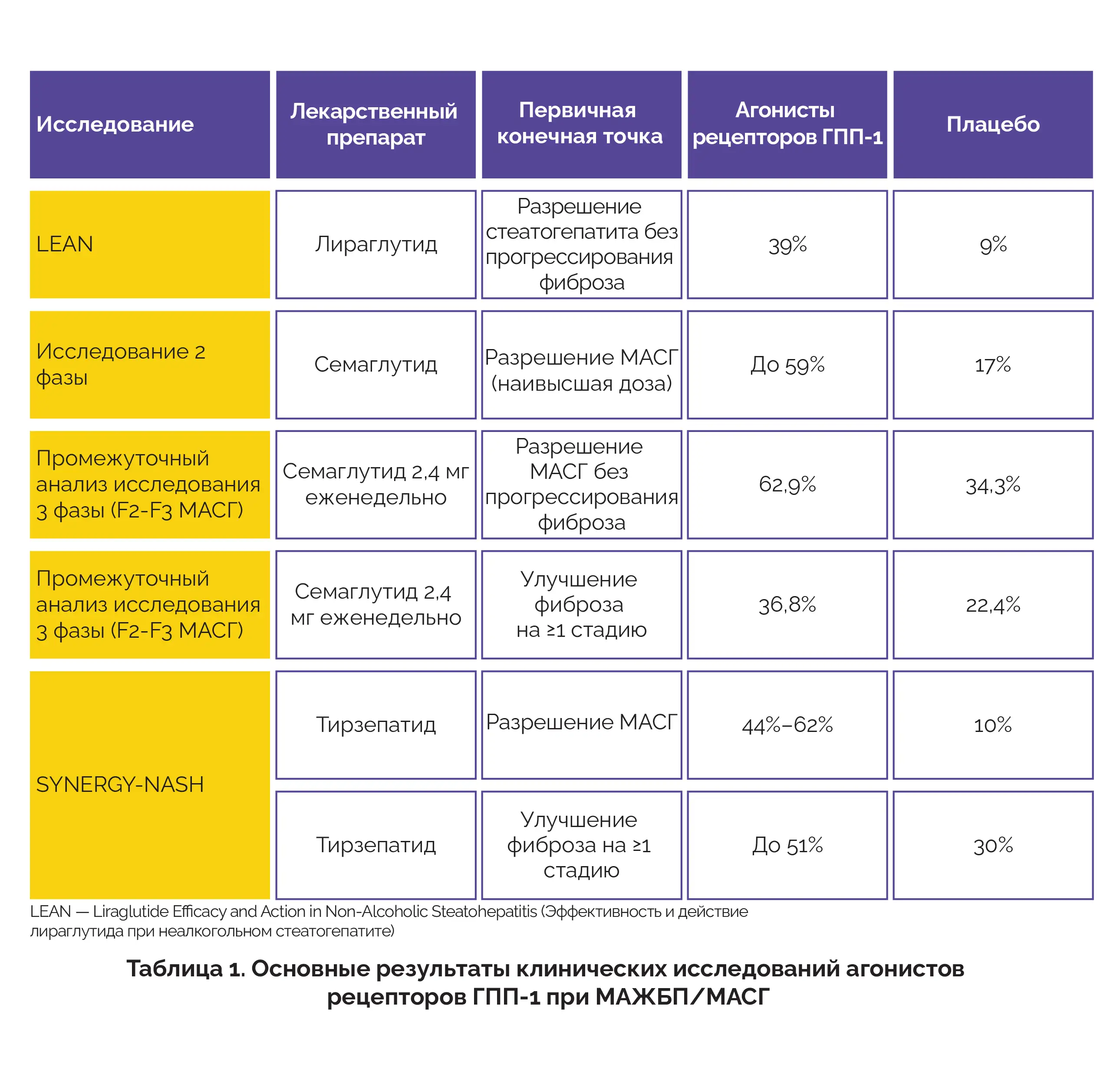
Авторы обобщили данные трансляционных, клинических и сердечно-сосудистых исследований, чтобы изучить способность агонистов рецепторов ГПП-1 влиять как на патологические изменения в печени, так и на системный кардиометаболический риск у пациентов МАЖБП. Клинические данные последовательно демонстрировали значимые гистологические улучшения при применении агонистов рецепторов ГПП-1 в рамках всего спектра метаболически ассоциированного стеатогепатита (МАСГ) (таблица 1).
Помимо исходов, специфичных для печени, агонисты рецепторов ГПП-1 последовательно демонстрировали сердечно-сосудистую защиту. Крупные исследования сердечно-сосудистых исходов, включая LEADER (лираглутид), SUSTAIN-6 и SELECT (семаглутид), и REWIND (дулаглутид), сообщили о заметном снижении частоты больших неблагоприятных сердечно-сосудистых событий, поддерживая их роль в снижении частоты осложнений со стороны сердечно-сосудистой системы у пациентов с метаболическим заболеванием.
Накопленные данные позволяют рассматривать агонисты рецепторов ГПП-1 как препараты, способные изменить подходы к лечению МАЖБП, воздействуя одновременно на повреждение печени и сердечно-сосудистую уязвимость в рамках единой терапевтической стратегии. Семаглутид и тирзепатид оказались особенно перспективными кандидатами для лечения пациентов с ожирением, сахарным диабетом 2 типа, выраженным фиброзом и высоким кардиометаболическим риском.
Chronic Diseases and Translational Medicine
GLP-1 Receptor Agonists in Metabolic Dysfunction-Associated Steatotic Liver Disease: Bridging Hepatic and Cardiovascular Outcomes
Gabriel Amorim Moreira Alves и соавт.














Комментарии (0)