

Categories
Change Password!
Reset Password!



Frailty is a common complication of osteoarthritis (OA) that contributes to functional decline and reduced quality of life. Emerging evidence suggests that increased intestinal permeability ("leaky gut"), reflected by elevated plasma zonulin levels, may contribute to frailty through chronic inflammation.
Multi-strain probiotics improve frailty and physical function while minimizing intestinal permeability in patients with osteoarthritis.
Frailty is a common complication of osteoarthritis (OA) that contributes to functional decline and reduced quality of life. Emerging evidence suggests that increased intestinal permeability ("leaky gut"), reflected by elevated plasma zonulin levels, may contribute to frailty through chronic inflammation. This study scrutinized whether daily supplementation with a multi-strain probiotic could restore intestinal barrier integrity and improve frailty in patients with OA.
A 14-week, randomized controlled trial enrolled 110 patients with OA (age 45–70 years). Volunteers received either a daily multi-strain probiotic containing 112 billion colony-forming units from 8 well-characterized bacterial strains (n=54) or placebo (n=56). Assessments were executed at baseline and after 14 weeks.
The primary laboratory endpoint was the change in plasma zonulin, a marker of intestinal permeability, while the primary clinical endpoint was the alteration in frailty according to Fried's frailty criteria. Secondary endpoints were pain intensity, Oxford Knee Score (OKS), handgrip strength, gait speed, knee range of motion, high-sensitivity C-reactive protein, 8-isoprostanes, and safety. Following study completion, 103 subjects were included in the final analysis (probiotic, n=49; placebo, n=54).
After 14 weeks, those receiving the multi-strain probiotic demonstrated remarkable improvements in frailty, gut barrier integrity, physical performance, and walking-related pain compared with placebo. However, no noticeable benefits were noted for knee range of motion, pain at rest, or oxidative stress markers (Table 1).
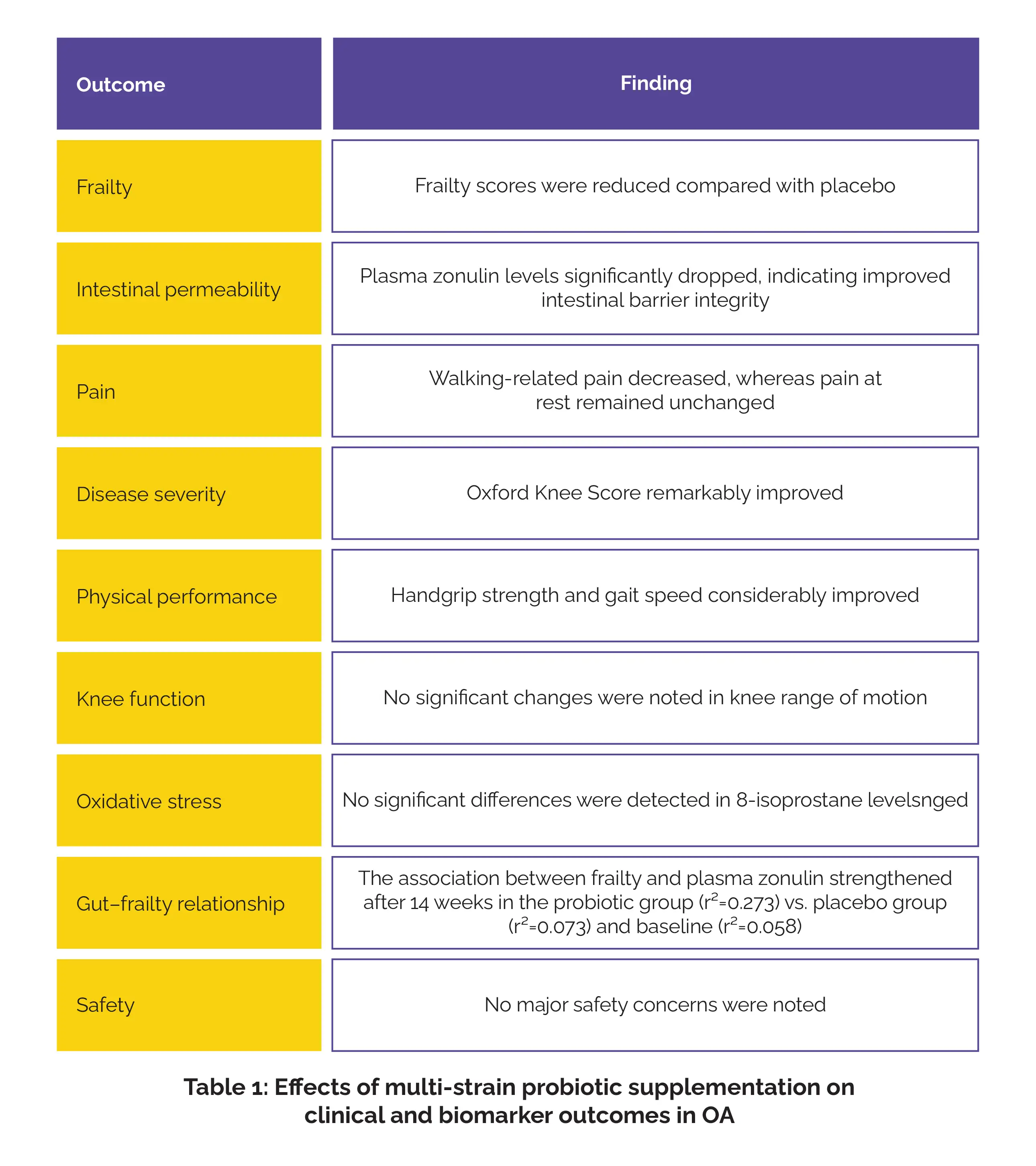
Strengthening the intestinal barrier through multi-strain probiotic supplementation was linked with meaningful reductions in frailty and improvements in physical performance among patients with OA. These results underscore the emerging role of the gut–joint axis as a potential therapeutic pathway for managing frailty in OA.
European Journal of Clinical Nutrition
The effect of multi-strain probiotics on frailty in osteoarthritis patients: a randomized trial focusing on intestinal leak repair
Asima Karim et al.













Comments (0)