

Categories
Change Password!
Reset Password!



Licensed pediatric liquid omeprazole formulations in the UK are more palatable and better accepted than compounded preparations, highlighting the need for child-friendly medicines.
Omeprazole, a widely used proton pump inhibitor, remains a cornerstone treatment for gastroesophageal reflux disease (GERD) and a range of acid-related conditions in the pediatric population. Despite its established clinical role, access to licensed liquid formulations suitable for children varies considerably across healthcare systems worldwide. This gap commonly compels clinicians and pharmacists to rely on extemporaneously compounded preparations — products that, while functional, are not subject to the same regulatory standards as commercially authorized medicines and may differ substantially in their sensory properties.
As medication palatability is a key driver of adherence in children, researchers set out to systematically compare the sensory profiles of six omeprazole liquid formulations currently available in the United Kingdom, including both licensed products and a commonly used compounded suspension. A randomized, single-blind sensory evaluation was conducted with a volunteer panel of 30 healthy adults (mean age 24 ± 2.6 years; 77% female).
Participants assessed six omeprazole oral liquid formulations available in the UK under standardized conditions. Sensory attributes — specifically taste, aftertaste, smell, and mouthfeel aversiveness — were scored using a visual analog scale (VAS), while overall acceptability was captured through a validated 5-point facial hedonic scale. Open-ended qualitative feedback was also collected to characterize the dominant flavor and texture perceptions associated with each formulation. Sensory assessment revealed marked differences in palatability across the evaluated formulations, with the greatest contrast observed between compounded and licensed products (Table 1).
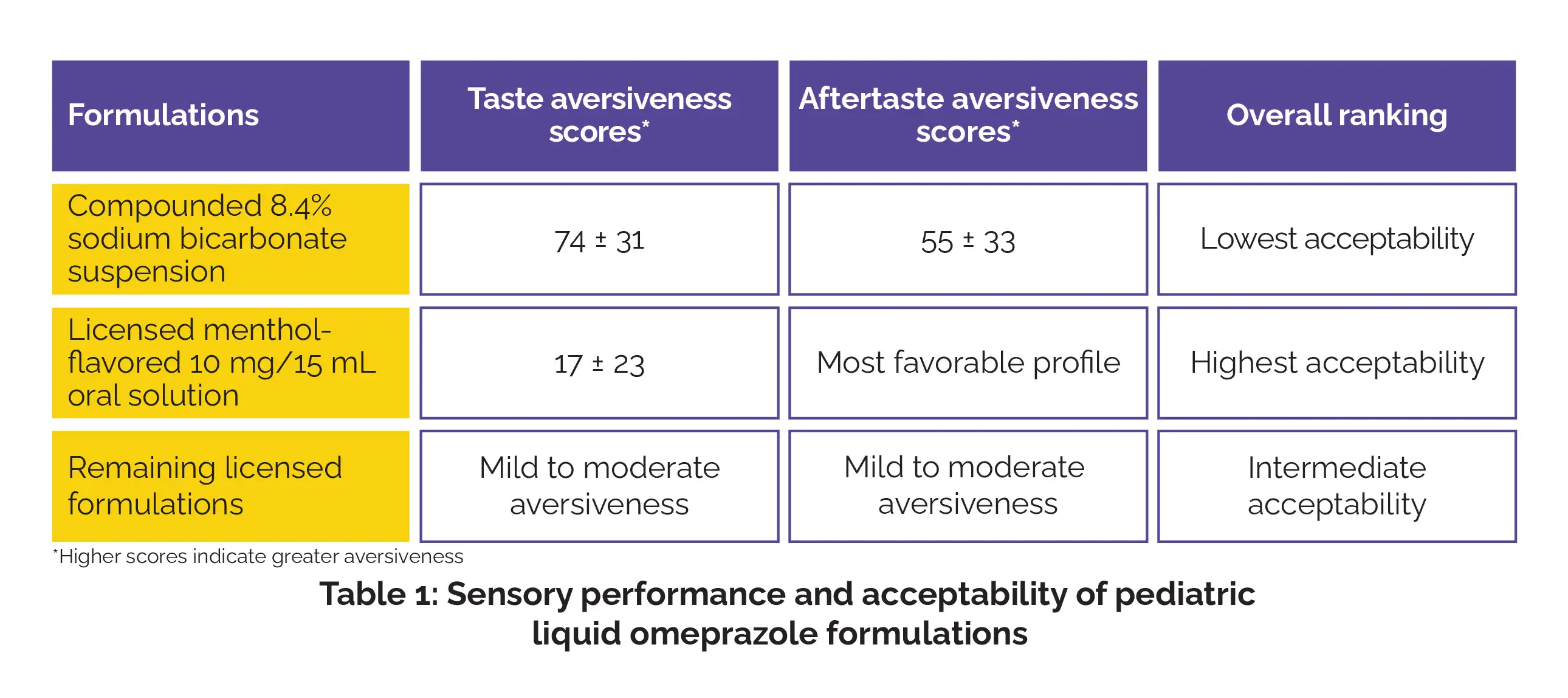
Bitterness emerged as the dominant negative attribute of the compounded sodium bicarbonate suspension, whereas the menthol-flavored licensed formulation was consistently preferred by participants. This sensory evaluation study drew a clear and clinically meaningful distinction between compounded and licensed omeprazole liquid formulations, with the former faring considerably worse across palatability measures.
The findings carry direct implications for prescribing practice: in pediatric patients, for whom medication acceptance is notoriously fragile and non-adherence can have real therapeutic consequences.
Clinical Drug Investigation
Comparative Sensory Evaluation of Pediatric Liquid Omeprazole Formulations Available in the UK
Sejal R Ranmal et al.















Comments (0)