

Categories
Change Password!
Reset Password!



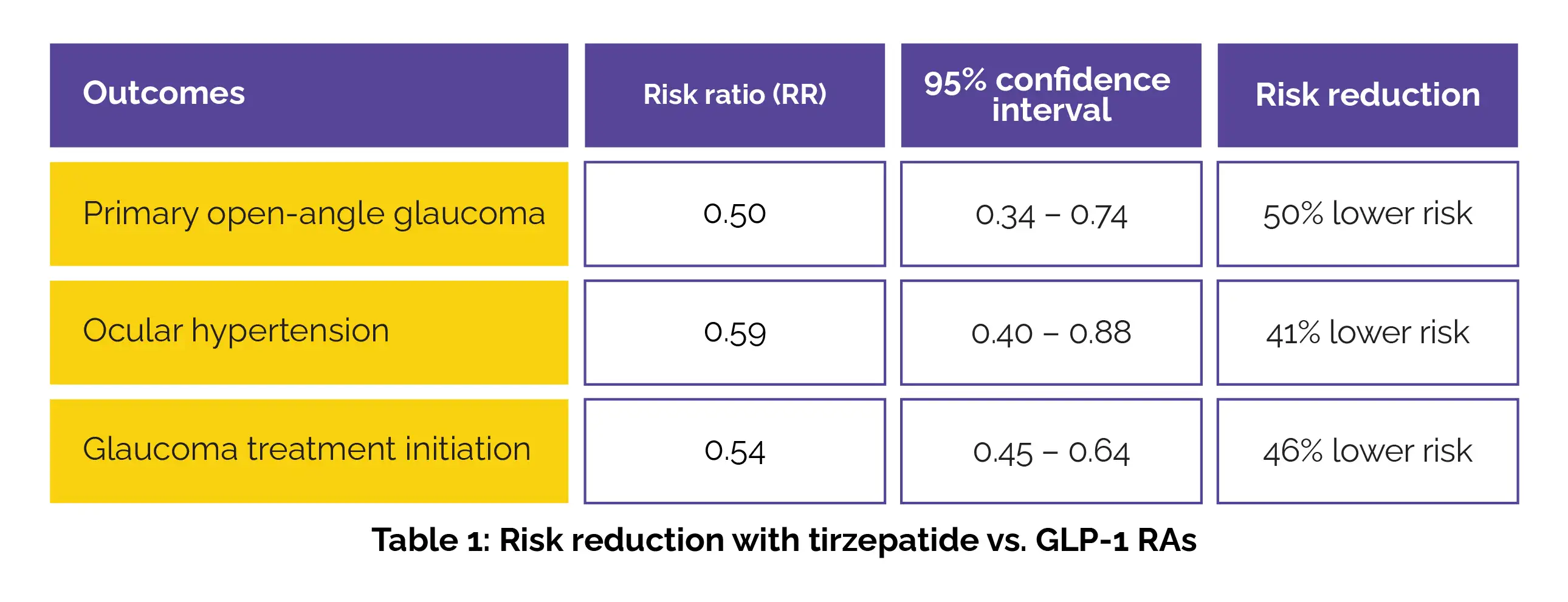
In T2DM, tirzepatide significantly reduces the likelihood of primary open-angle glaucoma, ocular hypertension, and glaucoma treatment initiation vs. GLP-1 RAs.
According to a large retrospective cohort study, tirzepatide is linked with a reduced risk of primary open-angle glaucoma and ocular hypertension, along with a lower likelihood of initiating glaucoma treatment, in type 2 diabetes mellitus (T2DM) as opposed to selective glucagon-like peptide-1 receptor agonists (GLP-1 RAs).
The analysis used electronic health record data from 71 U.S. healthcare organizations, making it one of the largest evaluations of ocular outcomes in those receiving incretin-based therapies. The study included 41,850 tirzepatide users and 147,828 GLP-1 RA users, with 41,849 patients in each group after 1:1 propensity score matching to balance baseline characteristics, comorbidities, and medication use. Those with prior glaucoma, ocular trauma, or prior exposure to study drugs were excluded.
In comparison with selective GLP-1 RAs, tirzepatide use was related to a lower risk of primary open-angle glaucoma, ocular hypertension, and initiating glaucoma treatment (medications or surgery), as depicted in Table 1:
Consistent Benefits Across High-Risk Groups
Risk reductions remained stable in key subgroups, including:
Overall, the findings suggest that tirzepatide may offer an additional ocular benefit beyond glycemic and cardiometabolic control, potentially minimizing the risk of glaucoma-related outcomes in T2DM. Further prospective studies are needed to confirm causality and clarify underlying mechanisms.
American Journal of Ophthalmology
Tirzepatide is Associated With Reduced Risk of Primary Open-Angle Glaucoma and Ocular Hypertension in Patients With Type 2 Diabetes
Alexander T. Hong et al.













Comments (0)