

Categories
Change Password!
Reset Password!



Single-dose intravenous ferric carboxymaltose and ferric derisomaltose produce greater improvements in red cell and reticulocyte indices than oral iron by mid-pregnancy.
Tackling iron deficiency anemia (IDA) during pregnancy is a race against time as fetal demand rapidly escalates. A secondary analysis of the multicenter RAPIDIRON trial reveals that single-dose intravenous (IV) iron provides a far faster hematologic boost than traditional oral supplements, delivering critical iron directly to the bone marrow when mothers need it most.
The study, led by Manjunath S. Somannavar et al., assessed anemic mothers starting at baseline (12–16 weeks) across three distinct treatment paths:
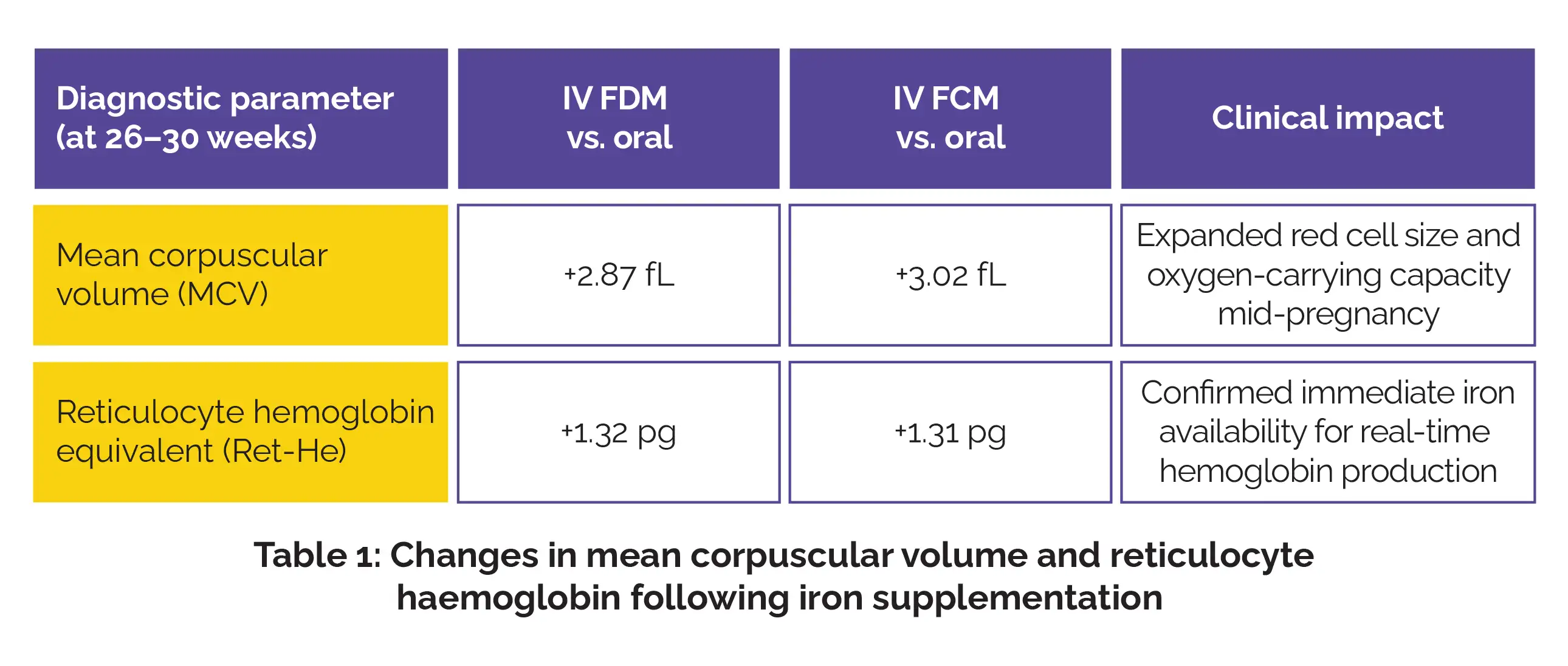
By mid-gestation (26–30 weeks), both IV formulations generated statistically superior improvements over oral iron across key red cell and reticulocyte indices (Table 1).
Postpartum Catch-Up and Early Biomarkers
While IV iron offers an immediate mid-pregnancy surge, blood parameters across all three groups converged by 42 days postpartum. At this stage, differences in parameters like immature reticulocyte fraction (IRF), mean corpuscular hemoglobin (MCH), and mean corpuscular hemoglobin concentration (MCHC) were no longer statistically significant—confirming that daily oral supplements eventually restore iron stores after delivery.
However, the primary advantage of IV iron lies in its speed. Novel reticulocyte markers such as Ret-He and IRF allow clinicians to verify successful erythropoiesis within days rather than waiting weeks for standard hemoglobin changes, yielding an early window to optimize maternal therapy before delivery.
The Journal of Maternal-Fetal & Neonatal Medicine
Response of reticulocyte and red blood cell indices to single-dose intravenous iron in pregnant women with moderate iron deficiency anemia: secondary analysis of the RAPIDIRON trial
Manjunath S. Somannavar et al.












Comments (0)