

Categories
Change Password!
Reset Password!



Seasonal allergic rhinitis (SAR) triggers widespread mucosal inflammation driven by underlying immune pathways, notably involving Janus kinase (JAK) signaling.
Intranasal administration of pumecitinib at 1.2 mg and 2.0 mg twice daily successfully mitigates both nasal and ocular symptom burdens while maintaining a favorable safety profile in adults with moderate-to-severe seasonal allergic rhinitis.
Seasonal allergic rhinitis (SAR) triggers widespread mucosal inflammation driven by underlying immune pathways, notably involving Janus kinase (JAK) signaling. Although systemic therapies exist, targeted topical intranasal options require robust clinical data to establish their therapeutic viability. Researchers set out to measure the clinical efficacy, safety profile, and pharmacokinetic behavior of multiple dosage strengths of pumecitinib nasal spray delivered over a two-week period during peak pollen season.
Study conductors organized a randomized controlled phase 2 study across 20 distinct medical facilities. A cohort of 168 adult volunteers aged 18 through 65 years experiencing moderate-to-severe SAR was divided evenly in a 1:1:1:1 allocation to receive either a matching placebo solution or pumecitinib nasal spray at concentrations of 0.2 mg, 1.2 mg, or 2.0 mg applied twice daily across 14 consecutive days. Primary analysis tracked alterations from baseline in daily reflective total nasal symptom scores, whereas secondary parameters evaluated ocular manifestations and validated quality-of-life questionnaires.
All 168 randomized subjects completed the 14-day therapeutic protocol across the four study arms, revealing distinct clinical responses and safety outcomes detailed below:
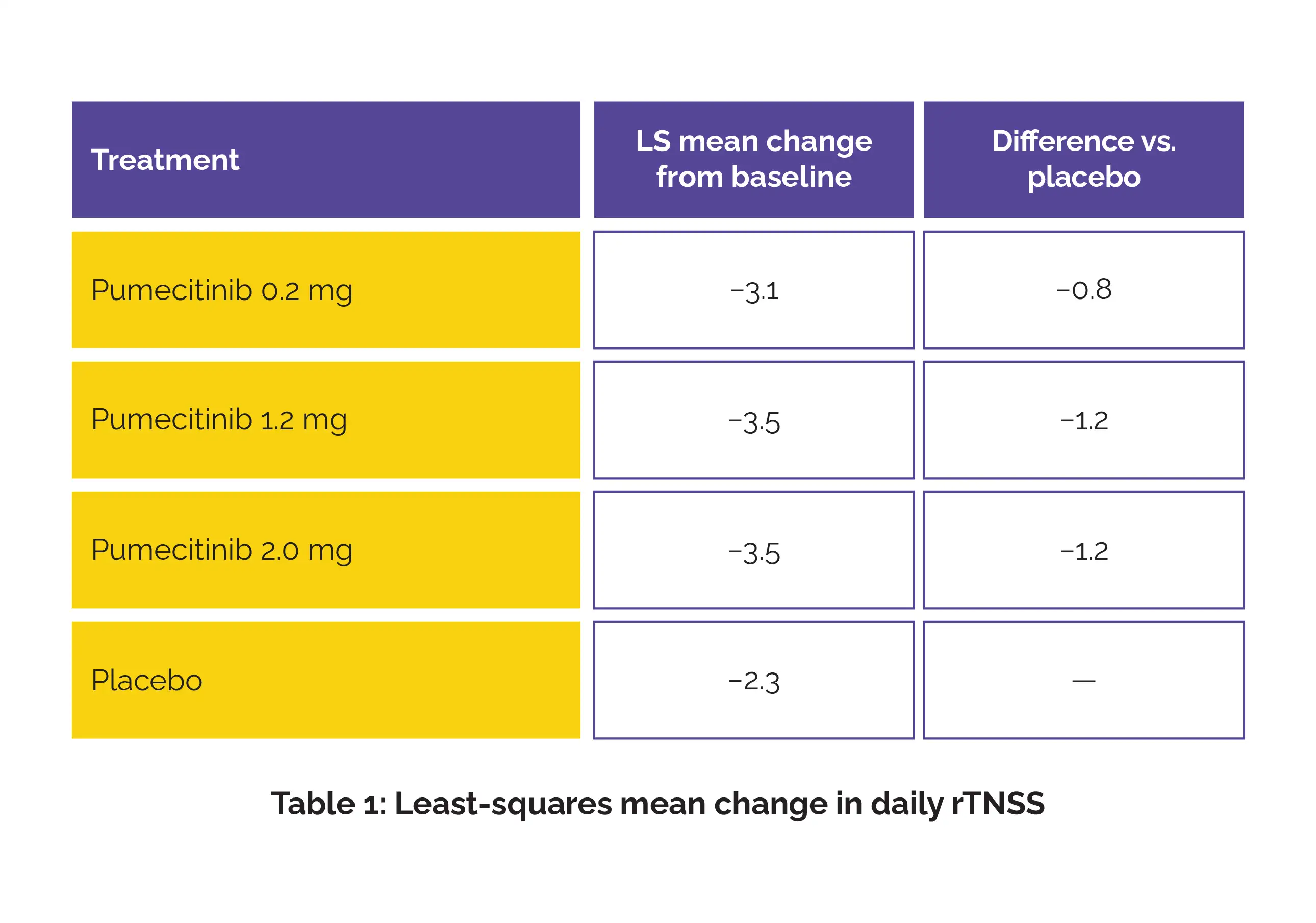
Twice-daily application of pumecitinib nasal spray at 1.2 mg or 2.0 mg effectively eased pollen-induced nasal and ocular distress without causing dose-related safety complications, thereby laying a solid groundwork for upcoming expansive clinical evaluations.
The Lancet Regional Health - Western Pacific
Efficacy, safety, and pharmacokinetics of pumecitinib nasal spray for moderate-to-severe seasonal allergic rhinitis: a multicentre, double-blind, randomised, placebo-controlled, phase 2 trial
Jingyun Lia et al.












Comments (0)