

Categories
Change Password!
Reset Password!



In grade 2–3 radiation-induced lung injury, pirfenidone combined with glucocorticoids improves lung diffusing capacity at 24 weeks compared with glucocorticoids alone.
Pirfenidone, an oral antifibrotic agent widely used in idiopathic pulmonary fibrosis, substantially improves pulmonary function when added to glucocorticoids in patients with radiation-induced lung injury (RILI), according to results from a multicentre, randomised phase 2 clinical trial conducted across China.
The study led by Zan Hou et al. determined whether pirfenidone could offer antifibrotic benefit in 134 adults aged 18–75 years with grade 2 or grade 3 RILI, defined by Common Terminology Criteria for Adverse Events (CTCAE). Volunteers had an Eastern Cooperative Oncology Group (ECOG) performance status of 0–2 and were recruited from 10 medical centres throughout China. They were randomly allocated in a 1:1 ratio to get either pirfenidone in combination with glucocorticoids (n=67) or glucocorticoids alone (n=67).
Pirfenidone was given orally three times daily, beginning at 200 mg during week 1, increasing to 300 mg in week 2, and reaching a maintenance dose of 400 mg from weeks 3 through 24. All subjects received concurrent glucocorticoid therapy equivalent to prednisone 40 mg per day, divided into two doses for 2 weeks, followed by a gradual taper of 10 mg every 2 weeks over 6–8 weeks. The key endpoint was the change in diffusing capacity of the lungs for carbon monoxide (DLCO%) from baseline to week 24, assessed in the modified intention-to-treat population.
Safety was evaluated in all subjects who were given at least one dose of medication. The study population comprised 105 men (78%) and 29 women (22%), and the median follow-up duration was 9.2 months. At 24 weeks, those treated with pirfenidone + glucocorticoids demonstrated a clinically meaningful improvement in DLCO% from baseline when compared to those treated with glucocorticoids alone.
The least-squares mean difference between groups was 10.4%, indicating a statistically significant advantage for the pirfenidone-based regimen. The overall safety profile was comparable between groups. Grade ≥3 adverse events were mainly pneumonia and rash, with pneumonia occurring less frequently in the pirfenidone group. Serious adverse events were same between groups (Table 1).
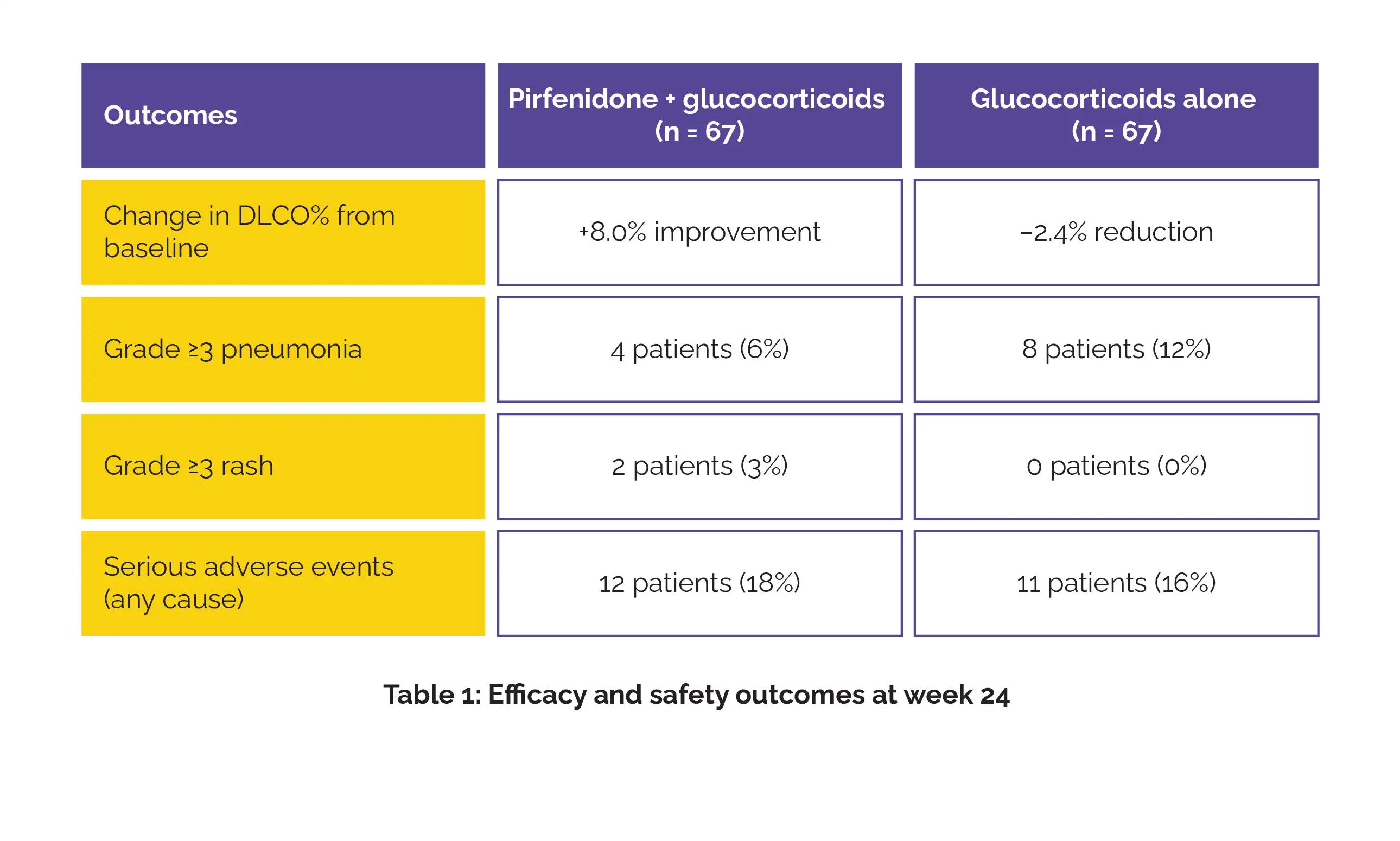
No treatment-related deaths were reported. These findings indicate that pirfenidone combined with glucocorticoids represents an effective and well-tolerated therapeutic option for grade 2 or grade 3 RILI. By targeting both inflammatory and fibrotic pathways, this approach addresses a major unmet need in the management of thoracic radiotherapy–linked pulmonary toxicity.
The Lancet Oncology
Pirfenidone for grade 2 and grade 3 radiation-induced lung injury: a multicentre, open-label, randomised, phase 2 trial
Zan Hou et al.










Comments (0)