

Categories
Change Password!
Reset Password!



A monthly single-pill combination of ibandronic acid and vitamin D achieves outstanding treatment adherence, persistence, and patient satisfaction in postmenopausal osteoporosis management.
A real-world study suggests that a once-monthly tablet combining ibandronic acid and vitamin D helps postmenopausal women stay on osteoporosis treatment, with nearly 99% medication compliance and high patient satisfaction after six months.
Osteoporosis remains a major challenge in aging women, prompting researchers to examine the compliance, persistence, patient experience, and safety associated with a convenient once-monthly ibandronic acid–vitamin D regimen. Hence, a multicenter observational study was undertaken in Portuguese community pharmacies, where postmenopausal women receiving the monthly regimen were monitored from baseline through six months of therapy.
Treatment adherence, continuity of use, and safety findings were systematically captured, while satisfaction with therapy was measured using Osteoporosis Treatment Patient Satisfaction Questionnaire (OPSAT-Q). Among the 230 postmenopausal women enrolled in the study, the majority successfully completed the six-month follow-up period, and the monthly treatment strategy demonstrated strong real-world performance across adherence, persistence, patient experience, and tolerability outcomes (Table 1).
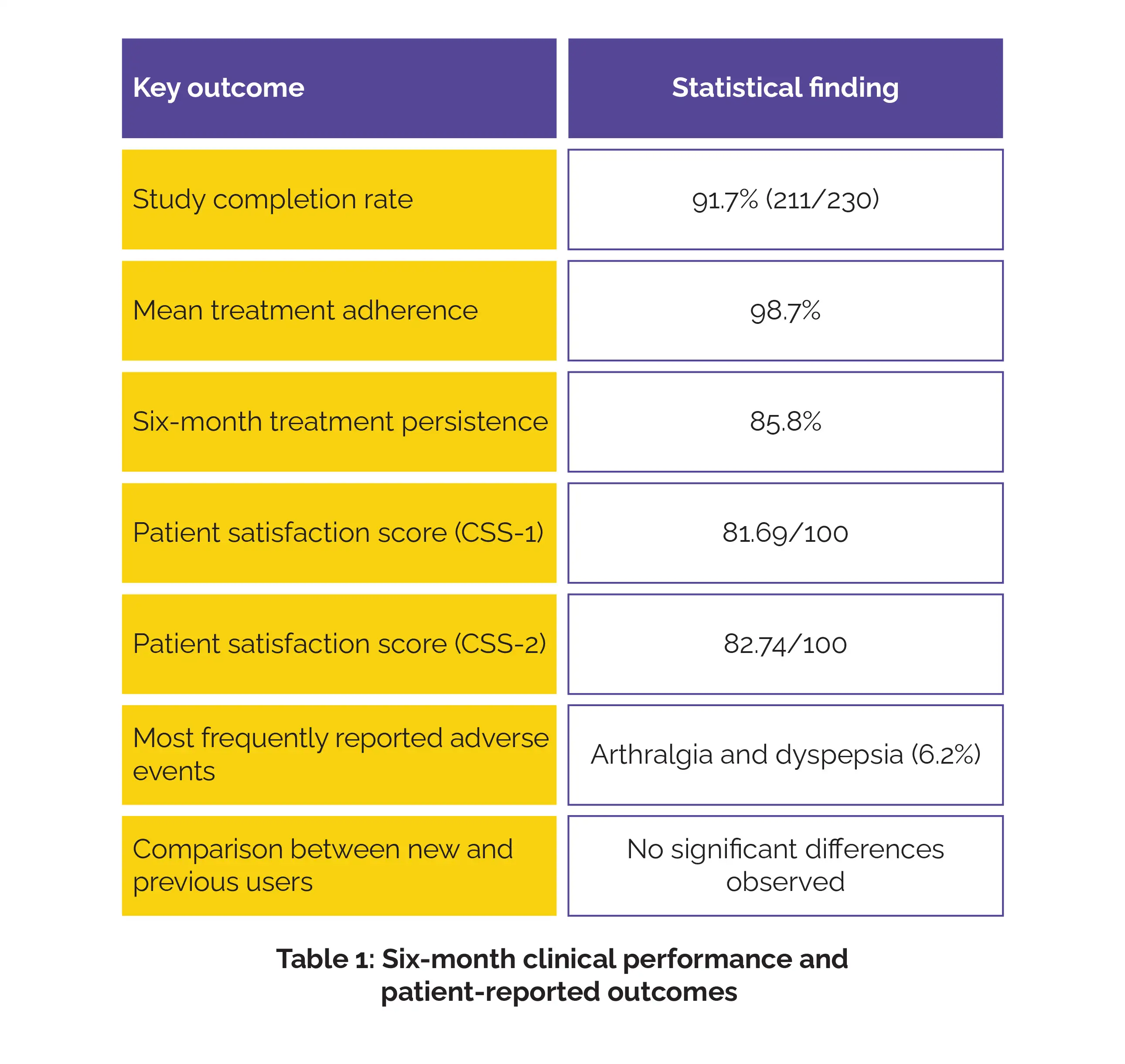
Overall, the simplified once-monthly regimen successfully sustained treatment engagement while maintaining high patient satisfaction and a favorable safety profile in routine osteoporosis care. By aligning treatment simplicity with patient convenience, the once-monthly combination strategy emerged as a practical approach for strengthening long-term engagement in osteoporosis care while preserving a reassuring safety profile.
Current Medical Research and Opinion
Evaluation of compliance, persistence, safety profile and satisfaction to monthly single-pill treatment regimen of ibandronic acid 150 mg and cholecalciferol 22,400 IU among postmenopausal women with osteoporosis
Rita Neves et al.













Comments (0)