

Categories
Change Password!
Reset Password!



Headache after alcohol consumption responds well to a single oral dose of 60 mg loxoprofen sodium, whereas general fatigue and nausea persist despite treatment.
Hangovers continue to impose a measurable economic and healthcare burden by impairing workplace productivity and increasing physician visits, underscoring the requisition for effective symptom-relief strategies. A nationwide, randomized controlled physicians’ trial has now evaluated whether loxoprofen sodium can ease common hangover complaints, including fatigue, headache, and nausea.
Overall, 229 adults were randomly assigned to get loxoprofen sodium 60 mg (single oral dose) or placebo. The study was closed once 150 subjects developed hangovers, forming the efficacy population (74 in the loxoprofen group and 76 in the placebo group). Volunteers had a median age of 34 years, 92.0% were men, and baseline characteristics were well-balanced between groups.
The primary endpoint—alteration in general fatigue severity from baseline to 3 hours after dosing, measured using a visual analog scale (VAS)—exhibited no vital difference between treatments. In contrast, headache relief was markedly greater with loxoprofen. The adjusted between-group difference was 14 points, confirming a clear benefit for hangover-related headache. Nausea relief did not differ between groups. Safety outcomes were also comparable, indicating no excess adverse events with active treatment (Table 1).
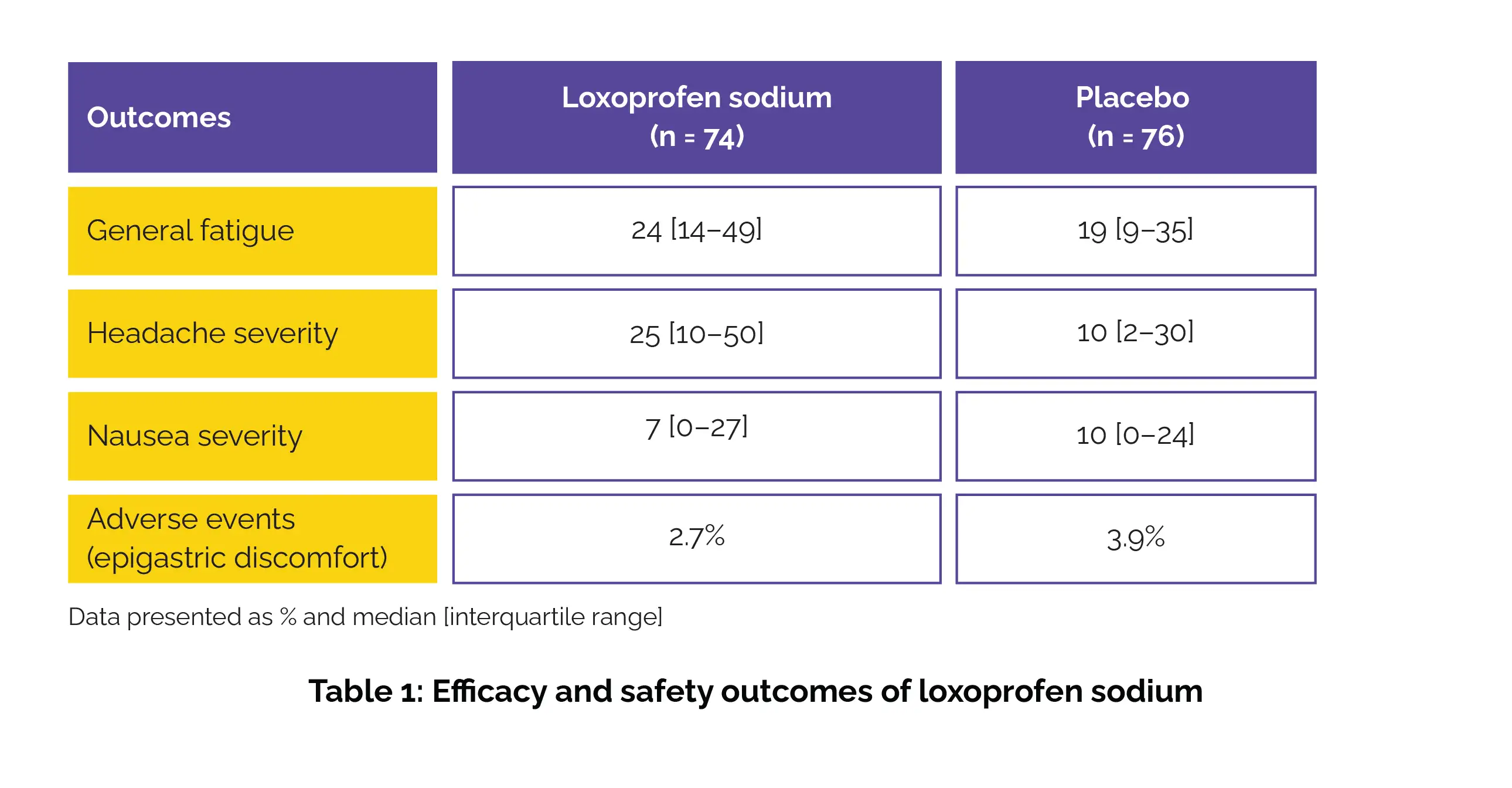
Hence, loxoprofen sodium successfully mitigated hangover-associated headache, while general fatigue and nausea remained unaffected. These findings suggest that loxoprofen may be a targeted option for headache relief after alcohol consumption, though it does not address the full spectrum of hangover symptoms.
Alcohol
A nationwide randomized, double-blind, placebo-controlled physicians' trial of loxoprofen for the treatment of fatigue, headache, and nausea after hangovers
Masahiko Hara et al.















Comments (0)