

Categories
Change Password!
Reset Password!



Dental implants placed with insertion torque exceeding 100 Ncm show higher postoperative pain, greater marginal bone loss, and lower 3-year survival rates than implants placed with moderate torque levels.
A prospective study published in "Quintessence International" by Ahmed M Aziz et al. evaluated short- and long-term clinical outcomes of dental implants placed with different insertion torque (IT) levels over a 36-month follow-up period. Researchers enrolled patients requiring single-tooth dental implants and categorized them according to IT values into:
Clinical outcomes assessed during the 3-year follow-up included implant survival, implant success, marginal bone loss, and postoperative pain. The degree of pain was checked via a 10-cm visual analog scale (VAS) at distinct postoperative time points ranging from immediately after surgery to week 3. Survival analyses were performed using Kaplan-Meier and Cox regression models, while multivariate analyses identified predictors associated with marginal bone loss and postoperative pain.
The results showed that 230 patients underwent dental implant placement. Patients in the very high IT group reported markedly greater postoperative pain at week 3 compared with other groups (Table 1).
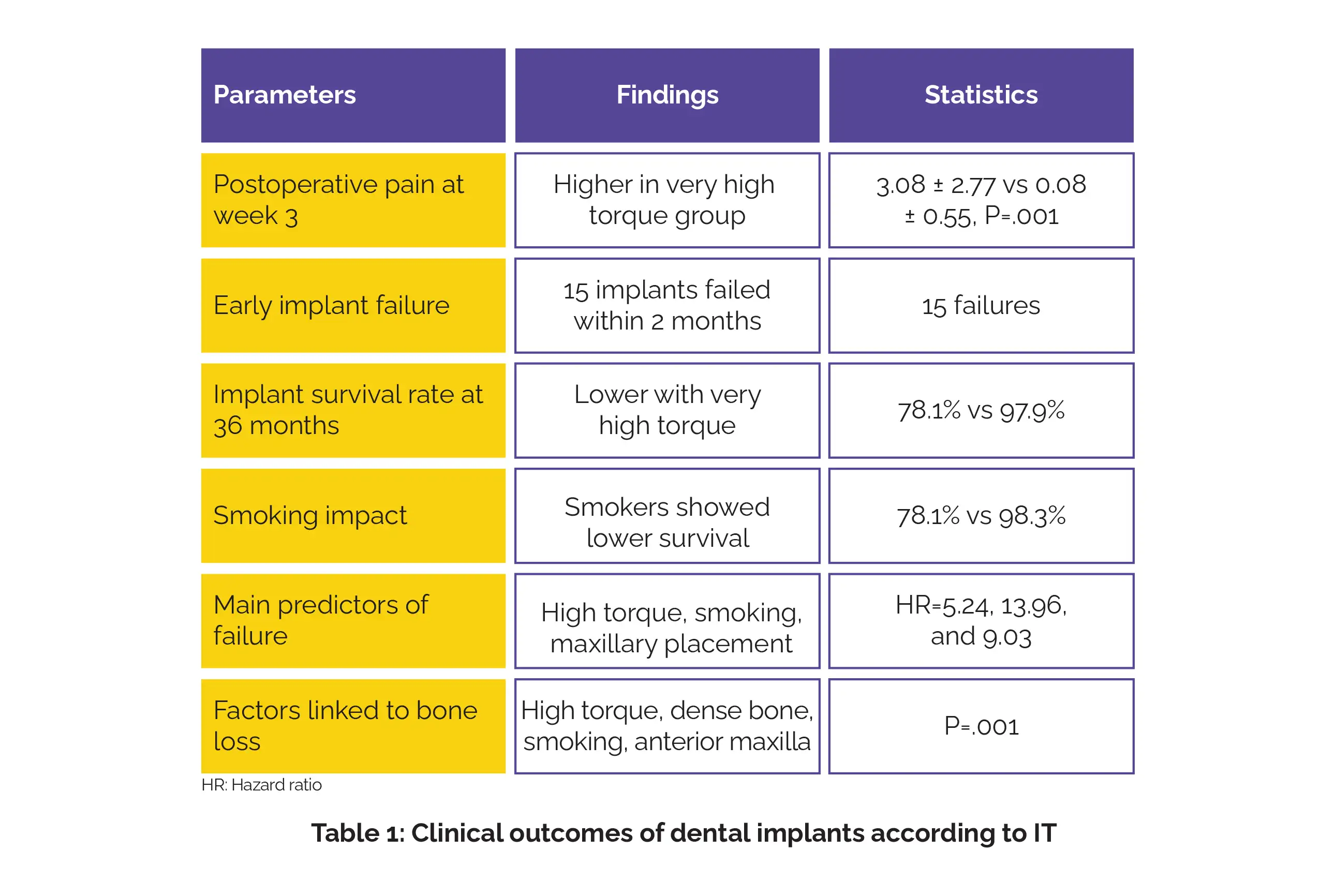
The study concluded that excessively high IT negatively affected long-term implant performance by increasing postoperative pain, marginal bone loss, and implant failure risk. The combined influence of dense bone conditions, smoking-related impaired healing, and anatomically vulnerable maxillary regions further contributed to unfavorable outcomes. These results emphasized the importance of maintaining optimal IT levels to improve implant longevity and peri-implant bone stability.
Quintessence International
Clinical outcomes of dental implants placed with varying insertion torques: a 3-year prospective analysis
Ahmed M Aziz et al.














Comments (0)