

Categories
Change Password!
Reset Password!



Serum soluble CD163 levels are elevated in complex regional pain syndrome patients, reflecting macrophage activation and providing a measurable biomarker for immune involvement in the condition.
Could macrophage stimulation yield a measurable indicator of inflammation in complex regional pain syndrome (CRPS)? Growing evidence implicates immune dysregulation, particularly the monocyte–macrophage system, in CRPS pathogenesis. Elevated levels of pro-inflammatory cytokines, including tumor necrosis factor-alpha (TNF-α) and interleukin-6 (IL-6), point towards the involvement of pro-inflammatory M1 macrophages. However, measuring these cytokines can be cumbersome in routine clinical practice.
Serum soluble CD163 (sCD163), a marker of tissue-resident macrophage activation, may yield a more clinically feasible approach to assessing immune involvement. Against this background, Nadia Kriek and other researchers examined serum sCD163 levels in CRPS sufferers and monitored their connection with soluble interleukin-2 receptor (sIL-2R), a marker of T-cell activation.
This retrospective cohort study included 22 patients with CRPS and 27 healthy controls. Serum sCD163 and sIL-2R concentrations were measured via enzyme-linked immunosorbent assay (ELISA). Data were collected on demographic characteristics, clinical signs and symptoms, pain intensity assessed via the 11-point Numeric Rating Scale (NRS), and CRPS disease intensity.
Serum sCD163 concentrations were noticeably higher in those with CRPS than in healthy controls (Table 1).
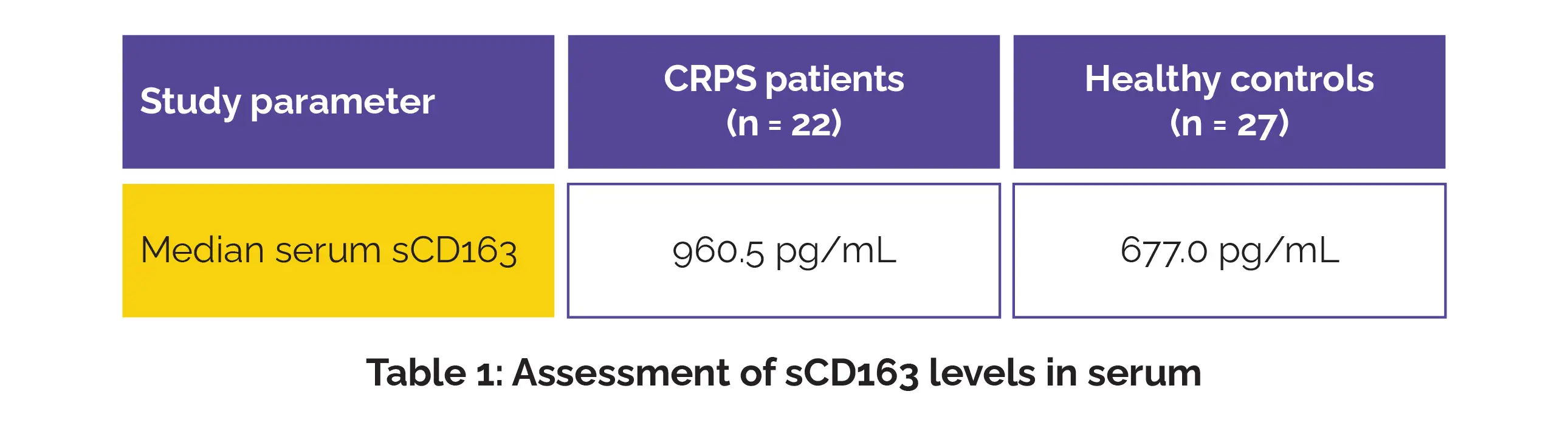
In CRPS sufferers, a noticeable positive link between sCD163 and sIL-2R levels was noted (rs= 0.577). However, this link was not significant among healthy controls (rs = 0.359). While classic pro-inflammatory cytokines like TNF-α and IL-6 are challenging to capture reliably in standard clinical settings due to rapid degradation and transient expression, sCD163 serves as a robust circulating marker for monocyte-macrophage activity. Overall, measuring sCD163 can assist clinicians in assessing specific inflammatory subtypes in CRPS, aiding diagnostic precision, and guiding personalized care strategies.
Pain Practice
Elevated Serum Soluble CD163 Indicates Macrophage Activation: A Potential Biomarker for Inflammation in Complex Regional Pain Syndrome?
Nadia Kriek et al.














Comments (0)