

Categories
Change Password!
Reset Password!



Estradiol–dydrogesterone combination therapy provides significantly greater short-term reduction in perimenopausal symptoms than dydrogesterone monotherapy.
A real-world cohort study has found that estradiol–dydrogesterone (E2/DYD) combination therapy offers superior short-term symptom control than dydrogesterone monotherapy in women with perimenopausal symptoms.
The retrospective study, led by Shuaiting Liu et al., examined 150 females treated at a tertiary gynecological outpatient clinic. Among them, 60 women received dydrogesterone alone, while 90 received E2/DYD combination therapy. Researchers assessed treatment effectiveness and safety over 12 weeks using the Kupperman Menopause Index (KMI), a commonly used measure of menopausal symptom severity.
At week 12, women receiving E2/DYD combination therapy experienced a greater reduction in KMI scores than those treated with dydrogesterone alone. Clinical response, defined as at least a 50% drop in KMI score, was achieved in a higher percentage of women receiving combination therapy. Adverse events were more common with E2/DYD therapy. However, most events were described as mild and self-limited (Table 1).
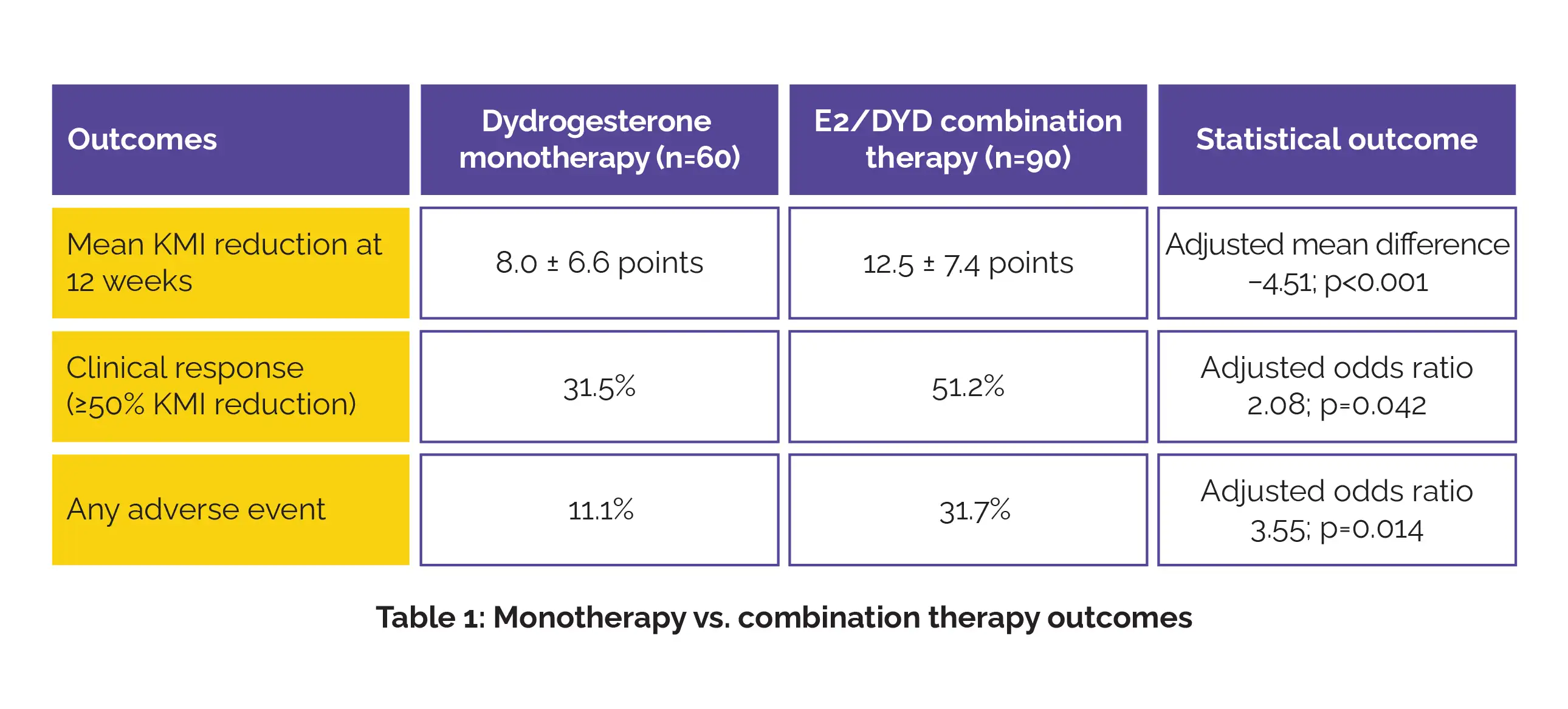
The investigators also reported that vasomotor symptoms and mood-related complaints improved more substantially with combination therapy. Endometrial thickness increased modestly in the combination therapy group by 0.60 mm, but week-12 measurements remained within physiologic limits, suggesting no immediate endometrial safety concerns.
Researchers concluded that E2/DYD combination therapy may provide greater short-term relief of perimenopausal symptoms than dydrogesterone monotherapy in routine clinical practice. They emphasized that the findings are hypothesis-generating because of the retrospective observational design and noted that prospective randomized trials are needed to confirm efficacy and safety outcomes.
Frontiers in Endocrinology
Efficacy and safety of dydrogesterone monotherapy versus estradiol–dydrogesterone combination therapy in perimenopausal women: a real-world cohort study
Shuaiting Liu et al.












Comments (0)