

Categories
Change Password!
Reset Password!



A doctor–nurse–patient full-cycle care model is being explored as a coordinated approach to managing children with moderate-to-severe AD in the day-care setting. The model connects care before, during, and after the clinical consultation.
Children receiving the collaborative care pathway showed better control of atopic dermatitis (AD) and less impact of the disease on quality of life (QoL) than those receiving routine day-care management. This improvement was reflected in both disease severity and dermatology-specific quality-of-life measures.
These findings came from a study of 45 children with moderate-to-severe AD treated in a day-care ward between January and December 2025. Twenty children received routine day-care management, while 25 received a full-cycle collaborative pathway involving doctors, nurses, and patients.
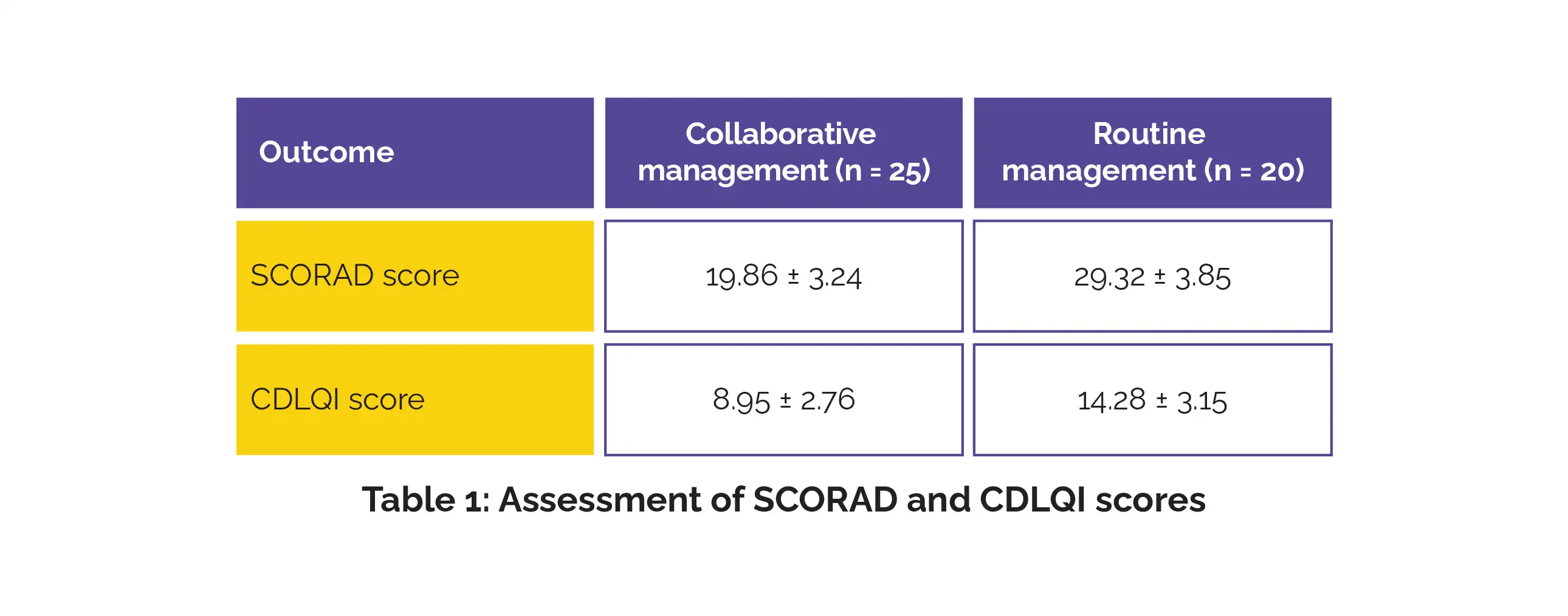
The collaborative pathway extended beyond the consultation itself. It incorporated pre-consultation preparation, standardized management during the consultation, and structured follow-up after the visit, creating a continuous care process rather than a consultation-focused approach. At baseline, SCORAD and CDLQI scores were comparable between the two groups. Following the intervention, both measures were lower among children receiving collaborative care, indicating better disease control alongside a reduced QoL burden (Table 1).
The benefits also extended to family-level outcomes. Parental disease cognition and treatment compliance were higher in the collaborative-care group, while families reported greater satisfaction with care. Recurrence during follow-up was also lower compared with routine management. By uniting physicians, nursing staff, parents, and young patients into a coordinated care circle, this full-cycle pathway bridges critical gaps in pediatric eczema management. It not only accelerates clinical recovery and stabilizes the condition long-term but also empowers families with the knowledge to maintain adherence. Authors note that larger multi-center studies with expanded sample sizes and extended follow-up windows are now warranted to substantiate long-term durability.
Asian Journal of Research in Nursing and Health
Effectiveness of a Doctor–Nurse–Patient Full-Cycle Collaborative Health Management Model for Children with Atopic Dermatitis in a Day-Care Ward
Sun Wanjun et al.















Comments (0)